What Will My Car Tax Be in 2025 GOV.UK – VED Rates Explained
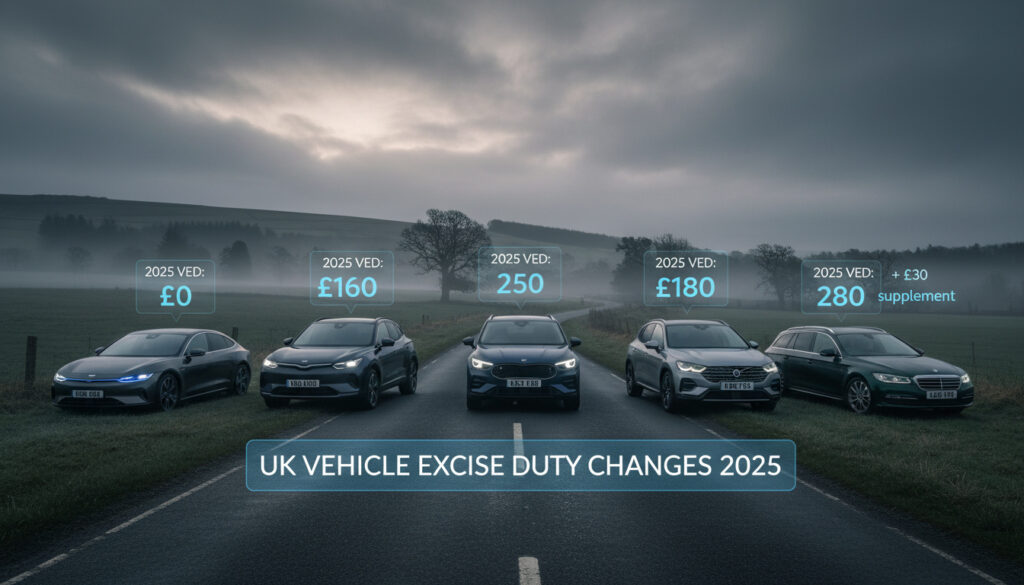
Vehicle Excise Duty (VED) rates shift significantly from 1 April 2025, ending the era of zero-tax electric vehicles and introducing inflation-linked increases across most car tax bands. The standard annual rate for the majority of cars registered after April 2017 settles at £195, while newly registered electric cars face a £10 first-year charge before moving to the standard rate.
For drivers of petrol, diesel, and hybrid vehicles, the most striking change affects first-year tax rates, which double for cars emitting more than 75g/km of CO₂ compared to previous years. These adjustments, confirmed in the Finance Bill 2024-25, reflect the government’s strategy to maintain revenue as the vehicle fleet transitions toward electric power.
Understanding your specific liability requires checking your vehicle’s CO₂ emissions band and registration date, as these determine whether you pay the new first-year rates or the adjusted standard tariffs.
How Much Will My Car Tax Be in 2025?
£195 for most cars registered after 1 April 2017, including electric vehicles from year two.
£10 for new zero-emission cars registered from 1 April 2025, rising to £195 annually thereafter.
First-year rates reach £5,490 for vehicles emitting over 255g/km CO₂.
Electric vans now pay £355 annually, matching petrol and diesel light goods vehicles.
- First-year rates have doubled for internal combustion engine cars exceeding 75g/km CO₂ emissions.
- Retail Price Index (RPI) uplifts apply to standard rates, maintaining real-terms value without additional exchequer impact.
- The Expensive Car Supplement threshold increases to £50,000 exclusively for zero-emission vehicles.
- Double-cab pick-ups registered from 1 July 2024 face company car taxation at £180 annually.
- Drivers can calculate exact liabilities using the GOV.UK vehicle tax checker.
- Historic vehicles over 40 years old retain full exemption from VED charges.
| CO₂ Emissions (g/km) | First-Year Rate 2025 | Standard Rate (Year 2+) |
|---|---|---|
| 0 (Zero emission) | £10 | £195 |
| 1-50 | £110 | £20 |
| 76-90 | £270 | £165 |
| 131-150 | £540 | £215 |
| 171-190 | £2,190 | £315 |
| 255+ | £5,490 | £760 |
Source: GOV.UK VED rates 2025
What Are the VED Rates and Bands for 2025?
The 2025 Vehicle Excise Duty structure maintains its emissions-based approach while introducing significant increases for higher-polluting vehicles. Rates are divided between an initial first-year charge based on laboratory-measured CO₂ output and a flat standard rate applied from the second year of registration onwards.
First-Year Rates for New Registrations
Cars registered for the first time between 1 April 2025 and 31 March 2026 face graduated tax charges directly tied to their CO₂ emissions certification. Vehicles emitting zero CO₂ pay £10, while those in the highest category (above 255g/km) face charges of £5,490—more than double the previous year’s £2,475. Data from Simply Business confirms these figures represent a doubling of rates for all vehicles exceeding 75g/km.
Cars registered before 1 April 2025 follow the previous tax year’s first-year rates, potentially saving thousands for high-emission vehicles compared to post-April registrations.
Standard Rates After the First Year
From the second year of taxation, most vehicles move to a flat rate adjusted by the Retail Price Index. Cars registered after 1 April 2017 pay £195 annually, regardless of fuel type. This represents a £5 increase for petrol and diesel vehicles and a significant change for electric vehicles previously exempt from charges. Analysis by Cinch indicates these rates apply consistently across CO₂ bands for the standard calculation period.
How Tax Bands Are Determined
HM Revenue & Customs bases VED calculations on official CO₂ emissions figures recorded during type approval testing. These figures appear on the vehicle’s V5C registration certificate and determine both the first-year liability and, for older vehicles registered between 2001-2017, the ongoing annual charge. The official GOV.UK publication provides the definitive banding tables.
Car Tax Changes for Electric Vehicles in 2025
The Autumn Budget 2024 marked a pivotal shift in UK transport taxation policy, removing the Vehicle Excise Duty exemption that has supported electric vehicle adoption since the duty’s introduction for zero-emission cars. From 1 April 2025, all electric vehicles become subject to road tax for the first time.
New EV Registrations From April 2025
Zero-emission cars registered on or after 1 April 2025 face a £10 first-year rate, followed by the standard £195 annual charge from year two. This places new electric vehicles on a nearly equal footing with traditional internal combustion engine cars regarding annual taxation, though the first-year rate remains significantly lower than even the cleanest hybrid alternatives.
Existing Electric Vehicles (2017-2025)
Owners of electric cars registered between 1 April 2017 and 31 March 2025 move immediately to the £195 standard rate from April 2025. These vehicles do not benefit from the £10 introductory rate available to newly registered EVs, representing a sudden transition from zero cost to full standard taxation.
The threshold for the Expensive Car Supplement rises to £50,000 specifically for zero-emission vehicles, compared to £40,000 for other cars. EVs exceeding this value pay the supplement for a single year only if their second licence begins before 1 April 2026.
Commercial Electric Vehicles
Electric vans align with their petrol and diesel counterparts at £355 annually, ending the previous exemption for zero-emission light goods vehicles. Meanwhile, BP Pulse Live Birmingham – Find EV Chargers Now infrastructure continues to expand, though taxation parity now applies across fuel types for commercial operators.
How Do I Renew and Pay My Car Tax? Who Qualifies for Exemptions?
Tax renewal operates through the Driver and Vehicle Licensing Agency (DVLA) online platform, requiring a valid MOT certificate where applicable and current insurance coverage.
More related posts
 Ella Maisy Purvis: Biography and Neurodiversity
 Mahershala Ali: Religion, Oscar Wins & Name Change
 Tammy Slaton Now: Weight, Husband Death & Updates
 Erin Moriarty: Appearance, Health Rumors, and The Boys
 Paul Brunson: Age, Wife, Kids, Net Worth, and Football Club
 Lucy Pinder: Married to Russell Martin? Career & More
 Aston Villa vs PSG Timeline: Scores, Results & History