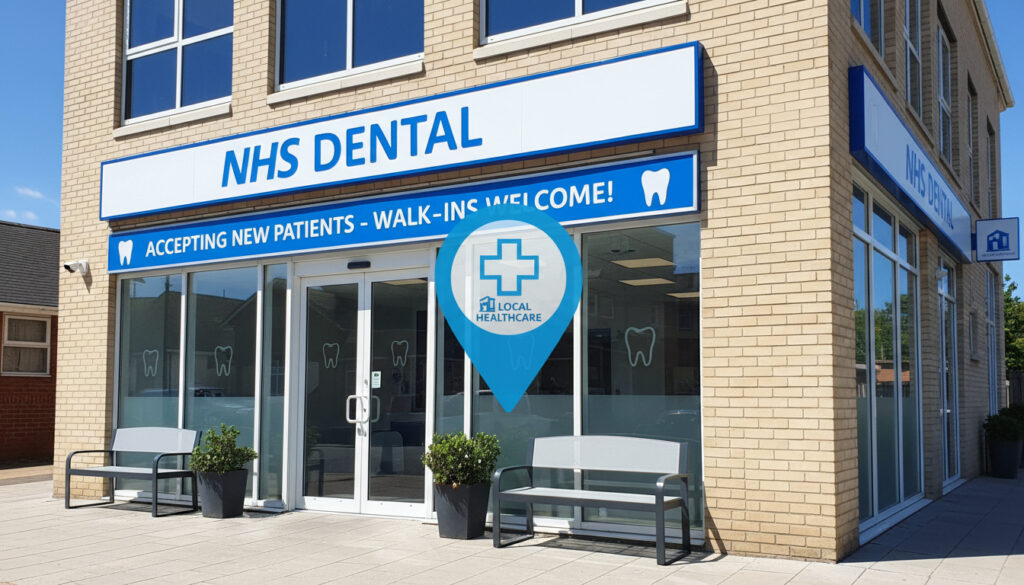
NHS Dentists Near Me – Find Practices Accepting New Patients
Securing an NHS dental appointment in England presents significant challenges, with availability varying dramatically by postcode. While the official NHS “Find a Dentist” tool provides a starting point for local searches, the reality of patient access often diverges sharply from official listings. Recent investigations indicate that the majority of practices remain closed to new adult patients despite ongoing government reforms.
The landscape of NHS dentistry shifted in 2024 with the introduction of the Dental Recovery Plan, a £200 million initiative designed to expand capacity through financial incentives for practices. However, data conflicts persist between government reporting of early gains and professional body assessments describing continued crisis conditions across the country.
Understanding the current system—from charge bands and exemption criteria to the distinction between official availability and actual practice capacity—enables patients to navigate this constrained environment more effectively.
How Can I Find NHS Dentists Near Me Accepting New Patients?
Enter your postcode on nhs.uk/service-search/find-a-dentist to identify local practices and their current availability status.
Contact practices directly to confirm acceptance, as listings marked “when availability allows” may obscure lengthy waiting lists or closed registers.
Determine exemption status for free care before registering, particularly for children, pregnant women, or low-income patients holding HC2 certificates.
Severe pain or trauma requires contacting NHS 111 or visiting A&E, though standard charges apply unless exempt.
- Up to 96% of dental practices were not accepting new adult patients as of November 2024, according to a Daily Mirror investigation.
- NHS England data from April 2024 indicated 1,417 practices accepted new adults, representing a 53% increase from January figures.
- Children experienced better access rates, with 2,063 practices accepting new juvenile patients in April 2024.
- One in ten parliamentary constituencies contained zero practices accepting new adult NHS patients.
- Dental practices receive £15 to £50 premiums for each new patient registered who had not received NHS dental care for two or more years.
- Regional disparities remain pronounced, with the South West and East of England showing early gains while other areas stagnate.
- Waiting lists at some practices extend up to ten years for routine adult registrations.
| Service or Metric | Current Details |
|---|---|
| Band 1 Charge (Examination/Diagnosis) | £27.40 |
| Band 2 Charge (Fillings/Root Canal) | £73.50 |
| Band 3 Charge (Crowns/Dentures/Bridges) | £319.10 |
| New Patient Premium (Practice Incentive) | £15 – £50 |
| Free Care Eligibility Age Limit | Under 18 years |
| Maternity Exemption Period | 12 months post-partum |
| Recovery Plan Funding Allocation | £200 million |
| Practices Accepting New Adults (April 2024) | 1,417 (53% increase) |
| Practices Not Accepting New Adults (Nov 2024) | Up to 96% |
| Target for Additional Training Places | 40% increase by 2031 |
What Are NHS Dental Charges and Who Qualifies for Free Care?
NHS dental treatment operates through a tiered charging system based on the complexity of clinical work required. Band 1 covers examinations, diagnosis, and preventive advice at £27.40. Band 2 includes all Band 1 services plus fillings, root canal treatment, and extractions for £73.50. Band 3 encompasses complex procedures including crowns, dentures, and bridges at £319.10.
Exemption Criteria and Financial Support
Certain groups qualify for exemption from all NHS dental charges. Children under 18 receive free treatment, as do pregnant women and mothers within 12 months of giving birth. Patients with low incomes may obtain full exemption through the HC2 certificate scheme. Standard exemptions also apply to specific benefit recipients, though the NHS eligibility criteria provide definitive guidance on qualification.
Patients holding valid HC2 certificates or maternity exemption cards must present these at each appointment to avoid charges. Dental practices bill the full amount if valid documentation is unavailable at the time of treatment.
Private vs NHS Appointments
Many dental practices operate mixed economies, offering both private and NHS slots. When contacting practices initially listed as accepting NHS patients, patients should explicitly specify their requirement for NHS care, as reception staff may otherwise offer private alternatives with shorter waiting times but significantly higher costs.
How Do I Access Emergency NHS Dental Treatment?
Severe dental pain, trauma, or facial swelling requires immediate assessment through specific pathways. NHS 111 operates as the primary triage service for urgent dental conditions outside regular hours, directing patients to emergency clinics or out-of-hours dentists.
Hospital Emergency Departments
Accident and Emergency departments accept dental cases involving significant facial injuries, uncontrolled bleeding, or swelling affecting breathing. However, A&E units do not typically provide routine dental repairs, referring stable patients back to community dental services for definitive treatment.
Emergency Charges
Emergency dental appointments generally incur a Band 1 charge of £27.40 unless the patient falls within exemption categories. Official NHS guidance confirms that no blanket free emergency care exists; standard exemption rules apply regardless of urgency.
Why Is NHS Dental Access So Limited Despite 2024 Reforms?
The Dental Recovery Plan, implemented in March 2024, promised 2.5 million additional appointments through £200 million in funding. The initiative increased minimum activity values for practices and introduced the new patient premium scheme to incentivize registrations. However, nine months post-implementation, access remains critically restricted.
Data Transparency Issues
Investigations by the British Dental Association and Daily Mirror revealed discrepancies in how the NHS website reports availability. Listings marked “accepting patients when availability allows” often mask de facto closed lists. When researchers contacted 100 practices listed as potentially accepting new patients, 84 confirmed they were not taking new adult registrations, with some maintaining decade-long waiting lists.
Practices displayed on the NHS Find a Dentist tool may show outdated acceptance status. Telephone verification remains essential, as website changes implemented alongside the Recovery Plan altered categorization wording without necessarily improving actual access.
The Recovery Plan targets a 40% increase in dental training places by 2031, meaning significant capacity improvements require years to materialize. Current shortages reflect post-pandemic backlogs compounded by recruitment challenges in underserved regions.
How Has NHS Dental Access Changed Since 2024?
-
:
The Department of Health announces the Dental Recovery Plan, allocating £200 million for new patient premiums, workforce expansion, and prevention programs targeting children. -
:
Reforms take effect, introducing £15-£50 payments to practices for each new patient absent from NHS dentistry for two or more years. Minimum activity values increase to £28. -
:
NHS England reports 1,417 practices accepting new adult patients, representing a 53% increase from January, alongside 2,063 practices accepting children. -
:
A Daily Mirror investigation finds 73% of practices explicitly not accepting new adults on the NHS website, rising to 96% after verifying “when availability allows” listings. One in ten constituencies reports zero accepting practices. -
:
Government targets indicate a 40% expansion in dental training places to bolster the workforce pipeline.
What Is Confirmed About NHS Dentist Availability Versus What Remains Uncertain?
Established Information
- Standard NHS charge bands (1, 2, and 3) apply uniformly across England with fixed fees.
- Specific exemption categories (children, pregnant women, low-income HC2 holders) receive free treatment.
- The Dental Recovery Plan launched in March 2024 with £200 million funding.
- The British Dental Association officially characterizes current access levels as a crisis.
- Emergency dental services operate through NHS 111 and A&E for severe cases.
Information That Remains Unclear
- Real-time practice availability fluctuates daily and may not reflect website listings.
- The actual number of practices genuinely accepting new patients varies between official NHS data and independent investigations.
- Long-term effectiveness of the 2024 Recovery Plan remains undetermined.
- Specific waiting list durations are rarely published publicly and require individual practice inquiry.
What Explains the Current NHS Dental Crisis?
The current access shortages stem from compounded pressures following the COVID-19 pandemic, which disrupted routine care and created substantial backlogs. Workforce distribution issues exacerbated the problem, with rural and deprived urban areas experiencing greater difficulty retaining dental professionals compared to affluent regions. The post-pandemic recovery has proceeded unevenly, leaving many patients traveling significant distances or waiting years for registration.
Regional disparities persist despite targeted reforms. While the South West and East of England reported improvement in practice availability during mid-2024, other areas saw no measurable gains. This uneven distribution reflects historical investment patterns and the concentration of dental training opportunities in specific geographic areas, a gap the 2031 workforce expansion targets aim to address. Patients seeking other local services, such as Large Animal Vet Near Me – Find Certified Equine & Livestock Vets, often encounter similar regional availability challenges.
What Are Officials and Professional Bodies Saying?
The British Dental Association has characterized the situation as a crisis, criticizing modifications to the NHS Find a Dentist website for potentially inflating access claims while urging government action beyond current pledges.
— British Dental Association, November 2024
The £200 million Dental Recovery Plan introduces new patient premiums ranging from £15 to £50, specifically targeting one million additional patients who have not accessed NHS dentistry for two or more years.
— Department of Health and Social Care, February 2024
How Can I Secure NHS Dental Care Near Me?
Begin by verifying your exemption status through official channels, then search the NHS Find a Dentist tool using your specific postcode before calling practices directly to confirm current availability. For urgent needs, contact NHS 111 immediately, while non-urgent cases require persistence given current waiting lists. Similar to verifying vehicle compliance through the Check MOT on Car – Free GOV.UK Status & History Check service, confirming dentist availability requires checking official records followed by direct verification.
Frequently Asked Questions
Do I need to register with a GP to see an NHS dentist?
Registration with a general practitioner is not required to access dental services. Dental practices maintain separate patient lists, though individual registration with a specific dentist is necessary for ongoing treatment.
How long are typical waiting lists for NHS dentists?
Waiting periods vary significantly by location, with some practices reporting lists extending up to ten years for new adult patients. Availability changes regularly, requiring direct contact with practices for current estimates.
Can a private dentist provide NHS treatment?
Some practices offer both NHS and private appointments. Patients must specifically request NHS services when booking, as private slots are typically available more readily but incur higher fees.
What happens if I miss my NHS dental appointment?
Missed appointments may result in removal from the practice’s patient list, particularly where demand exceeds capacity. Some practices charge for missed sessions unless 24 hours’ notice is provided.
Are all NHS dental treatments free?
Standard charges apply to most adults unless they qualify for exemptions through pregnancy, low income, or specific benefits. Children under 18 receive treatment without charge.
How quickly can I get an emergency dental appointment?
Emergency appointments for severe pain or trauma are available through NHS 111, though waiting times vary. Accident and emergency departments may treat facial injuries, but dental charges still apply unless exempt.
More related posts
 Nico Williams Transfer News: Contract & Career Facts
 Michael Carrick: Bio, Net Worth, Wife’s Feud with Keane
 How to Connect AirPods to a Laptop: Step-by-Step Guide
 Osama Bin Laden: Killing, Legal Debate & Family Aftermath
 Rita Simons: EastEnders to Hollyoaks, Family, Advocacy
 Bradley Cooper: Relationship with Gigi Hadid, Kids & Career
 Mount Teide: Visitor’s Guide to Spain’s Highest Volcano
 Zach Braff: The Facts on Relationships, Health, and Sobriety