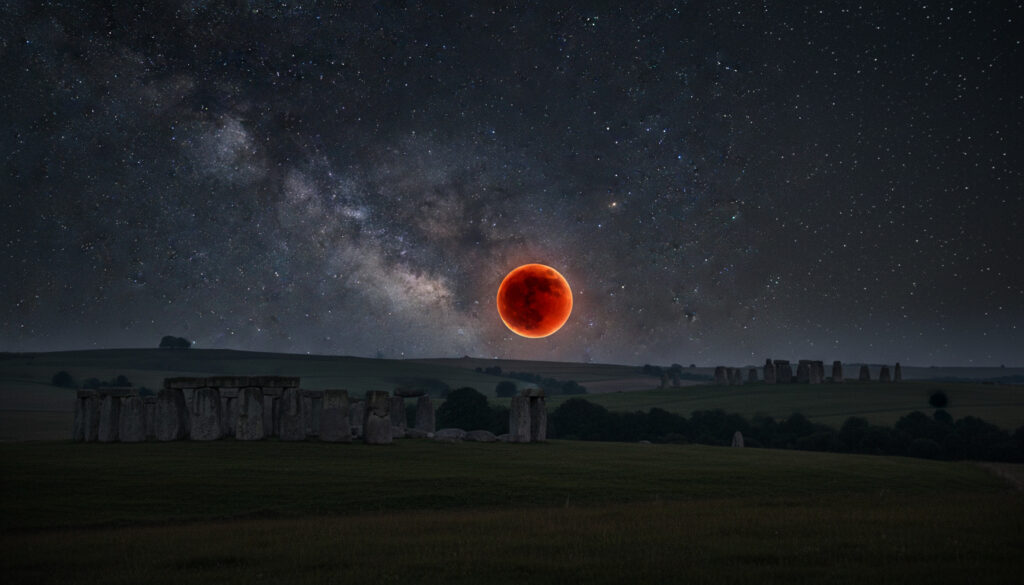
Blood Moon Total Lunar Eclipse Tonight – UK Visibility and Times Guide
On March 3, 2026, a total lunar eclipse will paint the full moon copper-red across the early morning skies of North America, Australia, and the Pacific. Commonly called a blood moon, this celestial event occurs when Earth passes directly between the sun and the moon, casting a reddish glow across the lunar surface. However, observers in the United Kingdom will find the sky empty during the crucial hours, as the moon remains below the horizon throughout the entire eclipse.
Despite the UK missing this particular display, the event marks a significant astronomical moment as part of an almost tetrad series of eclipses. The 58-minute totality offers a striking view for those positioned on the night side of Earth, particularly in the western regions of North America where the moon will sit low on the horizon during the maximum phase.
For British astronomy enthusiasts, understanding the precise timing and visibility constraints remains essential for planning alternative viewing methods, including live streams from observatories positioned within the visibility zone.
What Time is the Blood Moon Tonight in the UK?
| Event | Total Lunar Eclipse (Blood Moon) |
| Date | March 3, 2026 |
| UK Visibility | Not visible (Moon below horizon) |
| Global Peak | 11:33 UTC |
- The total phase lasts exactly 58 minutes, creating a substantial window for observation in visible regions.
- With an umbral magnitude of 1.15263, the moon will plunge deeply into Earth’s darkest shadow.
- The UK and London lie outside the visibility zone; the moon sets locally before the eclipse begins.
- Western North America, Australia, New Zealand, and the Pacific Islands enjoy optimal viewing positions.
- This eclipse belongs to an almost tetrad series, following totals in March and September 2025.
- During totality, the moon will occult the deep-sky galaxy NGC 3423 for observers in North America.
- Live streams from the Virtual Telescope Project will broadcast the event starting at 08:30 UTC.
| Eclipse Phase | Time (UTC) | Equivalent UK Time (BST)* | UK Visibility Status |
|---|---|---|---|
| Totality Starts | 11:04 | 12:04 | Moon below horizon |
| Maximum Eclipse | 11:33 | 12:33 | Moon below horizon |
| Totality Ends | 12:02 | 13:02 | Moon below horizon |
| Partial Eclipse Begins | Not specified | Not specified | Moon below horizon |
| Partial Eclipse Ends | Not specified | Not specified | Moon below horizon |
| Penumbral Phases | Not specified | Not specified | Moon below horizon |
*UK times are provided for reference only to indicate when the event occurs globally; the moon will not be visible from the UK during these hours. For those tracking time changes, see When Do the Clocks Go Back 2025 – Dates for US, UK, EU, Australia.
Is the Blood Moon Visible Tonight in London and the UK?
Why the UK Misses the 2026 Eclipse
The total lunar eclipse on March 3, 2026, will not be visible from the United Kingdom or London because the event occurs when the moon is below the horizon for all UK locations. NASA’s visibility map confirms that the UK lies entirely outside the observable area, with the moon setting locally before the eclipse begins. The timing creates a fundamental geographical constraint: while the eclipse unfolds in the early morning hours for western locations, the UK experiences daylight with the moon positioned beneath the horizon.
Where to See It Instead
The eclipse path favors the night side of Earth concentrated over the Pacific and adjacent landmasses. Prime viewing regions include the western half of North America, where the moon will be low on the horizon during totality, along with Australia, New Zealand, eastern Asia, and the Pacific Islands. Observers in these locations will witness the full progression from partial phases through the blood-red totality.
The total lunar eclipse on March 3, 2026, will not be visible from any location in the United Kingdom, including London. The moon remains below the horizon throughout all phases of the eclipse, making direct observation impossible regardless of weather conditions or viewing equipment.
What is the Total Lunar Eclipse (Blood Moon 2026)?
The Science of the Red Moon
During a total lunar eclipse, Earth positions itself directly between the sun and the full moon, blocking direct sunlight from reaching the lunar surface. However, Earth’s atmosphere acts as a lens, bending sunlight around the planet’s curvature. Shorter blue wavelengths scatter away, while longer red wavelengths pass through and illuminate the moon, creating the characteristic copper or blood-red hue. This phenomenon explains why the moon never becomes completely dark during totality, instead glowing with the combined sunset and sunrise light from Earth’s atmosphere.
Eclipse Geometry and Classification
The March 2026 event occurs at the moon’s descending node with specific measurable parameters. The umbral magnitude of 1.15263 indicates the moon will pass deeply into Earth’s umbral shadow, ensuring a total eclipse rather than a partial one. The penumbral magnitude of 2.18580 describes the extent of the lighter shadow crossing. This eclipse forms part of an almost tetrad series, following total eclipses in March and September 2025 and preceding a partial eclipse in August 2026.
During the March 2026 eclipse, the moon will pass directly in front of the spiral galaxy NGC 3423 as viewed from North America. This lunar occultation of a deep-sky object during totality represents a rare astronomical coincidence for observers in that region.
How Can UK Residents Watch the Eclipse?
Since the blood moon will not appear above the UK horizon, British observers must rely on remote viewing options. The Virtual Telescope Project plans a live broadcast beginning at 08:30 UTC on March 3, 2026, providing real-time feeds from observing sites within the visibility zone. This live stream offers UK residents the opportunity to witness the eclipse’s progression, including the occultation of NGC 3423, without requiring travel to North America or the Pacific. Standard internet connectivity and devices suffice; unlike solar eclipses, lunar eclipses require no eye protection when viewed remotely or directly.
UK-based astronomy enthusiasts can watch the blood moon via the Virtual Telescope Project’s live broadcast beginning at 08:30 UTC on March 3, 2026. This provides real-time views from observing sites within the visibility zone without requiring travel or specialized equipment.
What is the Timeline of the March 2026 Eclipse?
- Totality begins: 11:04 UTC (6:04 a.m. EST) — The moon enters Earth’s full umbral shadow and begins turning red. Source
- Maximum eclipse: Approximately 11:33 UTC — The moon reaches the deepest point of Earth’s shadow, presenting the maximum red coloration.
- Totality ends: 12:02 UTC (7:02 a.m. EST) — The moon begins exiting the umbra, ending the red phase. Source
- Occultation of NGC 3423: During the totality window over North America — The eclipsed moon passes in front of the spiral galaxy. Source
- Live stream coverage begins: 08:30 UTC — Virtual Telescope Project starts broadcasting for UK and global online viewers. Source
What is Certain and What Depends on Conditions?
| Established Facts | Uncertain Factors |
|---|---|
| Eclipse date: March 3, 2026 | Weather conditions in North America and Pacific regions |
| UK invisibility: Moon below horizon throughout | Atmospheric clarity affecting redness intensity |
| Totality duration: 58 minutes exactly | Exact hue of the blood moon (depends on atmospheric dust/volcanic activity) |
| Umbral magnitude: 1.15263 | Cloud cover at specific observing locations |
| Occultation of NGC 3423: Confirmed over North America | Local forecast accuracy for March 2026 (forecasts unavailable this far ahead) |
| Global visibility zones: Confirmed by NASA mapping | Live stream technical reliability on broadcast day |
Why Does the Moon Turn Red During a Total Lunar Eclipse?
The blood moon phenomenon results from the physics of atmospheric scattering. As sunlight strikes Earth’s atmosphere, gas molecules scatter shorter wavelengths—blues and violets—more effectively than longer red and orange wavelengths. During a total lunar eclipse, the Earth blocks all direct sunlight from reaching the moon, but the planet’s atmosphere refracts the remaining light inward, focusing the red spectrum onto the lunar surface. The same physics creates red sunrises and sunsets; during an eclipse, the moon appears illuminated by the combined light of every sunrise and sunset occurring simultaneously on Earth.
The intensity of the red color varies between eclipses based on atmospheric conditions. Following major volcanic eruptions that inject dust into the stratosphere, eclipses may appear darker or more copper-colored, while clearer atmospheres produce brighter red hues. The March 2026 eclipse’s specific coloration will depend on global atmospheric conditions at that time, which remain unpredictable. How Many Oceans Are There – The Five Oceans Explained provides additional context on Earth’s atmospheric systems that affect such phenomena.
Expert Sources and Data Verification
NASA’s Scientific Visualization Studio confirms the UK lies outside the observable area for the March 3, 2026 total lunar eclipse, with the Moon setting before the eclipse begins locally.
— NASA SVS Eclipse Visualization
The total lunar eclipse on March 3, 2026, occurs at the Moon’s descending node with an umbral magnitude of 1.15263 and penumbral magnitude of 2.18580, with totality lasting 58 minutes.
— Wikipedia Lunar Eclipse Data
Observers in London (BST, UTC+1) will miss the eclipse entirely, as the event unfolds in the early morning hours for western locations but post-sunset for Europe.
— Space.com Visibility Report
Summary: What UK Observers Need to Know
The blood moon total lunar eclipse on March 3, 2026, offers a spectacular astronomical display for observers across North America, Australia, and the Pacific, but UK residents will not see the event directly due to the moon’s position below the horizon. The 58-minute totality begins at 11:04 UTC and ends at 12:02 UTC, corresponding to midday in the UK when the moon is absent from the sky. British enthusiasts should plan to watch via live streams from the Virtual Telescope Project starting at 08:30 UTC, or mark their calendars for the next visible eclipse in the UK. For those planning future astronomical observations, check When Do the Clocks Go Back 2025 – Dates for US, UK, EU, Australia to ensure accurate timekeeping for celestial events.
Frequently Asked Questions
Why is the March 2026 blood moon not visible in the UK?
The eclipse occurs when the moon is below the horizon for all UK locations. By the time the eclipse begins globally, the UK experiences daylight with the moon set, making observation impossible regardless of equipment.
What time would the eclipse occur if it were visible in London?
If visible, totality would run from 12:04 to 13:02 BST (UTC+1), with maximum eclipse at approximately 12:33 BST. However, the moon remains below the horizon throughout.
Where are the best locations to see the total lunar eclipse?
Western North America offers the best views, with the moon low on the horizon during totality. Australia, New Zealand, eastern Asia, and Pacific Islands also enjoy full visibility of all phases.
Will there be a live stream of the blood moon for UK viewers?
Yes, the Virtual Telescope Project will broadcast live starting at 08:30 UTC on March 3, 2026, allowing UK observers to watch the eclipse online from remote observing sites.
What causes the red color during a blood moon?
Earth’s atmosphere scatters blue light and refracts red sunlight onto the lunar surface. This creates the copper-red glow from the combined light of all Earth’s simultaneous sunrises and sunsets.
How long will the total phase last?
Totality lasts exactly 58 minutes, providing a substantial viewing window for observers in the visibility zone to witness the fully eclipsed red moon.
Do I need special glasses to view a lunar eclipse?
No eye protection is necessary for lunar eclipses, unlike solar eclipses. The moon’s reflected light poses no danger to naked-eye observers or standard camera equipment.
More related posts
 Sara Sampaio: Biography, Relationship, Career & Movies
 Jeremy Kyle: From Cancellation to Comeback (2026)
 Floella Benjamin: Play School Presenter to Baroness
 20 Symptoms of Endometriosis: Complete List and Expert Guide
 George Russell: Relationship Status, Health, Career and FAQs
 Prisoner Cell Block H – Cast, Episodes, Where to Watch
 Charlie McDermott: What Happened to Axl Heck? Wife & Music
 Sophie Cunningham: Relationship Status and Key Facts