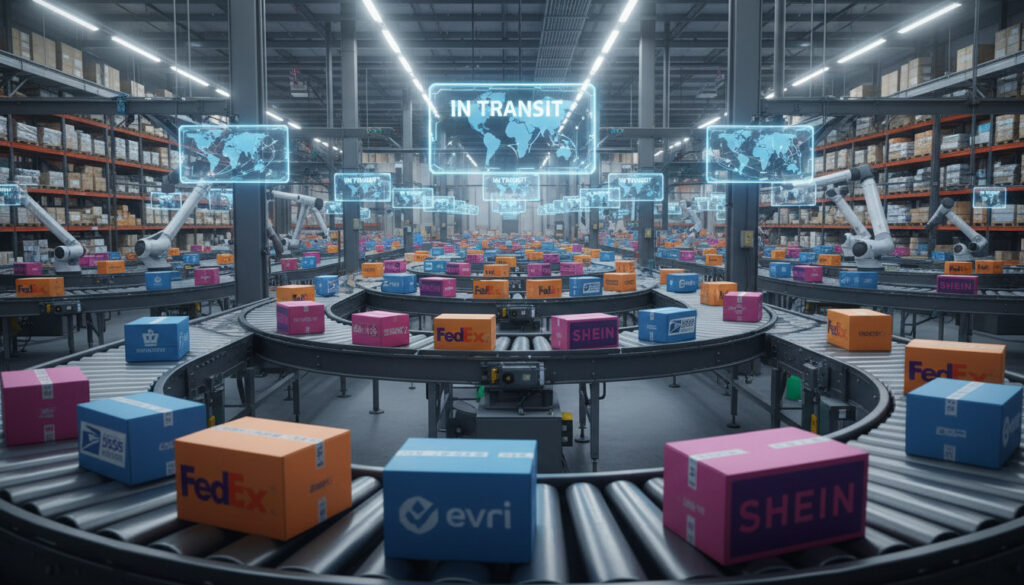
What Does In Transit Mean – USPS, FedEx, Royal Mail, Evri & Shein Guide
When a package shows “in transit” on tracking platforms, it indicates the item has departed its origin facility, been accepted by the carrier, and is actively moving through the logistics network toward its destination. According to FedEx official documentation, this status means the package is traveling through the carrier’s infrastructure but has not yet reached the final local facility responsible for delivery.
This designation encompasses multiple operational stages, including sorting at distribution centers, long-haul transportation via truck, aircraft, or rail, and transfers between regional hubs. As noted by logistics analysts, the package may remain stationary at a facility awaiting the next transport leg while still displaying this status. The term applies universally across domestic and international shipments, though specific interpretations vary by postal service or courier.
Understanding these distinctions proves essential for managing delivery expectations, particularly when tracking items through major carriers like USPS, FedEx, Royal Mail, Evri, or fashion retailers such as Shein that utilize partner logistics networks.
What Does ‘In Transit’ Mean in Shipping?
- Definition: Package accepted by carrier and en route through the network
- Status Trigger: Departure from origin warehouse or seller facility
- Common Carriers: USPS, FedEx, Royal Mail, Evri, and Shein partners
- Next Step: Arrival at destination hub or “Out for Delivery” scan
- Status indicates network movement rather than constant physical motion
- Updates typically occur at scanning intervals rather than in real-time
- International shipments include customs processing under this designation
- Duration varies significantly by geographic distance and service level selected
- “In transit” persists until the package reaches the final delivery hub
- Tracking accuracy depends on specific carrier scan frequency protocols
- Weather events and logistical disruptions routinely extend this phase
| Carrier | In Transit Meaning | Typical Duration |
|---|---|---|
| USPS | En route between facilities; updates every ~24 hours | 1-5 days |
| FedEx | Moving within network; may be stationary at facility | 1-5 days |
| Royal Mail | Shipped from origin; progressing via sorting hubs | 1-7 days |
| Evri | In transport between regional depots | 2-5 days |
| Shein | En route via partner carriers (often USPS) | 5-14 days |
| General | Pre-delivery network movement toward destination | Hours to weeks |
What Does ‘In Transit’ Mean for USPS, FedEx, Royal Mail, Evri, and Shein?
USPS Definitions and Tracking Patterns
USPS utilizes “in transit” to indicate a package is traveling between postal facilities or cities, with status updates appearing roughly every 24 hours according to tracking specialists. The service includes granular sub-statuses such as “En Route to Next USPS Network Stop,” providing additional location context as items move through the postal network.
FedEx Network Status
FedEx defines “in transit” as active movement within their logistics infrastructure, though the company clarifies that this status can persist for several days and does not necessarily mean the package is currently inside a vehicle. The package remains on schedule for its expected delivery date unless operational delays occur.
Royal Mail, Evri, and Shein Interpretations
For Royal Mail and Evri, “in transit” indicates the parcel has shipped from origin and is progressing through sorting hubs or transport depots. Industry logistics standards suggest these carriers follow similar hub-based routing. Shein shipments frequently display this status while moving through international transit countries before reaching local couriers. Tracking platform documentation confirms that Shein often partners with USPS or local couriers for final delivery, inheriting their transit definitions.
Shein and similar retailers frequently utilize multiple logistics partners across international borders. A shipment marked “in transit” may transfer between ocean freight, regional carriers, and final-mile postal services like USPS before completion.
Does ‘In Transit’ Mean My Package Will Be Delivered Today?
No. The “in transit” status explicitly indicates the package has not yet reached the local delivery facility and therefore will not arrive today. Tracking specialists emphasize that this designation means the item remains en route to the destination hub rather than being out for last-mile delivery.
Delivery occurs only when the status changes to “Out for Delivery,” which typically happens the same morning the package reaches your local facility. Logistics documentation confirms that these represent distinct operational phases within the supply chain.
Packages displaying “in transit” require additional sorting and transportation time before reaching your local delivery vehicle. Expect arrival within 1-5 days rather than hours, depending on remaining distance and carrier processing schedules.
How Long Does ‘In Transit’ Typically Take?
The duration typically spans 1 to 5 days for domestic shipments, though this window expands significantly for international routes or external disruptions. Industry analysis indicates that long-haul transportation, customs inspections, and weather events can extend this period from hours to several weeks.
Distance from origin, service level selected, and network capacity all influence timing. Cross-border shipments through carriers like Shein may remain in this status for 5-14 days while clearing international transit points.
Domestic express services often resolve transit within 24-48 hours, while economy international shipping may require 2-3 weeks. Check carrier-specific estimates rather than general timelines for accurate forecasting.
What Is the Typical Journey of a Package Marked ‘In Transit’?
- Order Packed: Item prepared and labeled at origin facility
- Carrier Acceptance: Package enters postal or courier network; “in transit” status activates
- Hub Transfers: Movement between regional sorting facilities via truck or air
- Destination Arrival: Package reaches local delivery facility (status changes to “Out for Delivery”)
- Final Delivery: Item loaded onto delivery vehicle and transported to address
What Is Certain and Uncertain About ‘In Transit’ Status?
| Established Information | Uncertain or Variable |
|---|---|
| Package has left origin and entered carrier network | Exact current location between scan events |
| Item is moving toward destination hub | Specific arrival time at local facility |
| Status updates require physical scanning | Frequency of scan updates varies by carrier |
| Delivery requires “Out for Delivery” status change | Impact of weather or customs delays on timeline |
| International shipments include customs processing | Duration of customs hold periods |
Why Do ‘In Transit’ Updates Vary Between Carriers?
Logistics networks operate with distinct scanning protocols and infrastructure densities. USPS provides updates approximately every 24 hours as mail moves between facilities, while FedEx may maintain the “in transit” designation for days without intermediate scans if the package moves through continuous transport lanes. What Does In Transit Mean – Guide for USPS, FedEx & More examines these technical differences in depth.
International retailers like Shein add complexity by transferring packages between ocean freight lines, regional carriers, and national postal services. Each transition point represents a potential delay in status updates, as tracking systems must synchronize across different operational platforms. Carrier documentation notes that tracking information may lag behind physical movement.
Rural delivery routes and hub consolidation patterns further explain why identical tracking statuses can indicate different physical scenarios—actively moving on a highway versus awaiting sortation at a cross-dock facility.
What Do Official Carrier Sources Say?
“In transit means that your package is moving within the FedEx network and is going to be delivered on the scheduled delivery date if there are no transit delays.”
— FedEx Customer Support Documentation
Primary sources for transit definitions include:
- FedEx FAQ on tracking terminology
- USPS postal service tracking guidelines via postal box service analysis
- APL Cargo logistics industry standards
- First Mile international parcel definitions
- 17Track universal tracking platform documentation
What Should You Remember About ‘In Transit’?
“In transit” confirms your package has entered the carrier’s logistics network and is progressing toward its destination, though it has not yet reached the local facility required for final delivery. This status accommodates everything from active highway transport to stationary sorting at distribution hubs. For detailed carrier-specific interpretations, refer to What Does In Transit Mean – USPS, FedEx, Royal Mail Explained. Monitor tracking for the “Out for Delivery” designation to confirm same-day arrival.
Frequently Asked Questions
Why is my package stuck in transit for days?
Delays occur due to weather, customs, or network congestion. The package may be moving slowly between hubs or awaiting transport capacity without scanning updates. Contact the carrier if status exceeds 7 days without change.
Does in transit mean out for delivery?
No. “In transit” indicates the package is traveling between facilities. “Out for delivery” means it has reached your local facility and is loaded on the delivery vehicle for same-day arrival.
Can a package be in transit for two weeks?
Yes. International shipments, customs processing, or economy shipping services can extend transit to two weeks or longer. Cross-border routes and ocean freight typically require extended timeframes.
What happens after in transit status?
The status changes to “Out for Delivery” when reaching your local facility. Following successful delivery, the tracking updates to “Delivered” with timestamp and delivery location details.
Why does Shein stay in transit so long?
Shein ships internationally using multiple carriers. Packages travel via ocean freight or air cargo through transit countries before reaching local couriers, extending the transit phase significantly.
Is in transit the same as shipped?
Not exactly. “Shipped” typically means the seller dispatched the package. “In transit” confirms the carrier has accepted and is actively moving it through their network toward delivery.
What does “in transit arriving late” mean?
This sub-status indicates the carrier recognizes a delay beyond the original estimated date. The package remains in the network but will arrive later than initially projected due to operational disruptions.
More related posts
 Stanley Tucci: Cancer, Weight Loss, Net Worth, and Family Life
 Al Capone: Life, Crime, Prison, Death & Myths Explained
 Vlad Dracula: The Real History Behind the Legend
 Ella Fitzgerald: Biography, Songs, Legacy of First Lady of Song
 What Time Does Royal Mail Deliver – Hours Weekends 2025 Rules
 How Many Halloween Movies Are There? Complete Count (2025)
 Eye Specialist for Dogs Near Me: Ireland Vets Guide
 Lauren Silverman: From Divorce to Engagement with Simon Cowell