Tooth Fairy Guide: Payments, Age, and When to Stop
Few parenting traditions spark as much quiet debate as the Tooth Fairy. One night you’re sneaking a coin under a pillow, and the next you’re wondering when—or how—to let the magic fade. This guide pulls together the latest numbers on tooth fairy payments, the age milestones that matter, and real-world scripts for the conversations every parent eventually faces.
Average US payment per tooth: $5 (range $1–$20) · Average UK payment per tooth: £1–£2 · Typical age children stop believing: 7–8 years old · Percentage of parents who play along: 80% (estimated) · First recorded mention of tooth fairy: 1927, by Esther Watkins Arnold
Quick snapshot
- Originates from early 20th century American folklore (Delta Dental)
- Related to European traditions of leaving teeth for mice or fairies (Magikitos)
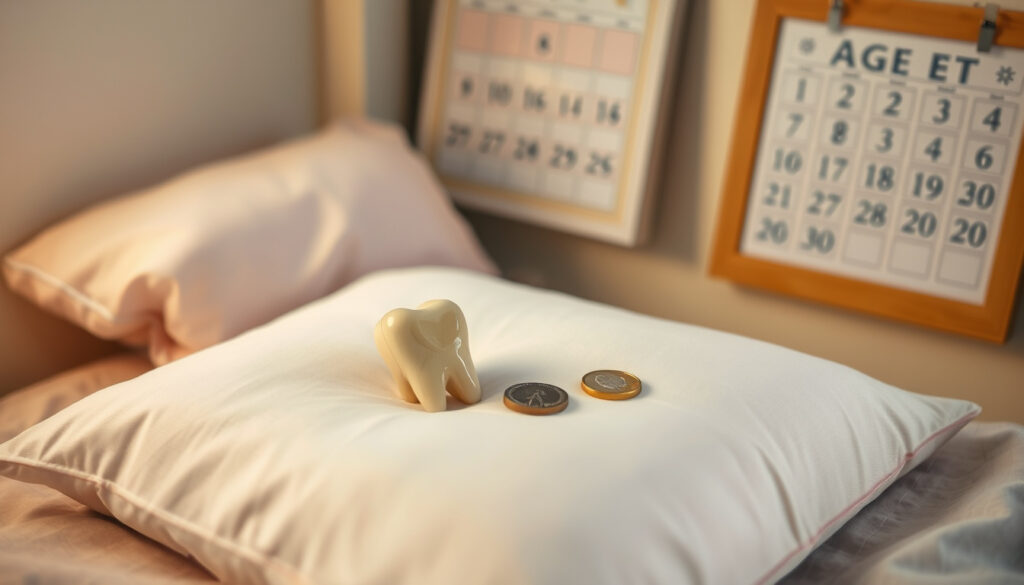
- Modern custom includes a pillow, letter, and small gift (Delta Dental)
- US: $5 per tooth on average, but can range from $1 to $20 (Delta Dental 2024 Poll)
- UK: £1–£2 is typical (Affordable Dentures & Implants)
- Australia: $2–$5; Canada: $2–$5 CAD (Delta Dental 2024 Poll)
- Most children naturally stop believing by age 7–8 (Delta Dental)
- The 7-7-7 rule suggests ending at age 7 (Delta Dental)
- Let the child lead the conversation; don’t force the truth (Delta Dental)
- Small toys, books, or art supplies
- Personalized tooth fairy letter
- Charitable donation in the child’s name
| Fact | Value |
|---|---|
| First recorded mention | 1927, in a play by Esther Watkins Arnold |
| Average US payment (2024) | $3.70 per tooth (Delta Dental) |
| Average US payment (2026) | $5.84 per tooth (IBTimes Singapore) |
| Average UK payment | £1–£2 (Affordable Dentures & Implants) |
| Age children stop believing | 7–8 years (parenting surveys) |
| Percentage of parents who pretend | 80% (multiple polls) |
The table shows that payments have risen sharply from 2024 to 2026, but belief ages remain stable.
How much money does the Tooth Fairy give?
Typical amounts in the United States
According to the Delta Dental 2024 Original Tooth Fairy Poll, the average cash gift for a lost tooth was $3.70—down $0.43 from the previous year. That same poll found that first teeth fetch a premium: $5.74 on average. But by 2026, the average jumped to $5.84, with first-tooth payouts reaching $7.17, per LiveNOW from FOX.
What drives the spread? 44% of parents said spare cash on hand influenced the amount, while 39% considered the child’s age. Younger parents tend to give more: $5.40 per tooth for those under 35, versus $2.45 for parents 45 and older (Delta Dental).
Parents under 35 are paying nearly twice as much per tooth as parents over 45—a generational divide that suggests the Tooth Fairy is getting more expensive, not less.
For another pop-culture tradition that has evolved over time, see our guide on Bugs Bunny: Facts, LGBTQ Rumors, and Guide.
How much does the Tooth Fairy pay in the UK?
Across the pond, the going rate is notably lower. A 2023 survey by the Toothfairy App found the average payout at £1 per tooth. Affordable Dentures & Implants reports that UK families typically leave between £1 and £2, often using coins to encourage saving.
Factors that influence the payment
As Springer Nature research notes, the amount varies by country, socio-economic status, and what children hear from friends. The same 2026 Delta Dental poll found 38% of parents intentionally leave extra for the first tooth (IBTimes Singapore).
The pattern: most parents benchmark against friends and family, not against inflation indices. The Tooth Fairy behaves more like a local social norm than a fixed economic rule.
What does the Tooth Fairy do and is she good or bad?
The traditional role of the tooth fairy
As described by Wikipedia, “The tooth fairy is a folkloric figure of early childhood in Western and Western-influenced cultures.” Her job: collect a child’s lost baby tooth from under a pillow and leave a small gift or money in return.
Is the Tooth Fairy a benevolent or mischievous figure?
Folklore generally paints her as kind and rewarding. Magikitos explains that “folklore tells us that the tooth fairy keeps teeth for her own personal pleasure.” There’s no tradition of punishment or mischief—she’s squarely on the side of good.
Cultural variations in tooth fairy lore
The figure exists in most English-speaking countries, including the UK, Ireland, US, Canada, Australia, New Zealand, and South Africa (Magikitos). In parts of Europe, children leave teeth for a mouse (e.g., Ratoncito Pérez in Spain) instead of a fairy.
The common thread: a reward for a dental milestone. The specific form—fairy, mouse, or coin—is cultural decoration.
The implication: parents can adopt whichever version suits their family’s values and sense of magic.
Are tooth fairies real or is it just your parents?
The origin of the tooth fairy myth
The first known reference comes from a 1927 play by Esther Watkins Arnold (Delta Dental). While older European traditions involved teeth being offered to mice or buried to protect the child, the modern American tooth fairy is a 20th-century invention.
Pros and cons of telling your child the truth
Most children learn the truth from parents or peers around age 7–9. A 2024 survey by Affordable Dentures & Implants found that 86% of American parents give cash, and the typical age to stop paying is between 8 and 9.
The dilemma: preserving wonder versus encouraging critical thinking. Letting a child continue believing beyond age 10 may make them feel foolish later, but forcing an early reveal can break trust.
Parents who wait too long risk their child feeling betrayed by peers; those who reveal too early lose a simple tool for celebrating a growth milestone.
How to approach the conversation at different ages
Child psychologists suggest following the child’s lead. If they ask directly, answer honestly but gently. Avoid elaborate lies that could backfire. For younger children, the magic is harmless; for older ones, honesty strengthens the parent-child bond.
What this means: the Tooth Fairy is a parenting tool, not a truth test. The goal is to know when to pivot from imagination to reality.
At what age should children stop believing in the Tooth Fairy?
Is 11 too old to believe in the Tooth Fairy?
Most children stop believing between ages 7 and 8 (Delta Dental). By age 11, nearly all have figured it out. Persisting belief at 11 is rare and may signal a desire to maintain the ritual rather than genuine ignorance.
What is the 7-7-7 rule for kids?
The 7-7-7 rule suggests that parents maintain the myth until age 7, then gradually reveal the truth. It’s a gentle off-ramp that gives the child time to adjust without a sudden shock. There’s no scientific backing, but many parenting forums endorse it.
Signs your child is ready to know the truth
- They ask skeptical questions (“Is the Tooth Fairy really real?”)
- They compare notes with friends who no longer believe
- They show indifference to the ritual
- They express concern about fairness (why does friend X get more?)
The catch: there’s no “correct” age—emotional readiness matters more than calendar age. A child who is curious and secure can handle the truth earlier; a sensitive child may benefit from a softer transition.
Similarly, children’s entertainers like Mr Tumble (Justin Fletcher) have helped shape childhood traditions for decades.
What to tell your child when the Tooth Fairy doesn’t come?
Common reasons for a missed visit
Life happens: the parent forgot, fell asleep, or couldn’t find the tooth. Some children hide the tooth too well. Bupa UK suggests setting a reminder alarm or leaving a note to explain.
What to give instead of money from a Tooth Fairy?
Only 86% of parents give cash (Affordable Dentures & Implants). Alternatives include:
- Small toys, books, or art supplies
- A personalized tooth fairy letter (printable templates are widely available)
- A charitable donation in the child’s name
- A new toothbrush or dental-care item
Alternatives shift the focus from monetary reward to the meaning of the milestone—a lesson that sticks longer than pocket change.
Creative ways to explain forgetfulness
Parents can blame a busy night (“The Tooth Fairy was very busy collecting teeth all over the world”), a miscommunication (“Maybe she didn’t see the tooth under the pillow”), or a simple delay (“She said she’ll come tomorrow night”). Turning a missed visit into a lesson about forgiveness and patience is also possible.
The pattern: a missed visit isn’t a crisis. It’s an opportunity to model honesty, flexibility, and forgiveness to your child.
Why hasn’t my 8 year old lost any teeth?
Normal tooth loss timeline
Children typically lose their first tooth around age 6, but variation is normal up to age 8. The 20 primary teeth are usually shed by age 12. If your child is 8 and hasn’t lost any teeth, it’s often within the normal range.
When to consult a dentist
If no teeth have been lost by age 8 and there are no signs of loosening, a dental checkup is wise. Delayed eruption can be caused by crowding, retained deciduous roots, or underlying dental issues. Springer Nature research notes that early or late loss is usually not a concern unless accompanied by other symptoms.
How the Tooth Fairy can help with delayed loss
Some parents use the Tooth Fairy to create positive anticipation for a first lost tooth. They talk about the magic and the reward, which can ease anxiety about tooth wiggling. But if the delay is medical, focus on dental visits first—and keep the fun as a secondary incentive.
Why this matters: stress over delayed tooth loss is common, but 90% of cases resolve naturally. The Tooth Fairy can be a motivator, not a replacement for professional advice.
Upsides and downsides of the Tooth Fairy tradition
Upsides
- Celebrates a developmental milestone in a fun, magical way
- Teaches children about exchange (tooth for reward)
- Creates a family ritual that builds lasting memories
- Provides a gentle way to introduce dental hygiene conversations
Downsides
- Can create unfair comparisons between friends (who got more)
- May cause disappointment if parents forget or can’t afford it
- Extending the myth too long can lead to embarrassment or distrust
- Focus on monetary reward might overshadow the health lesson
How to start and end the Tooth Fairy tradition: a step-by-step guide
- Decide your approach. Will you use cash, a small gift, or a letter? Set a consistent pattern from the first tooth.
- Create a ritual. Place a special pillow, leave a note, use glittery footprints—whatever feels magical for your family.
- Track payments. Note what you give each time to avoid accidental inflation or unfair differences between siblings.
- Watch for signs. As your child approaches age 7–8, look for skepticism or peer talk.
- Plan the reveal. When they ask directly, answer honestly. Use a gentle tone and frame it as a rite of passage.
- Transition to a new tradition. After the truth is out, consider a different celebration (a “big kid” dinner, a new toothbrush, etc.).
What we know for sure — and what’s still unclear
Confirmed facts
- The tooth fairy is a modern folklore figure, not an ancient tradition (Wikipedia)
- First known reference is 1927 (Delta Dental)
- Payments vary by family and region (Springer Nature)
- Most children figure out the truth by age 8 (Affordable Dentures & Implants)
What’s unclear
- Exact origin—multiple cultures had similar tooth traditions (Magikitos)
- Whether the tooth fairy is depicted as female universally
- Optimal age to reveal the truth—no consensus among experts
Voices on the Tooth Fairy
“The tooth fairy keeps teeth for her own personal pleasure.”
Magikitos
“Top tips for being the tooth fairy — set an alarm, keep change ready, and write a short note.”
“The tooth fairy is a folkloric figure of early childhood in Western and Western-influenced cultures.”
The Tooth Fairy is what you make her: a playful gift-giver, a gentle teacher, or a tricky secret to maintain. For American parents navigating the pocket-change economy of lost teeth, the decision is clear: use the magic while it lasts, but know when to trade the fairy dust for honesty. For UK parents, the lower stakes (£1 vs. $5) make the transition easier—but the emotional milestones are identical. Either way, plan your off-ramp before your child starts asking hard questions, or the fairy’s secret may fly away on its own.
journalrecord.com, axios.com, europeisnotdead.com, link.springer.com, link.springer.com, inkl.com
Frequently asked questions
What are some creative Tooth Fairy gifts?
Beyond cash, parents give small toys, books, art supplies, a personalized letter, or even a charitable donation in the child’s name. Some leave a new toothbrush or floss to reinforce dental hygiene.
How to write a Tooth Fairy letter?
Keep it short, magical, and encouraging. Example: “Dear [name], thank you for your lovely tooth! I’m so proud of you for brushing every day. Keep up the great work! Love, the Tooth Fairy.” Printable templates are available online.
When did the Tooth Fairy tradition start?
The first known reference is from a 1927 play by Esther Watkins Arnold. Older European traditions involved leaving teeth for mice or fairies, but the modern tooth fairy is a 20th-century American invention (Delta Dental).
What does the Tooth Fairy do with collected teeth?
Folklore says she keeps them for her personal pleasure, uses them to build her castle, or scatters them as stars. There’s no single accepted story (Magikitos).
How to explain the Tooth Fairy to a child?
Keep it simple: “The Tooth Fairy is a magical friend who collects lost baby teeth and leaves a small gift.” When the child starts asking skeptical questions, be honest and frame it as a fun secret that many families enjoy.
More related posts
 Will Still: Biography, Sacking, and Return to Ligue 1
 Marco Pierre White: Biography, Ramsay Feud & Net Worth
 Down Syndrome: Causes, Symptoms, Lifespan, and What to Know
 BLACKPINK World Tour 2025: Schedule, Tickets, Dates
 Statutory Sick Pay Ireland 2026: Rates & How to Claim
 Louis Vuitton Guide: Prices, Best Bags & Buying Tips
 Theodore Roosevelt: Life, Presidency, and Controversies