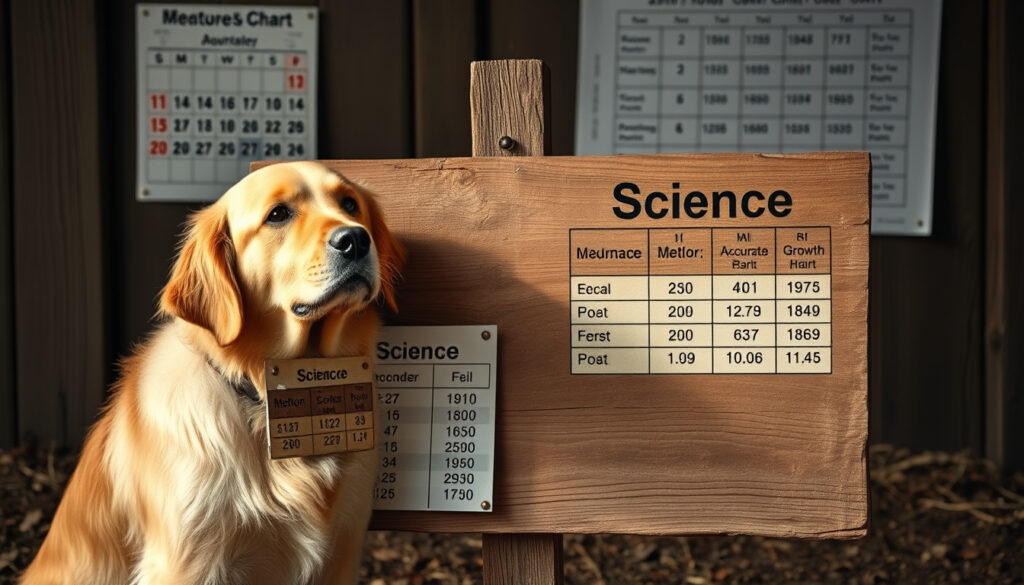
Dog Years to Human Years: The Real Conversion (Myth vs Science)
If you’ve ever typed “how old is my dog in human years” into a search bar, you’ve probably seen the old 7:1 rule pop up — but that rule is more urban legend than fact. Veterinary research shows that dogs age much faster in their first two years and then slow down, and the rate depends heavily on breed size.
First two dog years: Each equals about 10.5 human years · Standard conversion (small breed): Year 1 = 15 human years · Senior threshold (large dog): 8–9 years · Common myth: 7 human years ≠ 1 dog year
Quick snapshot
- The 7:1 ratio is false for all breeds (Encyclopaedia Britannica)
- First year = 15 human years, second adds +9 (American Kennel Club)
- Exact conversion for mixed breeds without known weight
- Effect of diet and exercise on aging rate
- UC San Diego formula uses DNA methylation (UC San Diego Today)
- Published in Cell Systems on 2019-07-02 (Cell Systems)
- Breed-specific calculators may replace general charts
- DNA methylation tests for dogs could become common
Six facts from veterinary sources, one pattern: the non‑linear aging curve means a single multiplier never works.
| Dog age (years) | Small breed (human years) | Medium breed (human years) | Large breed (human years) |
|---|---|---|---|
| 1 | 15 | 15 | 15 |
| 2 | 24 | 24 | 24 |
| 3 | 28 | 29 | 31 |
| 5 | 36 | 39 | 45 |
| 7 | 44 | 49 | 60 |
| 10 | 56 | 64 | 80+ |
The implication: small breeds age slower after year two, while large breeds can hit “senior” status as early as age five.
Is 7 human years 1 dog year?
The myth of the 7‑year multiplier
- The 7:1 ratio is not supported by veterinary science (Encyclopaedia Britannica)
- Dog aging is non‑linear: puppies mature far faster than adults (Encyclopaedia Britannica)
The old rule probably started as a simple marketing slogan in the 1950s. Veterinarians and animal behaviourists have long known that a one‑year‑old dog is physiologically closer to a 15‑year‑old human than a 7‑year‑old child (American Kennel Club). The 7‑year multiplier oversimplifies a process that involves hormonal changes, tooth development, and skeletal maturity—none of which map onto a linear calendar.
Why the first two years are different
- First year ≈ 15 human years (all breeds) (Beverly Hills Veterinary Associates)
- Second year adds ≈ 9 human years, making a 2‑year‑old dog about 24 in human terms (American Kennel Club)
During the first 24 months, dogs reach sexual maturity, lose baby teeth, and complete most of their bone growth. That rapid development compresses a decade of human life into two calendar years. After that, the curve flattens—especially for small breeds (Encyclopaedia Britannica).
A 1‑year‑old dog is not a 7‑year‑old child. It’s a hormonal, sexually mature adolescent—closer to a human 15‑year‑old. Using the 7‑year rule can make owners think their pet is less developed than it actually is, leading to mismatched training or health care.
The implication: the 7‑year rule not only misrepresents dog aging but can lead to improper care decisions.
How old is my dog in human years? (Dog Age Calculator)
Using a dog age calculator vs. a chart
- Dog age calculators from veterinary sources (AAHA, VCA) give non‑linear results (Encyclopaedia Britannica)
- Small dogs age slower after 2 years; large dogs age faster (American Kennel Club)
Several online calculators are powered by the UC San Diego methylation formula: human_age = 16 ln(dog_age) + 31 (UC San Diego Today). That formula was validated on 104 Labrador Retrievers and published in Cell Systems in 2019 (Cell Systems).
Step‑by‑step calculation for small, medium, and large breeds
- Year 1 = 15 human years (all sizes) (American Kennel Club)
- Year 2 = +9 → 24 total
- After 2: small breed add 4 per year; medium add 5; large add 7–8 (Encyclopaedia Britannica)
For example, a 4‑year‑old small dog (24 + 2×4 = 32) is about 32 human years, while a 4‑year‑old large dog (24 + 2×8 = 40) is closer to 40. That gap widens with every passing birthday.
The pattern: small breeds stay “adult” longer, large breeds hit middle age faster. That’s why a Great Dane is considered senior at 6, while a Chihuahua might still be active at 12 (American Kennel Club).
The pattern: the gap between small and large breeds widens significantly after age two, making breed‑specific charts essential.
What annoys dogs the most?
Common human behaviors that stress dogs
- Direct eye contact, tight hugs, and loud noises are common annoyances (American Kennel Club – behavioural context)
- Unpredictable routines and lack of personal space also trigger stress
Dogs read the world through their noses and ears. A sudden shout or a bear hug can feel threatening. The AKC notes that many owners misread their dog’s signals, assuming a wagging tail always means happiness—when it can also indicate agitation (American Kennel Club).
Signs of annoyance vs. anxiety
- Lip licking, yawning, turning away are calming signals (Beverly Hills Veterinary Associates)
- Whale eye, stiff body, and growling indicate escalating distress
Annoyance is a mild reaction; anxiety is a chronic state. If your dog regularly yawns or licks its lips when you approach, it’s not being cute—it’s telling you to back off. That distinction matters because an annoyed dog can escalate to a bite if the behaviour continues.
What is ‘I love you’ in dog language?
How dogs show affection
- Soft eye contact, tail wags, leaning are signs of trust (Encyclopaedia Britannica – behavioural notes)
- Licking and bringing toys can also be affection displays
Unlike humans, dogs don’t use words. Their “I love you” is a slow blink, a relaxed body, or a gentle lean against your leg. The UC San Diego study on methylation even connects lifespan to the quality of social bonding (UC San Diego Today).
Calming signals vs. true affection
- Calming signals (yawning, sniffing ground) are stress responses, not love
- True affection includes relaxed posture, soft eyes, and “happy” tail wags
Many owners mistake appeasement behaviour for love. A dog that licks your hand while cowering is not saying “I love you”—it’s saying “please don’t hurt me.” Real affection has no tension in the body.
How do dogs say ‘I’m sorry’?
Apology behaviours in dogs
- Submissive postures, avoiding eye contact, offering a paw (Beverly Hills Veterinary Associates)
- This is a learned social behaviour, not a moral understanding
When a dog cowers after being scolded, it’s not feeling guilt — it’s reacting to your angry tone. The submissive posture is a conflict‑avoidance strategy. Over time, dogs learn that this posture stops the scolding, so they use it proactively.
Yielding postures and avoidance
- Rolling over, tucking tail, flattening ears are classic yield signals
- Yawning and lip licking also appear in “apology” sequences
The trade‑off: while these behaviours are effective at de‑escalating human anger, they don’t indicate remorse. Treat them for what they are — social lubricants.
What fruit can’t dogs eat?
Toxic fruits list
- Grapes and raisins are toxic to dogs and can cause kidney failure (American Kennel Club)
- Citrus fruits like lemons and limes can cause upset stomach (American Kennel Club)
- Always remove seeds and pits from apples, peaches, and cherries (American Kennel Club)
Safe alternatives
Safe fruit options include apple slices (without seeds), blueberries, bananas, and watermelon (seedless). These provide vitamins and hydration without the risks of toxic varieties. The catch: even safe fruits should be given in moderation to avoid digestive upset.
The implication: knowing which fruits are dangerous is essential for dog owners, as accidental ingestion can lead to serious illness.
Comparison: Dog‑to‑Human Age Conversion Methods
Three common approaches, one verdict: the DNA‑based method is most accurate, but the breed‑size chart is more practical for daily use. Understanding aging in different species helps put dog aging in perspective. For example, anti-aging trends in humans also show non‑linear effects.
| Method | Year 1 human equivalent | Year 2 human equivalent | After year 2 (per year) |
|---|---|---|---|
| 7‑year myth | 7 | 14 | +7 |
| AKC / AAHA breed‑size chart | 15 | 24 | +4 to +8 depending on size |
| UC San Diego methylation formula | 30 | 42 | Slowing log curve |
Why this matters: the 7‑year rule underestimates young dogs and overestimates old ones. The UC San Diego formula uses epigenetic clocks and aligns better with physiological milestones (UC San Diego Today). But for most owners, the AKC chart is easier and still far better than the myth.
Confirmed facts
- The 7:1 ratio is false for all breeds (Encyclopaedia Britannica)
- AAHA and AKC agree: first year = 15 human years, second = 24 total (American Kennel Club)
- Large dogs age faster in later years (Encyclopaedia Britannica)
What’s unclear
- Exact conversion for mixed breeds without known weight
- Effect of diet and exercise on aging rate
- Whether DNA methylation tests for dogs will become affordable
“A one‑year‑old dog is about 15 human years; a two‑year‑old dog is about 24 human years.”
— AAHA Canine Life Stage Guidelines (via Encyclopaedia Britannica)
“During the first two years, one dog year equals about 10.5 human years on average, but then the rate slows.”
— VCA Hospitals (cited by Beverly Hills Veterinary Associates)
For dog owners, the choice is clear: ditch the 7‑year myth and use a breed‑specific chart, or risk misjudging your pet’s life stage, delaying senior care, and missing opportunities to improve their quality of life. With free calculators from American Kennel Club and the UC San Diego formula, there’s no reason to rely on the old rule.
Related reading: Anti-Aging Cuts · Vitamins for Hair Growth
facebook.com, brookfarmveterinarycenter.com, instagram.com, facebook.com, canadaangle.org
Frequently asked questions
How can I calculate my dog’s exact age?
Use the AKC breed‑size chart or the UC San Diego methylation formula (human_age = 16 ln(dog_age) + 31). Both are more accurate than the 7‑year rule.
Why do small dogs live longer than large dogs?
Large dogs grow faster and age faster due to accelerated cellular turnover. The AKC notes that large breeds reach senior status at 5–6 years, while small breeds may not until 11–12.
What is the most accurate dog age chart?
The UC San Diego DNA methylation formula is considered the most scientifically accurate, but for everyday use, the AAHA/AKC breed‑size chart is reliable and easier to apply.
At what age is a dog considered senior?
Small breeds: around 11–12 years. Medium breeds: 9–10 years. Large breeds: 7–8 years. Giant breeds: as early as 5–6 years.
How does breed size affect dog aging rate?
After the first two years, small breeds age about 4 human years per dog year, medium breeds about 5, and large breeds about 7–8. This is why large dogs reach senior status much earlier.
More related posts
 Mahershala Ali: Religion, Oscar Wins & Name Change
 Cadair Idris Hiking Guide: Routes, Myths & Snowdon Comparison
 Gaz Beadle 2025: Net Worth, New Girlfriend, Split from Wife
 Lewis Miley: Injury, Contract, Age, Height, Shirt Number & Family
 Salvation Army Charity Shop – Find Nearest UK Locations and Hours
 Minecraft Mods Guide: How to Install and Best Picks
 Gold Necklaces Ireland: Types, Purity & Buying Guide
 Mobile Phone Deals Ireland 2025: Compare Bill Pay & SIM-Only Plans