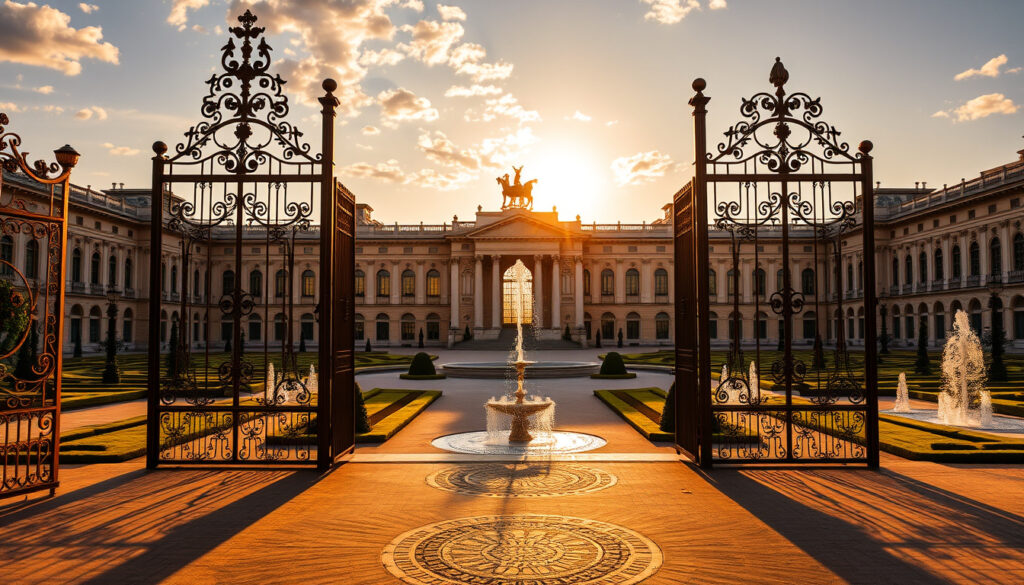
Louis XIV: The Sun King’s Reign, Legacy, and Fascinating Facts
If you’ve ever wondered how one man could rule for 72 years yet leave a legacy packed with contradictions, you’re not alone. Louis XIV, born on 5 September 1638 in Saint-Germain-en-Laye, transformed France into Europe’s cultural and military powerhouse while perfecting a system of absolute monarchy that still stirs debate.
Reign length: 72 years and 110 days (longest of any European monarch) ·
Legitimate children: 6, with only 1 surviving to adulthood ·
Acknowledged illegitimate children: At least 11 ·
Age at death: 76 ·
Palace of Versailles construction: Began in 1661, took decades ·
Major wars during reign: 4 (War of Devolution, Dutch War, War of the League of Augsburg, War of Spanish Succession)
Quick snapshot
- Nicknamed the Sun King (Château de Versailles)
- Reigned 1643–1715, over 72 years (Britannica)
- Centralized power at Versailles (Britannica)
- Total number of illegitimate children (some never acknowledged)
- Exact cause of the leg infection that led to gangrene
- Whether he actually said “L’État, c’est moi”
- 1638: Born at Saint-Germain-en-Laye
- 1643: Became king at age 5
- 1661: Began personal rule, started Versailles expansion
- Descendants still sit on European thrones (Spanish Bourbons)
- Versailles remains a UNESCO World Heritage site
- Academic debates about absolutism continue
Nine key facts, one clear picture: Louis XIV’s life fused immense power with deep personal fragility.
| Attribute | Detail |
|---|---|
| Full name | Louis Dieudonné |
| Born | 5 September 1638, Saint-Germain-en-Laye |
| Died | 1 September 1715, Versailles |
| Reign | 14 May 1643 – 1 September 1715 |
| Spouse | Maria Theresa of Spain (m. 1660) |
| Nickname | Sun King (Roi Soleil) |
| Children (legitimate) | 6 (only Dauphin Louis survived to adulthood) |
| Children (illegitimate) | At least 11 acknowledged |
| Successor | Louis XV (great-grandson) |
Why is Louis XIV so famous?
His reign as the longest in European history
- Louis XIV ruled from 1643 to 1715 — a span of 72 years and 110 days, the longest of any sovereign monarch in recorded history (Wikipedia).
- He took the throne at age 5 after his father Louis XIII died, with his mother Anne of Austria serving as regent (University of Kentucky).
Centralization of power and the Palace of Versailles
- In 1661, after the death of Cardinal Mazarin, Louis began personal rule, governing without a chief minister (HistoryExtra).
- He transformed the royal hunting lodge at Versailles into a sprawling palace that became the seat of power on 6 May 1682 (Britannica).
Military campaigns and cultural patronage
- His reign included four major wars: the War of Devolution (1667–1668), the Franco-Dutch War (1672–1678), the Nine Years’ War (1688–1697), and the War of Spanish Succession (1701–1714) (Biography.com).
- He heavily supported the arts, making French the preferred language of European diplomacy and fostering playwrights like Molière (Château de Versailles).
Louis XIV built the most powerful state in Europe, yet his wars drained the treasury — a trade-off that would haunt France long after his death.
The implication: the Sun King’s fame rests on a combination of sheer longevity, architectural ambition, and a centralized state that redefined monarchy.
TL;DR: Louis XIV’s 72-year reign and centralized rule at Versailles created a powerful state but also sowed the seeds of fiscal crisis that later fueled the French Revolution.
Why was Louis XIV called the Sun King?
Origin of the nickname from the ballet
- At age 15, Louis performed as the sun god Apollo in the Ballet de la Nuit, a lavish court performance (Château de Versailles).
- The role symbolised the sun as the source of life and order, mirroring the king’s self-image as the centre of the realm.
The sun as a symbol of power and Apollo
- Louis adopted the sun as his personal emblem, associating himself with Apollo, god of music, light, and prophecy.
- Versailles’ gardens, Hall of Mirrors, and iconography all reinforce the solar theme.
Use in propaganda and court culture
- State-sponsored engravings, medals, and poems repeated the sun metaphor, tying the king’s legitimacy to celestial inevitability (Britannica).
- Courtiers competed for the royal gaze — literally positioning themselves closer to the “sun” for favour.
The nickname wasn’t a casual flourish; it was a deliberate political tool that turned Louis into a living symbol of absolutism.
The pattern: the Sun King brand was built through performance, art, and relentless messaging — a blueprint for modern political branding.
How many illegitimate children did Louis XIV have?
Acknowledged illegitimate children
- Louis acknowledged at least 11 children born out of wedlock, according to historical records (Britannica).
- He legitimised many of them, granting titles and lands — a move that sometimes angered the high nobility.
Mothers of his illegitimate children
- His best-known mistresses were Louise de La Vallière, Françoise-Athénaïs de Montespan, and later Françoise d’Aubigné (Madame de Maintenon), whom he married secretly after the queen’s death.
- Each mistress bore several children, some of whom died young or were placed in convents.
Fates of his illegitimate children
- His legitimated sons received high offices: the Duke of Maine became commander of the royal guard; the Count of Toulouse was appointed admiral of France.
- Only a few lines survive today, notably through the House of Bourbon-Busset, which claims descent from one of Louis’s illegitimate sons.
The catch: while Louis provided for his illegitimate offspring, the practice created a parallel royal family that complicated succession after his death.
Did Louis XIV marry his cousin?
Marriage to Maria Theresa of Spain
- Yes, Louis married his first cousin Maria Theresa of Spain in 1660 (Britannica).
- She was the daughter of Philip IV of Spain, making them cousins through both French and Spanish branches of the Habsburgs.
The political alliance between France and Spain
- The marriage was a key condition of the Treaty of the Pyrenees (1659), which ended the Franco-Spanish war.
- It sealed a diplomatic shift, though it did not prevent future conflicts between the two countries.
The relationship between cousins
- Louis and Maria Theresa had six children, but only one son, the Dauphin Louis, survived to adulthood.
- The consanguinity likely contributed to the high infant mortality — a common issue among European royals.
What this means: cousin marriage was a dynastic tool, but it came at a human cost that weakened the direct Bourbon line.
Are there any descendants of Louis XIV today?
Legitimate line continuation through the Spanish Bourbons
- Yes, many European royal families descend from Louis XIV through his grandson Philip V, who became king of Spain in 1700.
- The current Spanish royal family (King Felipe VI) is a direct descendant, and the line also extends to the Grand Dukes of Luxembourg (Wikipedia).
Illegitimate descendants and the House of Bourbon-Busset
- Several illegitimate lines survive, notably the Bourbon-Busset family, which traces back to a legitimised son of Louis XIV.
- These lines are not recognised as part of the royal house but maintain noble status in France.
Modern claimants and DNA studies
- No direct male-line descendant of Louis XIV sits on the French throne today — the Bourbon pretender Louis Alphonse de Bourbon is a descendant of Louis XIV through a cadet branch.
- Reports of a supposed link between Louis XIV and Taylor Swift are speculative; no verified genealogical evidence supports it. The rumour likely stems from a misinterpretation of shared ancestors among Europeans (Britannica).
The trade-off: Louis XIV’s dynasty endured across borders, but the direct French line died out with his great-grandson Louis XV’s successors in the revolutions that followed.
What caused the death of Louis XIV?
The king’s final illness
- Louis XIV died on 1 September 1715 at Versailles, just days before his 77th birthday (Biography.com).
- He had been suffering from diabetes and recurrent bouts of gout.
Medical treatment in 1715
- A persistent leg infection developed into gangrene after physicians used traditional remedies (purging, bleeding) that proved ineffective.
- His doctors attempted amputation, but by then the gangrene had spread too far.
Autopsy findings and cause of death
- The autopsy confirmed gangrenous infection as the immediate cause, likely originating from an untreated wound or ulcer (Britannica).
- Modern historians note that untreated diabetes weakened his immune system, making the infection fatal.
The same absolute control Louis exerted over France could not halt a simple leg infection — a reminder that even the Sun King was mortal.
Why this matters: the king’s death left a four-year-old successor (Louis XV) and a regency that quickly dismantled many of his centralising policies.
Timeline of Louis XIV’s life and reign
- 1638 – Born at Saint-Germain-en-Laye (Britannica)
- 1643 – Becomes king at age 4; regency under Anne of Austria (University of Kentucky)
- 1661 – Begins personal rule after Mazarin’s death; starts Versailles expansion (HistoryExtra)
- 1667–1668 – War of Devolution (Biography.com)
- 1672–1678 – Franco-Dutch War (Biography.com)
- 1685 – Revocation of the Edict of Nantes (Château de Versailles)
- 1688–1697 – Nine Years’ War (War of the League of Augsburg) (Britannica)
- 1701–1714 – War of Spanish Succession (Britannica)
- 1715 – Death at Versailles (Britannica)
The implication: the timeline reveals a reign of extraordinary length punctuated by costly wars, religious persecution, and architectural ambition that defined an era.
What we know — and what remains unclear
Confirmed facts
- Reigned 72 years 110 days (Wikipedia)
- Married first cousin Maria Theresa of Spain (Britannica)
- Acknowledged at least 11 illegitimate children (Britannica)
- Built Versailles as a centre of power (Britannica)
- Known as the Sun King (Château de Versailles)
What remains unclear
- Exact total of unacknowledged illegitimate children
- Precise origin of the leg infection that killed him
- Whether the phrase “L’État, c’est moi” is authentic
- Any direct genealogical link to Taylor Swift (unsubstantiated)
- The exact level of debt incurred by the French crown at the end of his reign
What this means: while much is known about the Sun King, the gaps fuel ongoing historical debate about his personal life and the true costs of his rule.
Voices on Louis XIV
“L’État, c’est moi.”
— Attributed to Louis XIV
“He was a king who loved glory and wanted to be admired; he succeeded beyond all measure, but at a cost that France would later pay.”
— Duke of Saint-Simon, from his memoirs
“The age of Louis XIV was one of the most enlightened centuries the world had ever seen.”
— Voltaire, Le Siècle de Louis XIV
For modern France and the millions who visit Versailles each year, the Sun King’s legacy is a double-edged sword: a symbol of artistic brilliance and oppressive power. The choice for historians is clear: embrace the complexity, or risk oversimplifying one of Europe’s most transformative rulers.
paristickets.com, youtube.com, en.wikipedia.org, frenchmoments.eu, en.chateauversailles.fr, annatennmark.se
Frequently asked questions
What was the role of the Palace of Versailles in Louis XIV’s rule?
Versailles was both a home and a political machine. By moving the court there in 1682, Louis could monitor the nobility, reward loyalty, and centralise decision-making far from the turbulent streets of Paris (Château de Versailles).
Who were Louis XIV’s mistresses?
His most famous mistresses were Louise de La Vallière, Madame de Montespan, and later Madame de Maintenon, whom he married secretly. Together they bore several of his illegitimate children (Britannica).
What was the War of Spanish Succession?
Fought from 1701 to 1714, it was a European conflict triggered by the death of the Spanish Habsburg king Charles II. Louis XIV’s grandson Philip V inherited the throne, but the war drained French resources and marked the beginning of France’s relative decline (Britannica).
How did Louis XIV influence fashion and culture?
He imposed lavish dress codes at court, promoted French lace, silk, and wigs, and supported the Académie Française. French became the language of polite society across Europe (Château de Versailles).
What is the legacy of Louis XIV today?
He is remembered as the archetype of absolute monarchy, the builder of Versailles, and a patron of the arts. His reign set the stage for both French cultural dominance and the fiscal crises that led to the Revolution (Britannica).
How old was Louis XIV when he became king?
He was four years old when his father Louis XIII died in May 1643, though he did not assume personal rule until 1661 (University of Kentucky).
What was the Edict of Fontainebleau?
Issued in 1685, it revoked the Edict of Nantes, which had granted religious freedom to French Protestants (Huguenots). The move forced hundreds of thousands of skilled Huguenots to flee France, damaging the economy (Britannica).
Related reading
- William IV: The Sailor King – Another monarch whose reign shaped national identity.
- Theodore Roosevelt: Life, Presidency, and Controversies – A 20th‑century leader who centralised power in the United States.
More related posts
 India vs Pakistan Cricket Timeline: Full IND vs PAK History
 James Taylor: Biography, Sobriety, Relationships, and Net Worth
 Arthur’s Seat Climb: Time, Difficulty & Essential Tips
 Trisha Paytas: YouTube Fame, OnlyFans, Health, and Family
 Charlie McDermott: What Happened to Axl Heck? Wife & Music
 Michaela Strachan: Illness, Family, Career & Net Worth
 Lee Harvey Oswald: Lone Assassin or Conspiracy Figure