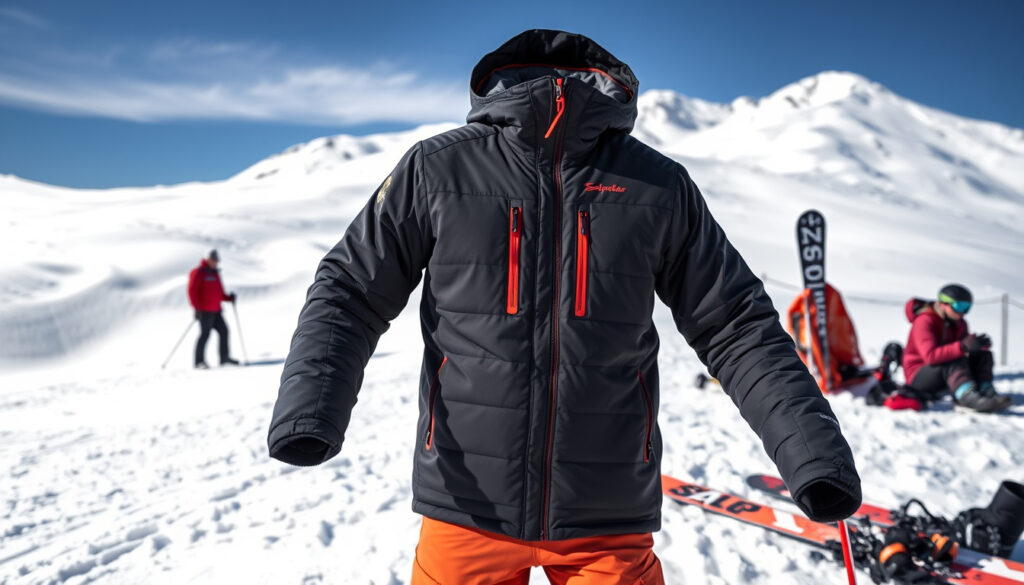
How to Choose the Best Ski Jacket: A Complete Buying Guide
Anyone who’s ever squinted at a ski jacket’s tag and wondered what “10,000mm” actually means isn’t alone. This guide decodes the technical specs, breaks down the jacket types, and highlights the features that matter most—so you can choose with confidence, not confusion.
Waterproof rating range: 5,000mm to 20,000mm · Insulation types: Down, synthetic, fleece · Common features: Powder skirt, pass pocket, helmet-compatible hood · Average price range: $100 to $500
Quick snapshot
- A minimum waterproof rating of 5,000mm is adequate for most skiing in dry, clear conditions (Snow+Rock (outdoor retailer)).
- Breathability of 10,000 g/m²/24h keeps you dry during active runs (Evo (gear guide)).
- Ski jackets typically include a powder skirt, pass pocket, and helmet-compatible hood (Mountain Warehouse (ski guide)).
- Whether a specific brand is “best” depends on individual body shape and local conditions.
- Exact waterproof rating needed varies by storm intensity and personal sweat rate.
- Waterproof ratings have moved from a basic 1,500mm minimum to 20,000mm+ for extreme conditions (Snow+Rock (retailer)).
- Recycled and more sustainable materials are becoming standard in new ski jacket lines.
The table below distills the essential specs every ski jacket should meet, according to gear experts.
| Feature | What to look for |
|---|---|
| Waterproof Rating | 10,000mm+ for reliable protection (Evo) |
| Breathability | 10,000 g/m²/24h+ (Evo) |
| Insulation Type | Down or synthetic (Level Nine Sports) |
| Seam Sealing | Fully taped or critical seams (Snow+Rock) |
| Hood Design | Helmet-compatible (Mountain Warehouse) |
| Powder Skirt | Essential for deep snow (Absolute-Snow) |
| Pass Pocket | Wrist or chest pocket for lift pass (Mountain Warehouse) |
| Ventilation Zips | Underarm vents for temperature control (Level Nine Sports) |
What’s the difference between a snow jacket and a ski jacket?
Snow jacket vs ski jacket: key differences
Snow jackets are often more casual and lack the technical features skiers rely on. Ski jackets are built for active movement: they include powder skirts, pass pockets, and helmet-compatible hoods (Mountain Warehouse). The trade-off: a snow jacket may look better in town but won’t keep you dry on a chairlift in a storm.
Is a ski jacket warmer than a winter jacket?
Not necessarily. Winter jackets (e.g., puffer coats) often use thick down or synthetic insulation for warmth, but they rarely breathe well enough for high-output skiing (Snow+Rock). Ski jackets balance insulation with breathability so you don’t overheat.
Is a puffer jacket ok for skiing?
A puffer jacket can work for a short, very cold day, but it lacks a powder skirt, has poor breathability, and may lose loft when wet (Level Nine Sports). For regular skiing, a purpose-built ski jacket is safer and more comfortable.
The difference isn’t just marketing: a snow jacket lacks the features that prevent snow from going up your back and keep your pass accessible. If you ski more than twice a season, the ski jacket pays off.
What type of ski jacket is best?
Insulated vs shell ski jackets
Insulated jackets come with built-in down or synthetic insulation and are best for cold climates where you want minimal layering. Shell jackets are just a waterproof/breathable outer layer and require separate mid and base layers (Evo). The choice depends on how much you want to adjust layers throughout the day.
3-in-1 ski jackets: pros and cons
A 3-in-1 jacket includes a removable inner layer (often fleece or a light puffer) so you can wear the outer shell alone or zip the layers together. It’s versatile for variable weather but can be bulkier than separate pieces (Mountain Warehouse).
How to tell if a jacket is good for skiing
Look for a powder skirt, helmet-compatible hood, ventilation zips, and a waterproof rating of at least 5,000mm (Absolute-Snow). Also check the seam taping: fully taped seams are better for wet snow (Snow+Rock).
The table below compares insulated, shell, and 3-in-1 jacket types across key metrics.
| Jacket type | Warmth | Waterproof | Versatility | Typical price |
|---|---|---|---|---|
| Insulated | High (built-in) | Good | Moderate | $150–$400 |
| Shell | Low (requires layers) | Excellent | High | $200–$500 |
| 3-in-1 | Variable | Good | Very high | $150–$350 |
Insulated jackets are simpler but can overheat on warm days. Shell jackets give you precise temperature control but require planning your layers before you leave the lodge.
Is it worth buying an expensive ski jacket?
Price vs performance: what you get for more money
Expensive jackets often use higher waterproof ratings (15,000–20,000mm), better breathability, and longer-lasting seam tape. They also come with longer warranties (Level Nine Sports). Budget jackets (under $150) can still be adequate for occasional skiing in mild conditions (Absolute-Snow).
Should I size up or down for ski jackets?
Ski jackets are designed to be worn over a base and mid layer. Size up if you plan to wear a thick fleece or down vest underneath. Size down if you prefer a trim athletic fit (Mountain Warehouse). Always try with your typical layers before buying.
What to wear under a ski jacket?
Base layer essentials
A moisture-wicking base layer (merino wool or synthetic) pulls sweat away from your skin. Never wear cotton: it stays wet and chills you (Snow+Rock).
Mid layer options
Fleece or a light down vest provides insulation. On warmer days, skip the mid layer entirely and rely on the jacket’s built-in insulation (Evo).
What not to wear when skiing
Avoid jeans, cotton hoodies, and bulky sweaters that restrict movement and don’t dry quickly (Level Nine Sports). Multiple thick layers can also make you overheat and sweat through your base layer.
“The biggest mistake beginners make is wearing one super-thick layer. You need to be able to zip and unzip to regulate temperature.”
— Ski instructor at a major resort
“A good base layer is the most cost-effective upgrade you can make. You don’t need a $500 jacket if your base layer is moisture-wicking.”
— Gear expert at Evo
What are the two golden rules of skiing?
Rule 1: Dress in layers
Layering allows you to adapt to changing conditions and your own exertion level (Absolute-Snow). Start with a base, add a mid, and finish with your ski jacket shell.
Rule 2: Stay hydrated and take breaks
Altitude and physical activity increase fluid loss. Dehydration leads to fatigue and poor decision-making (Snow+Rock). Take a 10-minute break every hour and drink water.
These rules aren’t old‑school folklore. Ski schools teach them because they directly reduce injury and improve the experience. Ignoring them is the fastest way to ruin a powder day.
Confirmed facts and open questions
Confirmed facts
- Ski jackets should be waterproof (minimum 5,000mm).
- Layering is essential for temperature regulation.
- Ski jackets have specific features like a powder skirt and pass pocket.
What’s unclear
- Whether a specific brand is best depends on individual fit and conditions.
- Exact waterproof rating needed varies by storm intensity.
Summary
The ski jacket you choose directly affects how warm, dry, and comfortable you stay on the mountain. For the casual resort skier, a mid-range insulated jacket with a 10,000mm waterproof rating and proper layering is enough. For the dedicated powder hound, a breathable shell with a high waterproof rating and ventilation zips is the smarter investment. The decision is clear: know your conditions, know your layering plan, and buy accordingly.
snowsift.com, enjoytheoutdoorlife.com, aussieskier.com, bowinsgarment.com, evo.com, quiksilver.com
Frequently asked questions
How do I clean a ski jacket?
Use a mild detergent designed for technical fabrics, wash on a gentle cycle, and tumble dry low or air dry. Avoid fabric softeners.
What is the difference between 2-layer and 3-layer construction?
2-layer jackets have a separate liner; 3-layer construction bonds the waterproof membrane to the outer fabric and liner, reducing weight and bulk.
Can I use a ski jacket for snowboarding?
Yes, ski jackets work well for snowboarding. Some riders prefer slightly longer jackets for extra coverage.
Are ski jackets machine washable?
Most are machine washable. Check the care label and use a gentle cycle with tech-specific detergent.
How often should I replace my ski jacket?
Every 3–5 years, or when the waterproof coating wears off and seam tape begins to peel.
What is the best ski jacket for extreme cold?
An insulated jacket with a high waterproof rating (15,000mm+) and taped seams, paired with a thick mid layer.
Do ski jackets come with a warranty?
Many brands offer 1–2 year warranties. Premium brands sometimes offer lifetime repairs for defects.
More related posts
 Troye Sivan: Biography, Health, Relationships, Career
 Bee Network Bus Strikes: Latest Status, Dates & Updates
 Lisa Rinna: Life After RHOBH, Daughter’s Health & Marriage
 Maya Jama Ruben Dias – Relationship Timeline and Facts
 Quincy Jones: Death, Legacy, Michael Jackson Fallout Explained
 Joani Reid: Suspension After Husband’s China Spy Arrest
 Joseph Gordon-Levitt: Nationality, Ethnicity & Current Status
 Elegant Wedding Guest Dresses – 2025 Trends, Colors and Etiquette