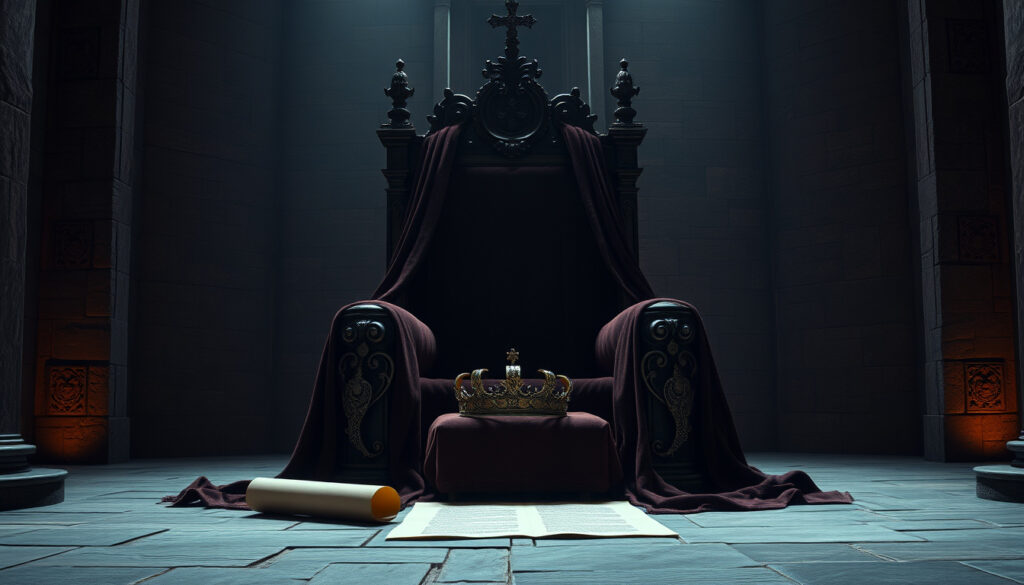
Ivan the Terrible: Biography, Reign, Son, and Legacy
Few figures in Russian history spark as much fascination as Ivan the Terrible. His name is synonymous with absolute power and brutal terror, yet the man behind the myth was also a reformer who transformed Russia into a centralized empire. Ivan IV was crowned the first tsar of Russia in 1547, a title that announced his claim to rule as a monarch equal to emperors, according to the Encyclopaedia Britannica (authoritative reference work). This article separates documented fact from later legend, drawing on historical records to explain how Ivan IV earned his fearsome reputation.
Reign: 1533–1584 ·
Title: First Tsar of All Russia ·
Crowning: January 16, 1547 ·
Legacy: Consolidated Russian state, known for terror
Quick snapshot
- Ivan IV was crowned Tsar in 1547 (Encyclopaedia Britannica)
- He established the Oprichnina in 1565 (Ukrainer (history platform))
- He killed his son in 1581 (Encyclopaedia Britannica (authoritative reference work))
- The exact cause of his mother Elena Glinskaya’s death (debated poisoning) (Wikipedia (community-edited encyclopedia))
- The full extent of his mental state is debated among historians (AskHistorians subreddit (community discussion))
- 1533: Became Grand Prince of Moscow (Wikipedia (community-edited encyclopedia))
- Ivan’s death in 1584 left a succession crisis, leading to the Time of Troubles (TheFamousPeople (biographical database))
Six key facts about Ivan the Terrible, one pattern: a ruler who defined his era through both reform and repression.
| Attribute | Detail |
|---|---|
| Full Name | Ivan IV Vasilyevich |
| Born | August 25, 1530, Kolomenskoye |
| Died | March 18, 1584, Moscow |
| Title | Tsar of All Russia |
| Years Active | 1533–1584 |
| Nickname | Ivan the Terrible (Ivan Grozny) |
What Did Ivan the Terrible Do?
Early reign and reforms
After his coronation in 1547, Ivan IV set out to modernize the Russian state. He introduced a new legal code (the Sudebnik of 1550), reorganized the military, and established the Zemsky Sobor, a kind of parliament. These reforms aimed to centralize power and reduce the influence of the boyar aristocracy. According to Wikipedia (community-edited encyclopedia), Ivan also expanded Moscow’s territory by conquering the Khanates of Kazan in 1552 and Astrakhan in 1556, securing the Volga River trade route.
The Oprichnina and terror
Beginning in 1565, Ivan created the Oprichnina—a separate territory under his direct control, enforced by a personal guard known as the Oprichniki. Encyclopaedia Britannica (authoritative reference work) describes the Oprichnina as a policy that divided the state into a special domain under the sovereign and a remainder governed separately. The Oprichniki carried out mass arrests, executions, and confiscations of land, primarily targeting the boyar class. At least one historian estimates that tens of thousands died during this period, though exact figures remain contested.
Ivan’s ruthless suppression of the boyars may have crushed traditional power centers, but it also destroyed the very institutions that could have provided stable governance after his death. The Oprichnina weakened the state’s administrative capacity, setting the stage for the Time of Troubles.
Who Were Ivan the Terrible’s Parents?
Father: Grand Prince Vasili III
Ivan’s father, Vasili III, was the Grand Prince of Moscow and a member of the Rurik dynasty. He died in 1533, when Ivan was only three years old, thrusting the boy into a turbulent political environment. Wikipedia (community-edited encyclopedia) notes that after Vasili’s death, Ivan became Grand Prince of Moscow as a child, but the real power rested with the regents.
Mother: Elena Glinskaya
Ivan’s mother, Elena Glinskaya, was a Lithuanian princess who served as regent after Vasili’s death. Her rule was marked by infighting among the boyars and military conflicts. She died in 1538, reportedly poisoned, though the exact cause remains debated. Encyclopaedia Britannica (authoritative reference work) states that Elena’s death ended the regency and left Ivan exposed to court intrigues, which historians believe contributed to his later paranoia.
What Happened to Ivan the Terrible’s Son?
The death of Tsarevich Ivan Ivanovich
In November 1581, Ivan killed his eldest son and heir, Tsarevich Ivan Ivanovich, in a fit of rage. The exact circumstances are unclear, but contemporary accounts suggest the tsar struck his son with a staff during an argument. This event is immortalized in Ilya Repin’s famous painting Ivan the Terrible and His Son Ivan. History.com (popular history channel) confirms that the killing of his son left Ivan without a capable successor, contributing to the political instability after his death.
The death of the tsarevich is often cited as the turning point that sealed Ivan’s legacy as a tyrant. It also created a succession crisis that would eventually lead to the end of the Rurik dynasty and the onset of the Time of Troubles.
Was Ivan the Terrible a Good Leader?
Contributions to the Russian state
Ivan’s reign saw Russia transform from a fragmented principality into a centralized empire. He introduced administrative reforms, expanded trade routes, and established Russia as a major power in Eastern Europe. The conquest of the Khanates of Kazan and Astrakhan opened up the Volga region to Russian settlement and trade. Encyclopaedia Britannica (summary) also credits him with conquering the Sibir Khanate in the east, though this expansion came at a high cost.
Costs of his autocratic rule
The later years of Ivan’s reign were defined by the Oprichnina terror, which devastated the economy and led to the depopulation of entire regions. The Livonian War (1558–1583) drained resources and ended in a costly failure. According to Ottawa Press (history blog), Ivan’s reign is commonly treated as spanning 51 years if counted from 1533 to 1584.
Ivan’s reforms built a powerful state, but his later terror and failed wars left Russia weakened and unstable, creating a contested legacy that historians still debate.
What Was Ivan the Terrible’s Reign Like?
Timeline of key events
- 1530: Ivan IV born (Encyclopaedia Britannica)
- 1533: Succeeds as Grand Prince of Moscow at age 3 (Wikipedia (community-edited encyclopedia))
- 1547: Crowned first Tsar of All Russia (History.com (popular history channel))
- 1552: Conquest of the Khanate of Kazan (TheFamousPeople (biographical database))
- 1556: Conquest of the Khanate of Astrakhan (Ottawa Press (history blog))
- 1558–1583: Livonian War (Wikipedia (community-edited encyclopedia))
- 1565–1572: Oprichnina period (Encyclopaedia Britannica (authoritative reference work))
- 1581: Ivan kills his son Tsarevich Ivan Ivanovich (Ukrainer (history platform))
- 1584: Ivan the Terrible dies (Encyclopaedia Britannica)
The timeline reveals a reign that can be divided into two distinct phases: the early reformist period (1547–1560) and the later repressive era (1565–1584). The shift was not gradual—it was marked by the abrupt introduction of the Oprichnina, which historians see as a response to Ivan’s growing paranoia after the death of his wife Anastasia in 1560.
Confirmed facts
- Ivan IV was crowned Tsar in 1547 (Encyclopaedia Britannica)
- He established the Oprichnina in 1565 (Ukrainer)
- He killed his son in 1581 (History.com)
- He reigned from 1533 to 1584 (Ottawa Press)
What remains unclear
- The exact cause of his mother Elena Glinskaya’s death (debated poisoning) (Wikipedia)
- The full extent of his mental state is debated among historians (Encyclopaedia Britannica)
- The number of Ivan’s wives is disputed (TheFamousPeople)
- The role of chronic pain from a spinal condition in his outbursts is inconclusive (AskHistorians)
“Ivan’s ruthless suppression of the boyars may have crushed traditional power centers, but it also destroyed the very institutions that could have provided stable governance after his death.”
— History.com (popular history channel)
“Ivan IV was a man of considerable intelligence and learning, but his later years were marked by severe mental instability and cruelty.”
— Encyclopaedia Britannica (authoritative reference work)
“Some historians suggest that Ivan’s chronic pain from a spinal condition may have contributed to his violent outbursts, though the evidence is inconclusive.”
Related reading: Prince Charles: King Charles III Biography, Health & Succession
en.wikipedia.org, ebsco.com, alchetron.com, britannica.com, prabook.com, bartleby.com, studysmarter.co.uk, fr.wikipedia.org, orizzontemedia.it
Frequently Asked Questions
What does “Terrible” mean in Ivan’s context?
The Russian word “Grozny” is more accurately translated as “formidable” or “awe-inspiring” rather than “terrible” in the modern sense. It reflects his power and authority, not necessarily his moral character.
How did Ivan the Terrible change Russia?
He centralized the Russian state, introduced a new legal code, expanded territory through conquest, and established the Oprichnina. His reign laid the foundation for the Russian autocracy that lasted until 1917.
What is the Ivan the Terrible painting by Repin about?
Ilya Repin’s 1885 painting “Ivan the Terrible and His Son Ivan” depicts the moment after Ivan fatally struck his son. It is a powerful representation of regret and the consequences of rage.
How many wives did Ivan the Terrible have?
Ivan had at least seven wives, though the exact number is disputed. His marriages were often politically motivated, and several ended in divorce or the wife’s death.
What was Ivan the Terrible’s relationship with the boyars?
Ivan viewed the boyars as a threat to his power. The Oprichnina was specifically designed to break their influence through terror, confiscation of property, and execution.
Is there a movie about Ivan the Terrible?
Yes, director Sergei Eisenstein made a two-part film “Ivan the Terrible” in 1944 and 1945, though the second part was banned until 1958. It is a classic of Soviet cinema.
What happened to the Oprichnina?
The Oprichnina was officially abolished in 1572 after it failed to achieve its goals and caused widespread devastation. Ivan even ordered the execution of some of its leaders.
More related posts
 Sanctuary: A Witch’s Tale Canceled – Is It Worth Watching
 Band 3 NHS Pay 2024 – Rates, Progression and Comparisons
 IKEA Wardrobes: Complete Guide to PAX, Doors, and Small Room Ideas
 Queen Elizabeth: Facts, Myths, and Unanswered Questions
 Nia Jax: Family, Biography & WWE Career Facts
 Labor Council Parking Charge Proposal – Details, Impacts and Status
 Iran Leader: Mojtaba Khamenei After Khamenei’s Death
 Mawaan Rizwan: Age, Brother, Partner, Sexuality & TV Career