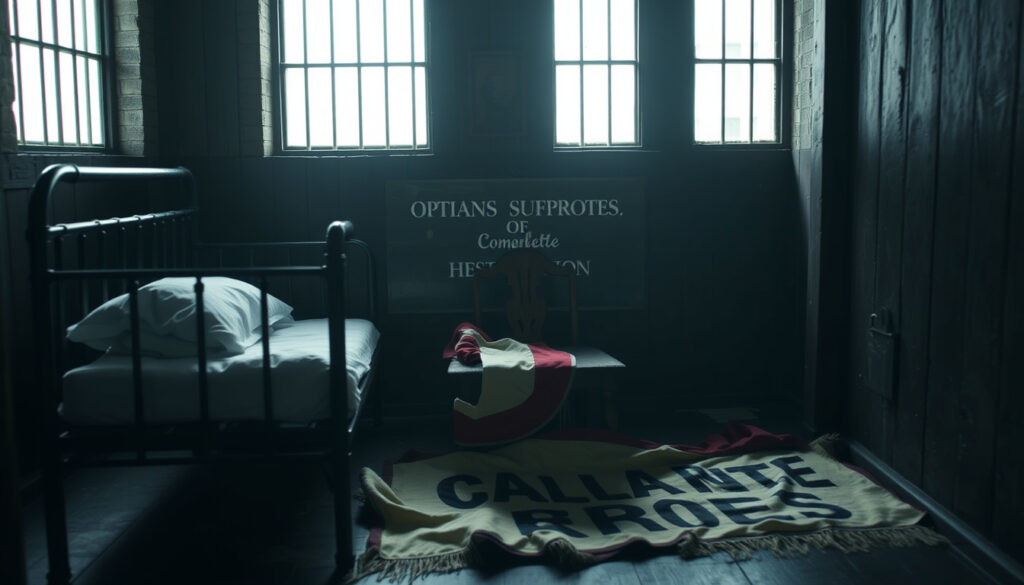
Emmeline Pankhurst: Biography, Quotes, Imprisonment, Death
Emmeline Pankhurst did not invent the argument that women should vote, but she made it impossible to ignore. As the leader of the Women’s Social and Political Union, she turned a protest movement into a direct challenge to the British political system.
Early Life
- Born 15 July 1858 in Manchester, England – BBC History
- Married Richard Pankhurst in 1879 – Britannica
- Involved in women’s suffrage from 1880 – UK Parliament
Activism
- Founded Women’s Social and Political Union (WSPU) in 1903 – National Park Service
- Led militant protests, hunger strikes – BBC History
- Imprisoned numerous times – UK Parliament
Legacy
- Died 14 June 1928 in London – Encyclopedia.com
- Women over 21 gained equal voting rights later that year – UK Parliament
- Statue in London’s Parliament Square – National Park Service
Key Achievements
- Campaign for women’s suffrage in the UK – Britannica
- Turned prison into a political platform – BBC History
- Introduced hunger strike as protest tactic – UK Parliament
Born: 15 July 1858 · Died: 14 June 1928 · Campaign: WSPU, 1903–1918
The core dates and records used below come from Britannica, UK Parliament, and the National Park Service.
| Fact | Record |
|---|---|
| Full name | Emmeline Pankhurst, née Goulden |
| Born | 15 July 1858, Moss Side, Manchester, England |
| Died | 14 June 1928, Hampstead, London, England |
| Age at death | 69 |
| Organization founded | Women’s Social and Political Union, 1903 |
| Number of imprisonments | At least 13, though often cited loosely |
| Children | Five, including Christabel, Sylvia, and Adela |
| Key achievement | Campaign for women’s suffrage in the UK |
1. Who Was Emmeline Pankhurst?
What is Emmeline Pankhurst most famous for?
Emmeline Goulden was born in Manchester in 1858 into a world that gave women fewer legal rights than men. She spent years inside the women’s suffrage movement before founding the Women’s Social and Political Union in 1903, a decision Britannica describes as a deliberate break with quieter parliamentary methods.
By the time the WSPU was formed, Pankhurst already understood how slowly Parliament moved when asked to change women’s lives. That earlier generation of activists had often been told to wait. Pankhurst, with her husband Richard Pankhurst, had supported more radical causes for years, and the shift from petitioning to direct action did not come from impatience alone; it came from the fact that legal pressure by itself had produced very little.
The implication: Her early faith in constitutional methods made her later radicalism more deliberate, not less.
2. The Strategy of “Deeds, Not Words”
What was Emmeline Pankhurst’s most famous quote?
The WSPU is best remembered for its motto, “deeds, not words”. The slogan is repeated in almost every account of Pankhurst’s career, and the National Park Service identifies it as the union’s motto. The fuller argument was that demonstrations and petitions had failed, so women would have to force the question through public disruption.
UK Parliament’s living heritage archive dates the most intense period of suffragette activity to the years before the First World War. During that period, the WSPU moved beyond public meetings and became famous for direct action: broken windows, arson attacks, and, above all, a refusal to accept that the law had the right to punish women for seeking a say in how that law was made.
The catch: The same motto that inspired activists also gave critics a ready-made caricature of the movement.
3. Prison, Hunger Strikes and the Cost of Militancy
How many times was Emmeline Pankhurst imprisoned?
Arrest did not stop the WSPU; it gave the movement a new kind of political drama. BBC History notes that Pankhurst and other suffragettes went on hunger strike while in prison, a tactic that pushed the state into a devastating response: forced feeding.
Hunger strikes turned local court cases into national stories. Pankhurst herself was imprisoned many times, often in poor health because of repeated force-feeding. The commonly repeated figure of thirteen arrests is worth treating with caution, because record-keeping was uneven and some arrests did not end in formal charge. But the pattern itself is well documented: arrest, prison, hunger strike, release, and rearrest.
By 1913, the government passed what became known as the “Cat and Mouse” Act, allowing suffragettes to be released on temporary licence as their health failed, then rearrested once they had recovered. The National Archives records this as a direct response to the hunger strikes, and it shows how quickly the protest movement had become a problem the authorities had to manage publicly.
What this means: The state’s escalating response proved the campaign’s effectiveness as much as its danger.
4. How the Vote Finally Came
How did Emmeline Pankhurst die?
The First World War changed the political calculation. Pankhurst suspended the militant campaign and supported the war effort, a position that split the suffrage movement. But the war also reshaped the country’s view of women’s contribution, and in 1918 Parliament passed the Representation of the People Act.
UK Parliament is careful to point out that the 1918 Act did not give all women the vote. Women over 30 with a property qualification could vote; men over 21 were largely included without that test. The movement’s victory was real but unfinished.
Pankhurst died on 14 June 1928. Weeks later, Parliament passed a much broader equal franchise law. She therefore did not live to see the final version of the change she had spent most of her public life demanding, though the 1918 vote was already a substantial break in the old rule.
Key dates in the suffrage campaign
- 1858: Born in Moss Side, Manchester – BBC History
- 1903: Founded the WSPU – National Park Service
- 1906: Members of the WSPU begin a more confrontational campaign – UK Parliament
- 1913: The government introduces a temporary “Cat and Mouse” scheme for released suffragettes – National Archives
- 1918: Some women over 30 receive the vote – UK Parliament
- 1928: Pankhurst dies shortly before the equal franchise law is completed – Encyclopedia.com
The pattern: Her death came just as the system she fought finally caught up with her demands.
5. What Still Gets Misremembered
The most common mistake is to treat “deeds, not words” as though Pankhurst invented the entire suffrage movement by herself. The slogan belongs to the WSPU, not to Pankhurst personally, and its exact wording was always a collective rallying cry rather than a single quotation.
Confirmed, fuzzy, or just wrong?
- Confirmed: Pankhurst founded the WSPU in 1903 – National Park Service
- Confirmed: She was repeatedly arrested and went on hunger strike – BBC History
- Confirmed: She died in 1928 as the final equal franchise law was being completed – Encyclopedia.com
- Fuzzy: The exact number of times she was imprisoned is repeated as “at least thirteen”, but sources do not always agree on what counts as a case – UK Parliament
- Fuzzy: The line “deeds, not words” is usually credited to Pankhurst, but it was the WSPU’s motto rather than a single original statement by her – National Park Service
Two lines people still quote
Deeds, not words.
— WSPU motto, recorded by the National Park Service
The 1918 act gave the vote to all men over 21 and to women over 30 who met a property qualification.
— UK Parliament
Pankhurst changed the rules of British politics by making women’s suffrage a question that could not be quietly pushed to the back of a drawer. She did not live to see every woman gain an equal vote, but the argument she forced into the open is the reason the question could not be buried again.
Related reading: Sylvia Plath: Biography, Poems, and Lasting Legacy · Keith Haring: Biography, Art, and Activist Legacy
en.wikipedia.org, en.wikipedia.org, londonmuseum.org.uk, parliament.uk, monash.edu, suffrageresources.org.uk, biography.com, ebsco.com
Frequently Asked Questions
Did Emmeline Pankhurst start the women’s suffrage movement?
No. She became the leader of the most high-profile militant organisation, the WSPU, but the campaign for women’s votes existed long before 1903.
What did “deeds, not words” mean?
It meant that the WSPU would combine peaceful campaigning with direct action, because private persuasion had failed.
Did Emmeline Pankhurst go on hunger strike?
Yes. BBC History records that she took part in hunger strikes while imprisoned.
Did she live to see women win equal voting rights?
She died in June 1928, shortly before the final equal franchise law was completed later that year.
What happened to the WSPU?
The First World War split the organisation, and after the partial 1918 vote the WSPU effectively ceased to operate as a mass campaign.
More related posts
 BBC Good Food Pancakes – Easy Classics to Fluffy Stacks
 Nikita Strictly: Age, Girlfriend, Health & Career Facts (2025)
 Amanda Staveley’s Biography, Net Worth, and West Ham Bid
 Jeremy Renner Accident, Recovery, and Life Story
 Emma Barton: EastEnders Actress vs Emmerdale Character
 Karl Darlow: Age, Nationality, Clubs, Salary & Grandfather
 Self Esteem: Definition, Signs, and 10 Ways to Improve
 When Do the Clocks Go Back 2025 – Dates for US, UK, EU, Australia