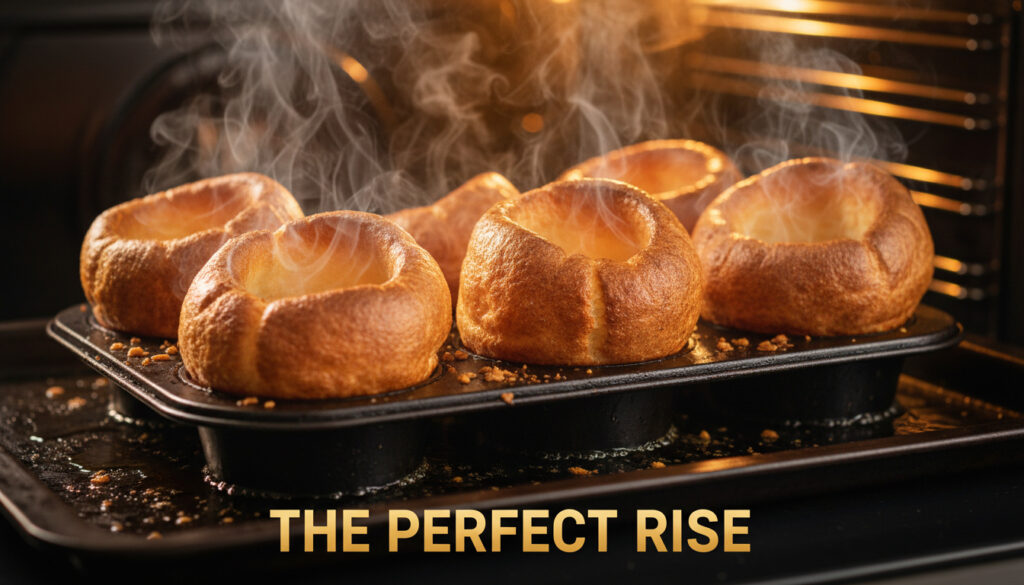
Yorkshire Pudding Recipe for 6 – Hot Fat for Perfect Rise
A traditional Yorkshire pudding for six servings relies on a simple equal-volume batter of eggs, flour, and milk, baked in fierce heat until crisp and golden. This British staple accompanies roast dinners but requires precise technique to achieve the characteristic hollow rise.
The classic ratio produces twelve individual puddings when using a standard muffin tin, ensuring two per person for a generous Sunday lunch. Success depends on temperature management and the interaction between cold batter and smoking hot fat.
How Do You Make Yorkshire Pudding for 6 People?
5 mins
25 mins
6 (12 puds)
Easy
Key insights for success:
- Equal volume measurements work reliably: one ramekin each of flour, eggs, and milk.
- Resting the batter for 30 minutes minimum allows gluten relaxation and better rise.
- Beef dripping provides traditional flavor, though sunflower oil serves as a neutral alternative.
- Cold batter hitting hot fat creates the steam explosion responsible for lift.
- Plain flour exclusively; self-raising agents produce dense, flat results.
| Origin | Yorkshire, UK (1737) |
| Key Ingredient | Beef dripping or high smoke-point fat |
| Batter Ratio | 140g flour : 4 eggs : 200ml milk |
| Yield | 12 medium puddings |
| Calories per pud | ~100 kcal |
| Essential Equipment | 12-hole metal muffin tin |
| Source Method | BBC Good Food |
For six people, combine 140g plain flour with four medium eggs and 200ml milk. Season with salt and pepper, then whisk until the consistency resembles double cream. Chill the batter for at least 30 minutes before baking.
What Temperature and Time for Perfect Yorkshire Puddings?
Optimal Heat Settings
Set your oven to 220–230°C (425–450°F) or gas mark 7–8. Position the shelf in the upper third to allow rising room. Preheat the empty muffin tin with fat for exactly ten minutes until the drippings shimmer and approach smoking point.
Timing Guidelines
Standard muffin-tin puddings require 15–20 minutes without opening the door. Large individual tins need 25–30 minutes, with a final five minutes turned upside down to crisp the base. Whole-pan versions baked in roasting tins take approximately 20 minutes at 200°C.
Maintain constant heat throughout baking. Opening the oven door before 15 minutes causes immediate deflation by releasing the steam pressure that creates the hollow structure.
Why Don’t My Yorkshire Puddings Rise and How to Fix It?
Common Structural Failures
Flat puddings typically indicate insufficiently heated fat or premature oven opening. Ensure the tin preheats for the full ten minutes until the fat sizzles. Self-raising flour causes collapse by creating the wrong type of lift; stick to plain flour only.
Fat and Flour Interactions
Batter consistency resembles double cream; thick mixtures fail to rise properly. Metal tins outperform silicone by conducting heat faster. If puddings collapse after removal, they were underbaked—return them briefly to the oven to finish setting.
Can You Make Yorkshire Pudding in a Muffin Tin or Other Ways?
Muffin Tin Technique
A standard 12-hole metal muffin tin accommodates the six-serving batch perfectly. Add half a teaspoon of fat per hole and fill each two-thirds full with batter. This produces individual portions with maximum surface area for crisping.
Alternative Methods
For a single large sharing pudding, pour all batter into a preheated roasting pan with meat drippings. Whole-pan Yorkshire recipes produce a different texture suitable for cutting into squares. Air fryer adaptations work at 180°C for 10–12 minutes, though results vary by machine. Vegetarian versions substitute sunflower oil for beef dripping without sacrificing rise. For those documenting variations, Another Word for Support – Synonyms by Context provides linguistic references.
Beef dripping and lard tolerate high temperatures better than butter or olive oil, which may burn and impart bitter flavors during the 220°C bake.
Bake completely and freeze for up to one month. Reheat from frozen at 200°C for 8–10 minutes until crisp. Alternatively, prepare batter the night before and refrigerate until needed.
How Did Yorkshire Pudding Become a British Icon?
- : First recorded recipe appears in The Whole Duty of a Woman, though under a different name.
- : Establishes as standard accompaniment to roast beef in Yorkshire, traditionally served as a cheap first course with gravy. Historical sources note it was used to fill diners before the expensive meat course.
- : Recognized globally as essential to the British Sunday roast, with variations including giant sharing versions and air-fryer adaptations.
What Is Certain Versus Flexible When Making Yorkshire Pudding?
| Established Requirements | Flexible Options |
|---|---|
| Plain flour is mandatory; self-raising produces poor results. | Fat type: Beef dripping, lard, or vegetable oil all work effectively. Scientific testing confirms multiple fats succeed. |
| Oven must reach 220°C minimum before baking begins. | Milk fat content: Semi-skimmed or whole milk both acceptable. |
| Tin must preheat with fat for 10 minutes. | Resting time: 30 minutes to overnight both improve texture. |
| Door must remain closed for first 15 minutes. | Serving style: Individual or whole-pan both traditional. |
Where Did Yorkshire Pudding Originate and Why?
Northern England developed this dish specifically to utilize dripping fat from roasting meat. Cooks placed the batter pan beneath the beef to catch the flavorful renderings, creating a savory, economical accompaniment. Historically, families served the pudding with gravy as a first course to reduce hunger before the expensive meat course, stretching limited resources.
The recipe’s survival depends on its simplicity—equal parts flour, eggs, and milk require no weighing scales when using volume measurements. This accessibility allowed working-class households to produce impressive results with minimal ingredients, cementing its place in British culinary heritage.
What Do Professional Chefs Recommend?
Hot fat is the absolute key. Get that smoking hot, don’t open the oven door, and you’ll get perfect Yorkshires every time.
— Jamie Oliver, Epic Yorkshire Puddings Recipe
The batter should be cold when it hits the hot tin. That’s what creates the dramatic rise.
How Should You Serve Yorkshire Pudding for Six?
Serve two hot puddings per person immediately from the oven alongside roast beef and rich gravy. For those documenting family recipes digitally, Convert PDF to JPEG – Free Online and Offline Guide offers useful formatting solutions, while proper storage techniques keep leftovers crisp for second helpings.
Frequently Asked Questions
What is the best flour for Yorkshire puddings?
Plain all-purpose flour works exclusively. Self-raising flour contains raising agents that create the wrong texture and prevent proper rising.
Can I prepare Yorkshire pudding batter in advance?
Yes. Rest batter in the refrigerator for 30 minutes up to overnight. This improves hydration and gluten relaxation, resulting in better texture.
Why do my Yorkshire puddings collapse after baking?
Opening the oven door early causes temperature shock. Bake fully until deep golden and crisp before removing, and cool on a wire rack.
Is beef dripping essential for authentic flavor?
While traditional recipes favor dripping for savory depth, sunflower or vegetable oil produces excellent rise and suitable flavor for vegetarian diets.
How do I scale the recipe for different group sizes?
Use equal volumes: one ramekin each of flour, eggs, and milk per four people. For six people, use 140g flour, four eggs, and 200ml milk.
Can I use silicone molds instead of metal?
Metal tins conduct heat superiorly and create better rise. Silicone tends to produce flatter results and softer bases.
More related posts
 Rami Malek Biography: Partner, Twin Brother & FAQs
 Michael Keaton: Facts, Health, Family, and Career (2025 Guide)
 Michaela Strachan: Illness, Family, Career & Net Worth
 Shea Lacey: Man Utd Winger Bio, Stats, Family & More
 Turkish Airlines Review: Is It a Good Airline? Pros and Cons
 Cineworld Didsbury: Showtimes, Screens, Parking & More
 Paige Spiranac: Partner, Net Worth, Age, Career Insights
 Michael Schumacher Condition: Facts on Coma, Speech, Mobility