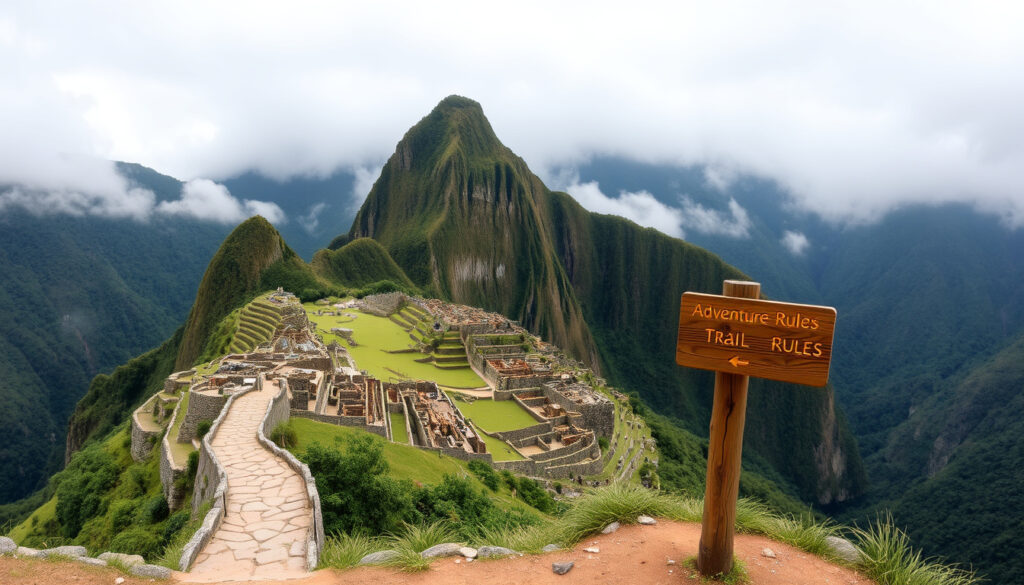
Machu Picchu Travel Guide: Safety, Difficulty, Rules & Tips
Few places stir the imagination like Machu Picchu, a 15th-century Inca citadel perched high in the Peruvian Andes that has drawn travelers for over a century. But beyond the postcard views lie practical questions about safety, difficulty, and rules – this guide covers the official regulations and what to expect.
Elevation: 2,430 m (7,970 ft) ·
Built: c. 1450 (Inca emperor Pachacuti) ·
UNESCO World Heritage Since: 1983 ·
Popular Hiking Route: Inca Trail (4 days / 3 nights)
Quick snapshot
- Machu Picchu sits at 2,430 m elevation in southern Peru (Official Machu Picchu website (government source))
- Built around 1450 for Inca emperor Pachacuti (Official Machu Picchu website)
- UNESCO World Heritage Site since 1983 (UNESCO Visitor Guide (unofficial site))
- Voted one of the New Seven Wonders of the World in 2007 (Official Machu Picchu website)
- The exact daily visitor cap changes seasonally; official figures point to 2,244 in 2020 but other guides cite 5,600 (Ministry of Culture of Peru (government notice))
- The number of steps on Huayna Picchu’s “Stairs of Death” isn’t formally recorded (Machu Picchu travel guide (independent information))
- c. 1450 – Construction begins under Pachacuti (Official Machu Picchu website)
- 1911 – Rediscovered by Hiram Bingham (Official Machu Picchu website)
- 1983 – UNESCO World Heritage listing (UNESCO Visitor Guide)
- 2007 – Named a New Wonder of the World (Official Machu Picchu website)
- A new circuit system launches in 2025, further controlling crowd flow (Machu Picchu travel guide)
- Ticket prices tend to rise yearly; early booking is essential (Regulations for visiting Machu Picchu (commercial site))
The table below summarises the essential numbers.
| Fact | Detail |
|---|---|
| Location | Cusco Region, Peru (SERNANP Historic Sanctuary of Machu Picchu (Peruvian protected areas authority)) |
| Elevation | 2,430 m (7,970 ft) (Official Machu Picchu website) |
| Built | c. 1450 (Official Machu Picchu website) |
| UNESCO Status Since | 1983 (UNESCO Visitor Guide) |
| Inca Trail Duration | 4 days / 3 nights (SERNANP Historic Sanctuary of Machu Picchu) |
| Ticket Price Range (2024) | $45–$80 depending on circuit (Essential Travel Guide (commercial site)) |
Why is Machu Picchu famous?
The citadel’s fame rests on three pillars: Inca engineering, a jaw‑dropping setting, and global recognition. Built as an estate for Emperor Pachacuti around 1450 (Official Machu Picchu website), it sits at 2,430 m in the Eastern Cordillera of southern Peru. American historian Hiram Bingham brought it to international attention in 1911 (Official Machu Picchu website). In 1983 it became a UNESCO World Heritage Site (UNESCO Visitor Guide), and in 2007 it was voted one of the New Seven Wonders of the World (Official Machu Picchu website).
The implication: the same fame that draws millions also forces strict crowd controls. Without them, the site would be overrun.
Is it safe to travel to Machu Picchu now?
Yes, with preparation. The main concerns are altitude, terrain, and crowds. The official Code of Conduct warns that visitors who violate rules can be expelled without refund (Official Machu Picchu website (government source)). Steep, uneven steps are the biggest physical risk; handrails exist only on parts of the route.
Altitude sickness affects many first‑timers. The site sits at 2,430 m, but many visitors arrive via Cusco at 3,400 m. Acclimatizing for 2–3 days in Cusco is strongly recommended. The Ministry of Culture set a daily cap of 2,244 visitors in 2020 (Ministry of Culture of Peru (government notice)), though other sources report higher limits during peak season (Essential Travel Guide). The trade‑off: fewer people mean less wear on the ruins, but get tickets early.
Altitude doesn’t discriminate. Even young, fit travelers feel it. Plan a slow ascent and stay hydrated.
The pattern: the site is safe if you respect its height and its rules. The biggest danger is underestimating either one.
Is it difficult to get to Machu Picchu?
Difficulty depends on your route. The classic Inca Trail is a 4‑day, 3‑night trek that reaches 4,200 m (SERNANP Historic Sanctuary of Machu Picchu (Peruvian protected areas authority)). For those who prefer less strain, a train from Cusco to Aguas Calientes followed by a bus gets you to the entrance in a day.
Are the stairs of death at Machu Picchu?
The so‑called “Stairs of Death” are on Huayna Picchu, the peak that looms behind the classic photo. The climb is a series of narrow stone steps with steep drops. It takes 45–60 minutes and is not for those afraid of heights (Machu Picchu travel guide (independent information)).
Do you need to be physically fit to go to Machu Picchu?
Moderate fitness helps, but many beginners and travelers over 70 complete the trail with proper pacing. The walk from the entrance to the classic viewpoint takes about 1–2 hours on terraced paths. The minimum age for the Inca Trail is 12; there is no upper age limit with a doctor’s approval.
Comparing difficulty: Kilimanjaro (5,895 m) is technically harder because of higher altitude and longer duration. Machu Picchu is shorter and steeper but more accessible for casual trekkers.
The catch: “difficult” is personal. If you can manage a day of walking at altitude, you can do this.
What is not allowed in Machu Picchu?
The official code of conduct bans a long list of items and behaviours. The aim is to protect the 15th‑century structures and keep the experience pleasant for everyone.
Can you wear jeans to Machu Picchu?
Yes, jeans are allowed, but they’re not recommended. The site is humid and rainy; quick‑dry trousers are more comfortable (Essential Travel Guide (commercial site)).
According to the official rules, visitors cannot bring backpacks larger than 40 × 35 × 20 cm, alcohol, selfie sticks, tripods, monopods, umbrellas, or baby strollers. Walking sticks are only allowed with rubber tips. Drones, smoking, and single‑use plastics are also prohibited (Official Machu Picchu website (government source)). Visitors must stay on marked paths and cannot touch or climb the stone structures.
Violating the rules can mean immediate expulsion with no refund. Don’t risk it for a selfie.
The trade‑off: these restrictions preserve the site, but they mean you have to pack light and plan ahead.
Where to pee on the Inca trail?
Toilets exist at trail checkpoints (Wayllabamba, Pacaymayo, Winay Wayna) and at the Machu Picchu entrance. There are no facilities on the trail itself between campsites. Permitted trekking companies include access to these bathrooms (SERNANP Historic Sanctuary of Machu Picchu). The official advice: use “bio‑bins” at campsites or carry out all waste. A pee bottle is practical for emergencies (Regulations for visiting Machu Picchu (commercial site)).
Planning your bathroom stops is part of the trek’s logistics – don’t set out without a plan.
Upsides
- Unmatched historical and scenic experience
- Well‑maintained trails and facilities
- Multiple route options for different fitness levels
- Guided tours ensure safety and context
Downsides
- Altitude affects nearly everyone; acclimatisation costs time
- Strict bag and gear restrictions make packing tricky
- Ticket prices and limited slots require early booking
- Toilet stops along the Inca Trail are scarce
How to plan your visit to Machu Picchu
- Acclimatise in Cusco – Spend 2–3 days in the city (3,400 m) before going higher (SERNANP Historic Sanctuary).
- Choose your route – Either the 4‑day Inca Trail or the train‑and‑bus option. Both require advance permits.
- Book tickets early – Daily slots sell out weeks ahead. Use the official portal or an authorised agency.
- Follow the packing guidelines – Leave large bags, drones, and selfie sticks at home (Official Machu Picchu website).
- Respect the rules on site – Stay on paths, don’t touch the walls, and carry out all waste (Official Machu Picchu website).
The pattern: planning is not optional. Every visitor who arrives prepared has a far better experience.
For more travel planning tips, check our guide on Disneyland Paris Hotels: Walk Times, Costs & Value and the Henry Danger: Complete Guide.
Confirmed facts vs. What’s unclear
Confirmed facts
- Machu Picchu is located at 2,430 m elevation in Peru (Official Machu Picchu website)
- Built in the 15th century for Inca emperor Pachacuti (Official Machu Picchu website)
- UNESCO World Heritage Site since 1983 (UNESCO Visitor Guide)
- Code of conduct bans large bags, selfie sticks, and smoking (Official Machu Picchu website)
What’s unclear
- Exact daily visitor limits vary by season and source (Ministry of Culture of Peru)
- The number of steps on the “Stairs of Death” is not officially listed (Machu Picchu travel guide)
- Ticket prices for 2025 circuits are not yet confirmed; estimates range from $45 to $80 (Essential Travel Guide)
- Exact opening hours and circuit durations may change; current sources suggest 6 a.m. to 3 p.m. entry (Regulations for visiting Machu Picchu)
The key takeaway: while many core facts are solid, some operational details are fluid – always check official sources before booking.
“Visitors who violate the listed rules can be immediately expelled without reimbursement and may face legal action if necessary.”
Official Machu Picchu website (government source)
“Entry to the Inca Trail network of the Historic Sanctuary of Machu Picchu is only through travel and tourism agencies authorized by the sanctuary headquarters.”
SERNANP Historic Sanctuary of Machu Picchu (Peruvian protected areas authority)
For first‑time visitors and seniors, the message is clear: this is an achievable destination if you plan around altitude, book early, and pack strategically. The rules exist to protect both you and the ruins. Ignore them and you risk expulsion or a ruined trip. For the traveller willing to prepare, Machu Picchu delivers an experience that few places on earth can match.
machupicchu.org, machupicchu.org, machupicchu.org, machupicchu.org, machupicchu.gob.pe, cuscoperu.com
Frequently asked questions
Do I need a guide to visit Machu Picchu?
Yes. Since 2025, guided tours are required and limited to 10 visitors per guide (Machu Picchu travel guide).
What is the best time of year to visit Machu Picchu?
The dry season (April to October) offers clearer skies and less rain. November to March is wetter but quieter.
How much does a trip to Machu Picchu cost?
Entry tickets range from $45 to $80 depending on the circuit (Essential Travel Guide). Flights, accommodation, and guide fees add considerably.
Can I visit Machu Picchu in one day from Cusco?
Technically yes, but it means a very long day. Most visitors spend at least one night in Aguas Calientes to acclimate and reduce rush.
What should I pack for a hike to Machu Picchu?
Pack light. Quick‑dry trousers, a rain jacket, sturdy shoes, a daypack under 40 L, and plenty of water. Leave drones, selfie sticks, and large bags at home (Official Machu Picchu website).
Is altitude sickness common at Machu Picchu?
Yes, especially for those who fly directly to Cusco. Symptoms include headache and shortness of breath. Acclimatising for 2–3 days in Cusco reduces the risk (SERNANP Historic Sanctuary).
More related posts
 Zlatan Ibrahimovic: Biography, Career, Net Worth, Age
 Tooth Fairy Guide: Payments, Age, and When to Stop
 Universal Credit Free Number 0345 – Official Helpline, Hours and Costs
 Ben Platt Biography: Career, Marriage, Net Worth & More
 M&S Cheshire Oaks – Hours, Café Menu, Parking Guide
 TommyInnit: Age, Real Name, Diagnosis, Relationships, and More
 Michael McIntyre: Biography, Family, Surgery & Earnings
 Ian Lavender: Dad’s Army star dies aged 77