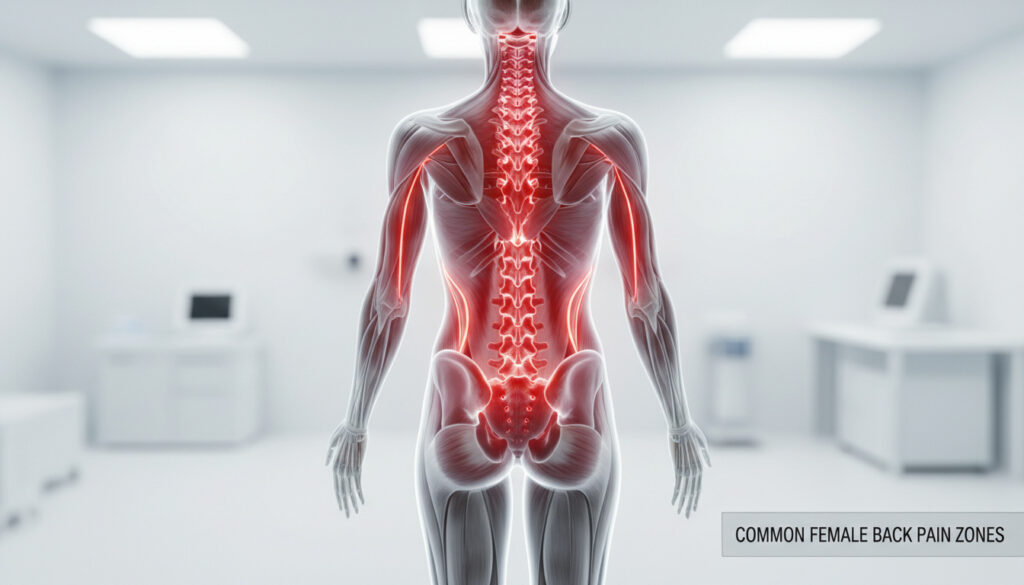
What Causes Back Pain in Females – Upper, Lower & Side Pain
Back pain manifests differently across female populations, with distinct patterns emerging in the thoracic region, lumbar area, and during specific physiological states such as gestation. While musculoskeletal strain affects both sexes, hormonal fluctuations, reproductive anatomy, and pregnancy-related biomechanical shifts create unique diagnostic categories for women. Research indicates that shoulder blade and upper back pain occurs frequently during pregnancy, particularly in the third trimester, driven by postural adaptation and ligament laxity.
The hormone relaxin, which prepares the pelvic girdle for delivery, simultaneously reduces stability throughout the spinal column, contributing to thoracic discomfort. Beyond pregnancy, conditions such as endometriosis and adolescent growth spurts present additional etiological factors that require gender-specific clinical consideration. Distinguishing between benign strain and serious underlying pathology remains essential for appropriate intervention.
Sudden onset pain, unilateral symptoms, and nocturnal presentation patterns each signal different underlying mechanisms. Understanding these variations helps clarify when conservative management suffices versus when immediate medical evaluation becomes necessary.
What Causes Lower Back Pain in Females?
Muscle overuse and ligament sprains from lifting, sudden movements, or prolonged sitting
Relaxin and estrogen fluctuations affecting pelvic stability and tissue elasticity
Endometriosis, pregnancy-related structural changes, and menstrual inflammation
Sciatica and disc herniation causing radiating pain down the lower extremities
- Sudden lower back pain typically stems from acute muscle strain or disc herniation rather than gradual degeneration
- Endometriosis frequently manifests as lower back or pelvic pain through ectopic tissue inflammation, though upper back involvement remains poorly documented
- Pregnancy weight gain increases lumbar load by 25-30%, significantly altering spinal curvature
- Postural adaptations during menstruation may exacerbate existing spinal conditions due to prostaglandin-related muscle tension
- Remedy approaches vary significantly between mechanical strain and hormonally-mediated pain
- Serum Total Bilirubin Level – Normal Range, Causes and Test Guide provides context on metabolic markers that may accompany systemic inflammation
| Factor | Description | Prevalence |
|---|---|---|
| Muscle Strain | Stretching or tearing of back muscles and tendons | Most common cause |
| Pregnancy | Hormonal and postural changes increasing lumbar lordosis | 50-70% of pregnancies |
| Endometriosis | Ectopic endometrial tissue growth causing inflammation | Approximately 10% of women |
| Sciatica | Nerve compression from disc herniation or stenosis | 5-10% of back pain cases |
| Osteoporosis | Bone density loss leading to compression fractures | Postmenopausal risk elevation |
| Disc Degeneration | Age-related breakdown of intervertebral cushioning | Increases with age |
What Causes Upper Back Pain in Females?
Upper back and thoracic pain between the shoulder blades affects women disproportionately during pregnancy and periods of postural stress. Clinical documentation shows this discomfort frequently intensifies during the third trimester, though onset may occur earlier.
Pain Between the Shoulder Blades
Thoracic discomfort in this region often originates from breast enlargement during pregnancy, which can add over two pounds of anterior weight by the third trimester, pulling shoulders forward and straining rhomboid muscles. Forward head posture from digital device use compounds this mechanical stress, creating myofascial trigger points.
Pregnancy-Related Mechanisms
The hormone relaxin circulates systemically during gestation, relaxing ligaments not only in the pelvic girdle but also throughout the thoracic spine. Physical therapy research indicates this ligament laxity reduces spinal stability, causing compensatory muscle spasm. Simultaneously, the growing uterus shifts the center of gravity forward, increasing mechanical advantage requirements for upper back muscles.
Sudden shoulder tip pain during early pregnancy may indicate ectopic pregnancy requiring emergency intervention. Upper right abdominal pain radiating to the shoulder blades accompanied by fever or jaundice suggests gallbladder complications demanding immediate evaluation.
Serious Underlying Conditions
While most upper back pain reflects musculoskeletal strain, specific presentations signal visceral pathology. Medical literature associates right-sided shoulder blade pain with biliary colic from gallstones. Preeclampsia after week 20 may present with shoulder discomfort concurrent with hypertension and edema. Rarely, aortic dissection produces acute nocturnal thoracic pain between the shoulder blades during the final trimester.
What Causes Back Pain on One Side in Females?
Unilateral back pain often indicates organ-specific pathology rather than symmetrical musculoskeletal strain. Left-sided discomfort may suggest kidney infection, ovarian cysts, or muscular imbalances from handedness dominance. Right-sided pain frequently correlates with hepatobiliary issues.
Left Side Pain
Renal pathology including pyelonephritis or nephrolithiasis typically manifests as sharp, colicky pain in the left flank radiating toward the groin. Gynecological conditions affecting the left ovary, such as cyst rupture or torsion, may refer pain to the ipsilateral lower back. Muscular strain from repetitive left-sided carrying of children or bags creates asymmetrical loading.
Right Side Pain
Gallbladder inflammation or cholelithiasis classically produces right upper quadrant abdominal pain radiating to the right scapula or shoulder blade. Hepatic inflammation may similarly refer pain posteriorly. Obstetric monitoring protocols emphasize that right-sided thoracic pain in pregnancy requires exclusion of HELLP syndrome and other hepatic complications.
Why Do Females Experience Back Pain at Night or as Teenagers?
Temporal patterns and developmental stages create distinct pain etiologies. Nocturnal symptoms often indicate inflammatory conditions or sleep-position biomechanics, while adolescent presentations reflect growth-related structural changes.
Nocturnal Back Pain
Pain intensifying during sleep suggests inflammatory spondyloarthropathy or mattress-related spinal malalignment. During pregnancy, research documents that nighttime thoracic pain in the final trimester requires careful evaluation to exclude vascular emergencies. Sleep position constraints during gestation limit pressure-relieving postures, compressing thoracic structures.
Side-sleeping with pillow support between the knees reduces lumbar torque. Wedge pillows elevating the upper body may decrease shoulder blade pressure during pregnancy by reducing forward shoulder collapse.
Adolescent Females
Teenage girls experience unique risk factors including rapid growth spurts altering spinal biomechanics, scoliosis development peaks, and heavy academic backpacks. Hormonal fluctuations during menstrual cycle establishment may contribute to muscle tension. Skin Cancer on Nose – Symptoms, Treatment and Prevention illustrates the importance of early health monitoring during adolescence, applicable to spinal health surveillance.
Sports specialization in female athletes creates repetitive strain patterns, while sedentary screen-based postures foster thoracic kyphosis. Ergonomic adjustments to study environments and backpack weight limitation below 10-15% of body weight reduce risk.
Current research lacks specific data linking endometriosis directly to upper back or shoulder blade pain. While hormonal mechanisms suggest possible referred pain patterns, evidence primarily associates the condition with lower back and pelvic discomfort, requiring gynecological consultation for clarification.
How Does Back Pain Progress During Pregnancy?
- First Trimester: Hormonal shifts introduce mild discomfort as relaxin production begins; early postural adjustments create upper back tension source
- Second Trimester: Accelerating weight gain and ligament stretching generate frequent aches; breast enlargement shifts shoulder position forward
- Third Trimester: Intense, persistent pain emerges from 25-30% body weight increase; fetal positioning creates nerve pressure and sleep disturbances clinical observations
- Labor Preparation: Relaxin peaks, maximizing ligament laxity; center of gravity shifts reach maximum forward displacement physical therapy analysis
- Immediate Postpartum: Sudden weight loss and breastfeeding posture introduce new strain patterns; hormonal levels begin normalization
What Is Certain vs. Uncertain About Female Back Pain Causes?
| Established Information | Information That Remains Unclear |
|---|---|
| Relaxin hormone causes systemic ligament laxity during pregnancy | Specific mechanisms of endometriosis-related upper back pain |
| Breast enlargement shifts thoracic posture forward | Prevalence rates of scoliosis-related pain in teenage females |
| Gallstones radiate pain to right shoulder blade | Long-term effects of hormonal contraceptives on spinal integrity |
| Ectopic pregnancy causes acute shoulder tip pain | Exact inflammatory pathways in menstrual-related thoracic pain |
| Third trimester carries highest musculoskeletal pain risk | Differential accuracy between nocturnal musculoskeletal and visceral pain |
Why Are Females More Susceptible to Back Pain?
Anatomical differences including a wider pelvis and lower center of gravity alter spinal biomechanics, increasing shear forces on the lumbar vertebrae. Hormonal cyclicity introduces monthly fluctuations in tissue elasticity that affect ligamentous support. The reproductive load of pregnancy adds significant anterior weight, requiring compensatory thoracic extension and upper back muscle recruitment.
Biomechanical research demonstrates that these factors combine to create unique stress patterns distinct from male populations. Additionally, conditions such as osteoporosis disproportionately affect postmenopausal women due to estrogen decline, increasing compression fracture risk.
What Do Medical Authorities Say About Female Back Pain?
Pregnant women experiencing sudden, severe pain between the shoulder blades require immediate evaluation to rule out aortic dissection or other cardiovascular complications, particularly when accompanied by neurological deficits.
Upper back pain during pregnancy frequently responds to posture correction, supportive sleep positioning, and gentle thoracic mobilization exercises supervised by physical therapists.
Immediate relief strategies including heat application, supportive brassieres, and activity modification provide symptomatic management while addressing underlying postural etiologies.
Key Takeaways on Back Pain Causes in Females
Lower back pain in females frequently originates from mechanical strain, pregnancy-related biomechanical changes, or reproductive conditions such as endometriosis, while upper back pain often reflects gestational postural shifts or referred visceral pain from hepatobiliary organs. Side-specific symptoms typically indicate unilateral organ pathology requiring targeted diagnostic evaluation. Teenage and nocturnal presentations demand distinct clinical approaches focusing on growth patterns and inflammatory markers. Persistent, sudden, or unilateral pain warrants professional medical assessment to exclude serious underlying conditions.
Common Questions
how to relieve severe lower back pain
Immediate relief includes applying heat or cold packs, maintaining gentle movement to prevent stiffness, and using supportive devices. Physical therapy targeting core stabilization and hip flexor stretching provides longer-term management. Medical consultation becomes necessary for pain persisting beyond two weeks or accompanying neurological symptoms.
how to treat lower back pain
Treatment depends on etiology: muscular strain responds to rest and anti-inflammatory measures, while disc-related pain may require targeted physical therapy or epidural interventions. Pregnancy-related pain improves with posture correction and prenatal yoga. Endometriosis-related pain requires gynecological management of the underlying condition.
how to relieve hip and lower back pain
Integrated approaches addressing both regions include pelvic tilt exercises, piriformis stretching, and sleep positioning with pillow support between the knees. Strengthening gluteal muscles reduces compensatory lumbar strain. Swimming and water therapy provide buoyancy that decompresses spinal structures while engaging core musculature.
is back pain between shoulder blades serious during pregnancy
While often resulting from benign postural changes, this pain requires immediate evaluation if sudden, severe, or accompanied by headache, visual changes, or upper right abdominal pain. These symptoms may indicate preeclampsia, gallbladder disease, or rare vascular emergencies requiring urgent intervention.
can teenagers prevent posture-related back pain
Prevention strategies include limiting backpack weight to 10-15% of body weight, maintaining screens at eye level to prevent forward head posture, and engaging in regular physical activity that strengthens posterior chain muscles. Scoliosis screening during growth spurts enables early intervention for structural abnormalities.
when should night back pain prompt immediate care
Nocturnal pain waking patients from sleep, especially when unrelieved by positional changes or associated with fever, unexplained weight loss, or neurological symptoms, requires urgent medical evaluation. These red flags may indicate infection, malignancy, or inflammatory spondyloarthropathy requiring specialized treatment.
More related posts
 George Farmer: Biography, Net Worth, and Life Now
 Ronnie Corbett: Death, Wife, Net Worth & Daughters
 Basketball Hoop Ireland: Compare Types, Prices & Retailers
 Paul Nicholas: Career, Family, Biggest Hit, and Life (2025)
 Andy Byron Astronomer: CEO Resigns After Coldplay Affair
 Black Coffee DJ: Biography, Disability, Net Worth & Family
 Chadwick Boseman: Death, Cancer, and Black Panther Legacy
 Mahershala Ali: Religion, Oscar Wins & Name Change