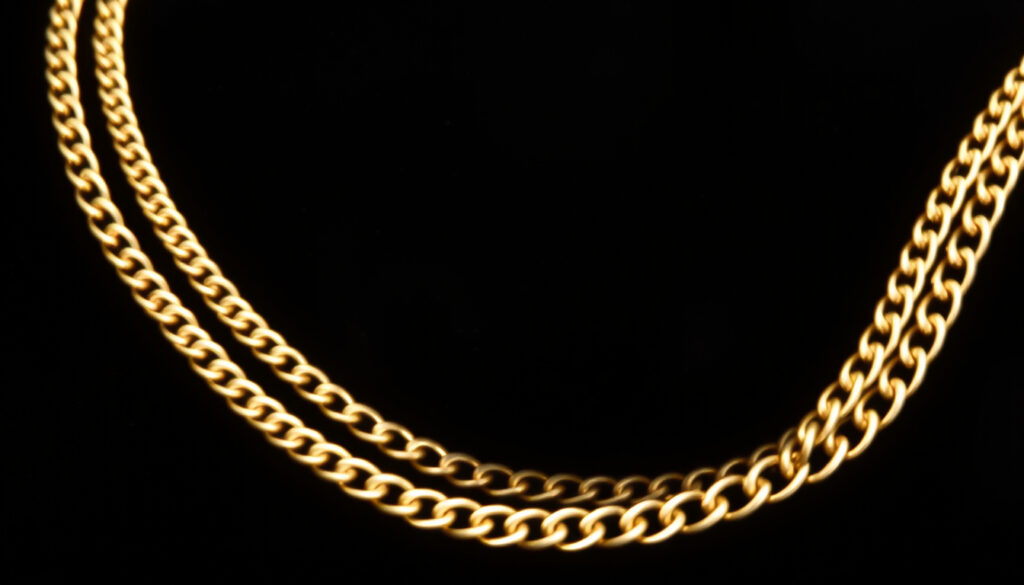
Gold Necklace Gold: 14k, 18k & 24k Buying Guide
Buying a gold necklace should be straightforward, but the moment you see stamps like 585, 750, or 916, the confusion sets in. Ireland has its own hallmarking rules—the Dublin Assay Office has been certifying precious metals since 1637 (Company of Goldsmiths of Dublin Assay Office)—yet many online guides ignore local standards.
Purest gold karat for necklaces: 24k (99.9% gold) · Most common karat for durability: 14k (58.3% gold) · Typical gold necklace weight (men): 5–20 grams · Average cost per gram (14k): $35–$50 USD · Gold necklace lifespan with proper care: Decades
Quick snapshot
- 24k: softest, deepest yellow (World Gold Council)
- 18k: durable, 75% gold (World Gold Council)
- 14k: hardest, 58.3% gold (Biddy Murphy Irish Gifts)
- Chain types: curb, rope, figaro, box (Martin Gear Jewellers)
- Pendant vs standalone (Martin Gear Jewellers)
- Lengths and layering (Martin Gear Jewellers)
- Top stores: Dylan Oaks, Tiffany, Momuse, Gear, Keanes (Company of Goldsmiths)
- Check hallmark for authenticity (Company of Goldsmiths)
- Online options with returns (Company of Goldsmiths)
- Clean with mild soap (Martin Gear Jewellers)
- Store in pouch (Martin Gear Jewellers)
- Avoid harsh chemicals (Martin Gear Jewellers)
Five key facts at a glance — the numbers that matter most when choosing a gold necklace.
| Label | Value |
|---|---|
| Purest gold necklace karat | 24k (99.9% gold) (World Gold Council) |
| Most durable gold necklace karat | 14k (58.3% gold) (Biddy Murphy Irish Gifts) |
| Average weight of a men’s gold chain | 10–15 grams |
| Average price range for 18k necklace | $300–$2,000 |
| Gold hallmarks in Ireland | Assay Office Dublin marks (Company of Goldsmiths of Dublin Assay Office) |
What Is the Best Gold Purity for a Necklace?
Three karat options dominate the market, each with a trade-off between purity and durability. For Irish buyers, the local hallmarking system uses fineness numbers (585, 750, 916) rather than karat stamps, so understanding both systems is key.
What is the difference between 24k, 18k, and 14k gold necklaces?
The difference lies in the percentage of gold: 24k is 99.9% gold, 18k is 75%, and 14k is 58.3%.
Which gold purity is best for a necklace?
The best purity depends on how often you plan to wear the necklace: 14k for daily, 18k for dressy, 24k for special occasions.
24k gold necklace gold
24k is pure gold — 99.9% gold with no other metals, according to the World Gold Council (World Gold Council). It has the richest yellow colour but is so soft that a necklace can bend or scratch under normal wear. In Ireland, 24k pieces are rare for daily chain necklaces; they are more common for special occasion pendants or investment bars.
18k gold necklace gold
18k contains 75% gold and 25% other metals (copper, silver, zinc). That blend makes it hard enough for most everyday necklaces while keeping a deep yellow tone. The Biddy Murphy Irish Gifts guide (Biddy Murphy Irish Gifts) confirms 18k corresponds to 750 fineness. It is the most common choice for Irish jewellery stores — a balance of beauty and strength.
14k gold necklace gold
14k is 58.3% gold (585 fineness). It is the hardest of the three, making it ideal for necklaces worn daily. Martin Gear Jewellers (Martin Gear Jewellers) notes that 14k resists bending and scratching better than higher karats. The downside: a slightly lighter yellow colour. For Irish buyers who want a durable chain that still looks like gold, 14k is often the best bet.
The implication: your choice between karats depends on how often you’ll wear the necklace and what you prioritise — colour, strength, or purity.
How to Choose a Gold Necklace for Women or Men?
Style and length vary by gender, but the underlying principles of karat and clasp quality apply to both.
Women gold necklace gold
Delicate chains — such as cable, snake, or box chains — are popular for women. Lengths of 16 to 18 inches sit at the collarbone and work well with pendants. Look for a sturdy clasp (lobster claw is best) and a karat that balances weight with durability: 14k or 18k are both suitable. Martin Gear Jewellers (Martin Gear Jewellers) advises checking the clasp for a hallmark stamp.
Men gold necklace gold
Men’s gold chains tend to be thicker — curb, rope, or Figaro styles in 20 to 24 inches. Weight typically ranges from 10 to 15 grams, but can go higher. Durability is paramount because thicker chains experience more stress. A 14k chain is the most common choice for men; 18k is also used but may be more prone to bending. The Company of Goldsmiths of Dublin Assay Office (Company of Goldsmiths of Dublin Assay Office) requires all gold jewellery sold in Ireland to be hallmarked, so any chain you buy from a reputable Irish store will have a verified purity stamp.
Men’s chains carry more weight and are worn more often — 14k gives you the strength to withstand daily wear, while 18k offers a richer colour but demands more care. For a working professional in Dublin, 14k is the safer bet.
The catch: while thicker chains like curb or rope are popular, the karat choice often determines how long the necklace maintains its shape.
Where to Buy Gold Necklaces in Ireland?
Ireland has a mix of high-street jewellery shops and online retailers. The key to a safe purchase is verifying the hallmark.
Gold chain necklace ireland
Top local stores include Dylan Oaks (Dublin), Tiffany & Co., Momuse, Gear Jewellers, and Keanes. These retailers sell hallmarked gold, meaning the piece has been tested by the Dublin Assay Office (Dublin Assay Office) using cupellation (fire assay). Online options like Rings from Ireland also offer Irish hallmarked pieces, but always check the return policy. The Company of Goldsmiths of Dublin Assay Office states that all gold items must be hallmarked — there are no weight exemptions. If a seller cannot show a hallmark, walk away.
When buying online, look for clear images of the hallmark stamp. The Irish Assay Office mark features a woman in Roman dress holding a harp in profile (Rings from Ireland Rings from Ireland).
Some Irish jewellers warn that a 14K stamp on a piece claimed to be Irish could be a red flag — Ireland uses fineness numbers (585) rather than karat stamps. Always verify with the local assay office.
The pattern: reputable Irish jewellers will always display the hallmark — if it’s missing, walk away.
How to Care for Your Gold Necklace?
Cleaning solutions
Use mild soap and warm water. Avoid harsh chemicals, chlorine, and abrasive cleaners. Gently scrub with a soft toothbrush, rinse, and pat dry. Martin Gear Jewellers recommends this method for all karats.
Storage methods
Store your gold necklace in a soft pouch or a lined jewellery box away from other pieces to prevent scratching. Do not keep it in a bathroom — humidity can weaken clasps over time.
When to remove jewelry
Remove your necklace before swimming (chlorine can damage the alloy), bathing, exercising, or any heavy activity. The World Gold Council advises that even 18k can deform under repeated stress.
What this means: consistent care extends the life of your necklace indefinitely.
What Are the Different Styles of Gold Chains?
Choosing a style affects not just appearance but also durability and cost. Here is a breakdown of the four most popular chain types.
Curb chain
Interlocking links that lie flat when worn. Curb chains are strong, widely used for men’s necklaces, and work well with pendants. Available in 14k and 18k.
Figaro chain
Alternating flat and round links (usually three round + one flat). Popular in both men’s and women’s designs. The flat links can show wear faster, so 14k is recommended for daily use.
Rope chain
Twisted links that create a rope-like texture. Very durable and visually striking. Rope chains are heavier, so they are often made in 14k to keep the weight manageable.
Box chain
Square links that form a smooth, flexible chain. Ideal for women’s pendants. Box chains can kink if bent sharply — 18k or 14k both work, but 14k is more resilient.
The implication: if you plan to wear a pendant every day, a curb or rope chain in 14k will give you the longest life. For a standalone fashion piece, an 18k Figaro or box chain offers a richer look with moderate care.
Purity Comparison: 14k vs 18k vs 24k
One table shows the real trade-offs between the three most common gold necklace purities.
| Attribute | 14k | 18k | 24k |
|---|---|---|---|
| Gold percentage | 58.3% | 75% | 99.9% |
| Fineness stamp | 585 | 750 | 999 |
| Durability | Excellent | Good | Poor (soft) |
| Colour | Light yellow | Deep yellow | Rich yellow |
| Best for daily wear | Yes | Yes (with care) | No |
| Typical price per gram (approx.) | $35–$50 | $50–$80 | Varies (premium) |
The pattern: lower karat means higher durability but paler colour, while higher karat offers richer colour but less strength.
Pros and Cons of Gold Necklace Purities
Upsides
- 14k: Durable, affordable, resistant to scratches — ideal for daily wear.
- 18k: Rich colour, still durable enough for occasional use, widely available in Ireland.
- 24k: Pure gold, no alloy — best for investment or special occasions.
Downsides
- 14k: Lighter colour may not appeal to those who want deep yellow gold.
- 18k: More expensive and less durable than 14k — can bend under heavy wear.
- 24k: Too soft for most necklaces; high cost and risk of damage.
The trade-off: none of these is inherently better — it depends on your lifestyle and budget.
How to Buy a Gold Necklace in Ireland (Step-by-Step)
- Decide on karat based on wear frequency: 14k for daily, 18k for occasional, 24k for special.
- Choose a style and length. Men: 20–24 inches, curb or rope. Women: 16–18 inches, box or Figaro.
- Check the hallmark. Look for the Irish Assay Office mark (woman with harp) and a fineness stamp (585, 750, etc.). The Company of Goldsmiths of Dublin Assay Office confirms compulsory hallmarking.
- Weigh the chain to calculate approximate gold value. A 10-gram 14k chain contains about 5.8 grams of pure gold.
- Buy from a reputable retailer — Dylan Oaks, Gear Jewellers, Keanes, or verified online stores with return policies.
- Request a receipt with the hallmark details for insurance and resale.
What this means: following these steps ensures you get an authentic, fairly priced piece.
Confirmed Facts vs What’s Unclear
Confirmed facts
- 24k gold is 99.9% pure gold (World Gold Council).
- 14k gold contains 58.3% gold alloy (Biddy Murphy Irish Gifts).
- Gold does not tarnish but can scratch (Martin Gear Jewellers).
- Irish hallmarking is mandatory for precious metals (Company of Goldsmiths of Dublin Assay Office).
What’s unclear
- Exact price fluctuations depend on market gold price — no fixed rate per gram.
- Best brand for longevity varies by use case and personal care habits.
- Optimal chain style for pendant durability depends on pendant weight.
- Long-term colour retention of 14k vs 18k can vary with alloy composition.
The implication: buyers should focus on verified facts and rely on reputable sources for price and durability data.
Expert Perspectives
“14k gold is the most practical for everyday wear because it resists bending and scratching.”
— Martin Gear Jewellers, Irish jewellery retailer (Martin Gear Jewellers)
“The Dublin Assay Office assays and hallmarks items of gold, silver, and platinum jewellery manufactured in Ireland or imported.”
— Company of Goldsmiths of Dublin Assay Office (Assay Office Ireland)
The pattern: both retailers and assay office confirm that hallmarking and karat choice are the pillars of a good purchase.
For an Irish buyer, the choice between 14k, 18k, and 24k comes down to one question: how often will you wear it? If the necklace will be on your neck most days, 14k is the clear winner — it holds up to the bumps and pulls of daily life while still looking like gold. For a dress piece you wear once a month, 18k gives you the colour and prestige. For the Irish buyer looking for a smart investment, the choice is clear: 14k for daily durability, 18k for elegance, and 24k only if you’re buying a piece you’ll rarely wear but want to preserve its value.
brilliantearth.com, orchid.ganoksin.com, langantiques.com, myirishjeweler.com, guardiangold.ca, reddit.com, assay.ie, civicpost.co.uk
Frequently asked questions
Can I shower with my gold necklace?
It’s best to remove it. Soap and shampoo can build up and dull the shine, and the necklace may slip off.
Does gold tarnish over time?
Pure gold does not tarnish. Alloy metals in 14k and 18k may oxidize slightly, but a quick clean restores the colour.
What is the difference between gold-filled and gold-plated?
Gold-filled has a thick layer of gold bonded to a base metal; gold-plated has a thin electroplated layer. Gold-filled lasts longer but is not solid gold.
How can I tell if a gold necklace is real?
Look for a hallmark stamp (e.g., 585, 750, 999). In Ireland, the Assay Office mark is mandatory. You can also take it to a jeweller for a density test.
Is it safe to wear a gold necklace every day?
Yes, especially if it’s 14k or 18k. Remove it during heavy activity or swimming to avoid damage.
What does 585 mean on a gold necklace?
585 means 58.5% pure gold – equivalent to 14 karats. It is the standard fineness mark used in Ireland for 14k gold.
How long does a gold necklace last?
With proper care, decades. 14k and 18k chains can last a lifetime if cleaned and stored correctly.
Are gold necklaces a good investment?
Gold holds value, but jewellery carries a markup. For investment, buy gold bars or coins. For a piece you’ll wear, consider the style and durability first.
Related reading: Diamond Ring Guide: Costs, 4 Cs, and Trends · Basketball Hoop Ireland: Compare Types, Prices & Retailers
More related posts
 Vince McMahon: Current status, net worth, controversies
 Down Syndrome: Causes, Symptoms, Lifespan, and What to Know
 Chris Evans DJ: Diagnosis, Career, Wife, Age & Net Worth
 Amy Childs: Weight Loss, Children, Health & Net Worth 2025
 Beetlejuice: The 1988 Film, Sequel, and Cultural Impact
 Mrs Rachel: Net Worth, Son’s Speech Delay, and More
 When Do the Clocks Go Back 2025 – Dates for US, UK, EU, Australia
 John Astin: Biography, Family, Adoption & Health Facts