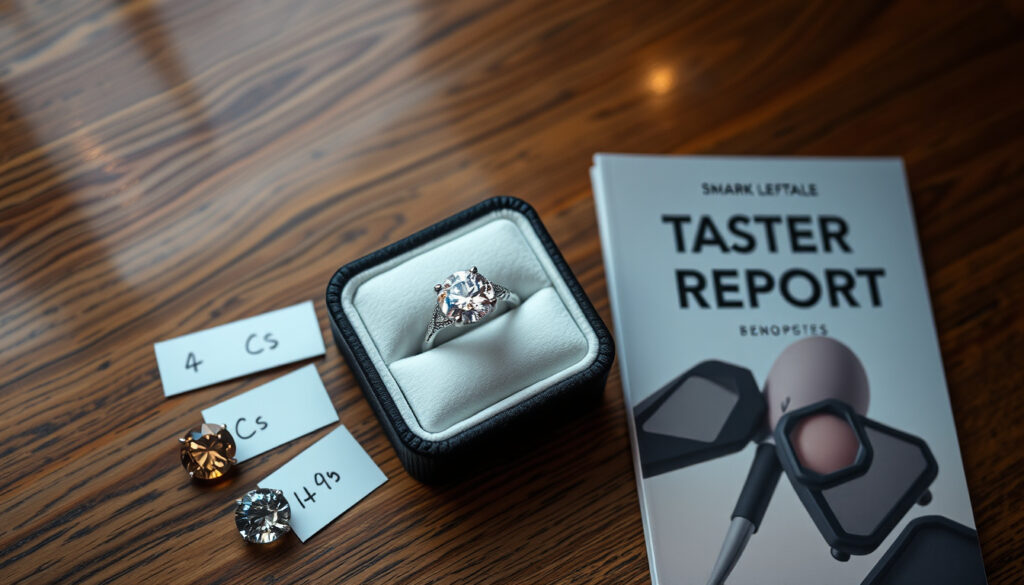
Diamond Ring Guide: Costs, 4 Cs, and Trends
Few purchases carry as much weight as a diamond ring—especially in Ireland, where the tradition runs deep and the cost can feel daunting. According to Tiffany & Co. Ireland (diamond education), the four Cs define quality, yet many buyers struggle to balance cut, colour, and budget. This guide breaks down the essentials, from Dublin pricing to the emerging trend of divorce rings, and even the astrological beliefs that influence who should wear diamonds.
Average price of 1-carat diamond ring in Ireland: €4,500 – €8,000 ·
Most popular diamond shape: Round brilliant ·
Percentage of engagement rings with diamonds: Over 80% ·
Average carat weight: 1.0 carat ·
First recorded diamond engagement ring: 1477
Quick snapshot
- The 4 Cs (cut, colour, clarity, carat) form the global standard for diamond quality assessment (Tiffany & Co. Ireland)
- Engagement rings are generally considered absolute gifts, meaning ownership transfers to the recipient (Kingsley Napley, family law solicitors)
- The legal treatment of an engagement ring after a broken engagement can vary depending on whether it was a conditional gift (Vardags, divorce law specialists)
- Recent coverage highlights the rise of divorce rings as a new jewellery category (The Diamond Store)
- Divorce rings are gaining popularity as a symbolic way to mark a new beginning after the end of a marriage (The Diamond Store)
Six key data points, one pattern: diamond quality and value are defined by a handful of industry standards and emerging trends.
| Fact | Value | Source |
|---|---|---|
| Diamond grading system | 4 Cs (Cut, Colour, Clarity, Carat) | Tiffany & Co. Ireland |
| Engagement ring legal presumption | Absolute gift in many jurisdictions | Kingsley Napley |
| Divorce ring trend | Celebrated as a new-life symbol | The Diamond Store |
| Tiffany acceptance rate | Only 0.04% of gem-quality diamonds accepted | Tiffany & Co. Ireland |
| Divorce ring article published | 26 January 2026 | The Diamond Store |
| Most expensive diamond sold at auction | The Pink Star – $71.2 million | Wikipedia |
What are divorce rings?
Divorce rings are a growing market: instead of hiding the old ring, some people buy a new ring to celebrate a fresh start. The Diamond Store (online diamond retailer) frames them as “a way to celebrate a new life after a breakup or divorce.” The trend is still small but visible, with social media and online jewellery stores driving awareness.
What finger to wear a divorce ring?
- Typically worn on the right hand, often on the ring finger, to distinguish it from an engagement ring worn on the left (The Diamond Store).
- Some choose the index or middle finger for a more personal statement.
Divorce Rings: 6 Styles To Celebrate A New Life
The Diamond Store’s guide lists stacking rings, eternity bands, and right-hand rings among the popular styles. The idea is to reclaim the finger and the symbolism.
The pattern: Divorce rings turn a painful association into a personal celebration, but the legal ground rules remain: the original ring is the recipient’s property, so the choice to wear, remake, or replace it is entirely yours.
Can Gemini wear a diamond ring?
Astrological beliefs about diamonds vary, but many modern sources suggest that Gemini, an air sign, can benefit from diamond’s grounding energy. Angara (online jeweller with Ireland-specific content) notes that diamonds are associated with the planet Venus and can enhance love and clarity for those born under Gemini.
Which zodiac should not wear diamonds?
- Some traditions advise Virgo against wearing diamonds, claiming the stone’s energy can create restlessness (Angara).
- These are cultural beliefs, not scientific facts.
Astrological ring advice is rooted in tradition, not evidence. For the buyer who loves both the sparkle and the story, the choice is personal—just be aware that no gemstone has been proven to alter fate.
What this means: If you’re a Gemini drawn to diamonds, wear them with confidence. If you follow astrological rules, check the recommendations—but don’t let a superstition override your taste.
How much is a 1 carat diamond in Ireland?
In Dublin and across Ireland, a 1-carat diamond engagement ring typically ranges from €4,000 to €10,000, depending on the 4 Cs. Tiffany & Co. Ireland sets a premium baseline, while local jewellers like Paul Sheeran (Irish diamond specialist) offer insights on balancing quality and cost.
Factors affecting diamond price
- Cut is the most important factor for brilliance (GIA (Gemological Institute of America)).
- Colour grades D–Z affect price exponentially.
- Clarity: Flawless to Included—eye-clean stones can save money.
- Carat weight: doubling carat weight roughly triples price.
- Lab-grown diamonds cost 30–40% less (Brilliant Earth (ethical jeweller)).
A 1-carat ring in Ireland can be had for less if you choose a slightly lower colour or clarity, or go lab-grown. The trade-off: natural diamonds hold their resale value better—though resale is never guaranteed.
Why this matters: For the €4,000–€10,000 price range, you have real choice. The smart buyer focuses on cut first and considers lab-grown to stretch the budget.
What are the 4 diamond rules?
The 4 Cs—Cut, Colour, Clarity, Carat weight—are the international language of diamond quality. Tiffany & Co. Ireland states that these four characteristics determine a diamond’s beauty and value. GIA (Gemological Institute of America) established the grading system in 1953.
4 Cs of Diamonds – Order of Importance
- Cut – dictates the diamond’s sparkle; the only C influenced by human skill.
- Colour – less colour (near colourless) is more valuable.
- Clarity – internal flaws are common; eye-clean is often enough.
- Carat weight – weight, not size.
Four characteristics, one trade-off: prioritizing cut yields the most visual impact for your money.
| C | What it measures | Best value tip | Source |
|---|---|---|---|
| Cut | Proportions and facet arrangement | Choose Excellent/Very Good to maximise brilliance | GIA |
| Colour | Degree of colourlessness (D–Z) | G–H range is white enough without the D-grade premium | The Knot |
| Clarity | Inclusions and blemishes | VS2 or SI1 is eye-clean | Brilliant Earth |
| Carat weight | Weight (1ct = 0.2g) | Lab-grown gives same weight for less | Brilliant Earth |
Many retailers push carat weight because it’s the most visible selling point. But a poorly cut 2-carat diamond can look duller than a well-cut 1-carat. GIA warns that cut is often the most overlooked C.
The implication: If you only remember one rule, remember cut. It’s the difference between a stone that captures light and one that just sits there.
Is a 2 carat ring considered big?
Yes, 2 carats is above the global average. In Ireland, the typical engagement ring is around 1 carat (Chupi (Irish jeweller)). A 2-carat ring stands out and commands a premium, often starting at €12,000 for a natural diamond.
How much should I spend on an engagement ring if I make $100,000 a year?
The old rule of spending 2–3 months’ salary is a marketing creation, not a law. With a €100,000 income, that would suggest €16,600–€25,000—but The Knot (wedding planning platform) reports that most couples now spend closer to one month’s salary. The better approach: set a budget that leaves room for a great cut and possibly a larger stone through lab-grown options.
- Natural 2-carat range: €12,000–€25,000 (depending on Cs)
- Lab-grown 2-carat range: €4,000–€8,000
What this means: Size matters, but budget matters more. Don’t let a number dictate your choice—let your priorities (cut, ethics, style) lead.
Comparison: Natural vs. Lab-Grown Diamond Rings
Three key differences, one recurring theme: price versus tradition.
| Aspect | Natural Diamond | Lab-Grown Diamond |
|---|---|---|
| Chemical composition | Pure carbon, formed over millions of years | Identical carbon, grown in weeks |
| Price (1-carat, similar quality) | €4,500–€8,000 | €1,500–€4,000 |
| Resale value | Holds some value (20–50% of retail) | Little to no resale value |
| Perception | Traditional, “real” diamond | Eco-friendly, lower cost |
Sources: Brilliant Earth on lab-grown identity; Angara on price ranges; Tiffany on natural diamond grading.
Specifications: Diamond Ring Buying Checklist
Seven specifications, one checklist for the informed buyer.
| Spec | What to look for | Source |
|---|---|---|
| Cut grade | Excellent or Very Good (GIA) | GIA |
| Colour grade | G–H for best value | The Knot |
| Clarity grade | VS2 or SI1 (eye-clean) | Brilliant Earth |
| Carat weight | 1–1.5 carats for budget + presence | Chupi |
| Certification | GIA or AGS report | GIA |
| Setting metal | Platinum or 18K gold (durable) | Paul Sheeran |
| Return policy | At least 30-day return | The Diamond Store |
Pros and Cons
Upsides
- Timeless symbol of commitment (Tiffany)
- Durable and suitable for daily wear (GIA)
- Lab-grown option offers ethical alternative (Brilliant Earth)
- Can be passed down as heirloom
Downsides
- High cost can strain budget (Chupi)
- Natural diamonds have ethical concerns (Brilliant Earth)
- Resale value is low (except for exceptional stones)
- Lab-grown diamonds hold no resale value
Steps to Buying a Diamond Ring in Ireland
- Set your budget. Decide on a maximum spend. Remember: financing options exist, but avoid stretching beyond what you’re comfortable with.
- Learn the 4 Cs. Use GIA’s guides to understand cut, colour, clarity, and carat.
- Choose natural or lab-grown. Compare prices and ethics. Brilliant Earth offers both options with full traceability.
- Select the setting. Solitaire, halo, three-stone—each has a different look and cost. Chupi specialises in Irish settings.
- Get a GIA certificate. Always request a grading report from a lab like GIA or AGS.
- Try before you buy. Visit a jeweller in Dublin or Cork to see stones in person. Paul Sheeran offers guidance for Irish buyers.
- Check the return policy. Ensure you have at least 30 days to return if it’s not right.
Timeline
Five milestones, one narrative: the diamond ring’s journey from royal gift to modern trend.
- 1477: First known diamond engagement ring (Archduke Maximilian to Mary of Burgundy) (Wikipedia)
- 1947: De Beers launches “A Diamond is Forever” campaign (Wikipedia)
- 1953: GIA establishes the 4 Cs grading system (Wikipedia)
- 2000s: Lab-grown diamonds enter the market (Wikipedia)
- 2020s: Divorce rings emerge as a trend (The Diamond Store)
Clarity: What We Know and What’s Still Murky
Confirmed facts
- Diamonds are graded using the 4 Cs (global standard) (Tiffany)
- Lab-grown diamonds are chemically identical to natural diamonds (Brilliant Earth)
- Engagement rings are traditionally worn on the left ring finger in many cultures (Wikipedia)
What’s unclear
- Astrological effects of diamond wearing are not scientifically proven (Angara mentions cultural beliefs, no evidence)
- The exact origin of the divorce ring trend is not well-documented (The Diamond Store presents it as a recent phenomenon)
The diamond industry relies on tradition and rarity, but lab-grown diamonds and divorce rings are rewriting the playbook. Irish buyers face the same paradox: a timeless stone that may not hold its value, and a new trend that lacks historical backing.
For anyone considering a diamond ring in Ireland, the choice between natural and lab-grown, tradition and trend, is no longer just about the 4 Cs—it’s about what the ring means for their future. The budget-conscious Irish buyer should prioritise cut, consider lab-grown for value, and ignore the marketing pressure to spend a fixed multiple of salary. For the divorced seeking a fresh start, the divorce ring is a personal statement—not a legal requirement. For the investor, a diamond ring is not a safe store of value; buy it for love, not profit.
Related reading: Guide to Buying a Diamond Engagement Ring · The Ultimate Guide to the 4Cs of Diamonds
Frequently asked questions
What is the best diamond cut for an engagement ring?
The round brilliant cut is the most popular for its unmatched sparkle. GIA recommends Excellent or Very Good cut grades for maximum brilliance.
How do I know if a diamond is real?
Look for a GIA or AGS certification. You can also check with a jeweller using a thermal probe or by looking for inclusions under magnification. GIA provides guidance on identifying real diamonds.
What is the difference between lab-grown and natural diamonds?
Lab-grown diamonds have the same chemical and optical properties as natural diamonds but are made in a laboratory. They cost 30–40% less and are considered more ethical by many buyers. Brilliant Earth explains both options.
How to clean my diamond ring at home?
Soak it in warm water with mild dish soap, scrub gently with a soft toothbrush, and rinse. Avoid harsh chemicals. Tiffany recommends professional cleaning once a year.
Are diamond rings investment pieces?
Generally no. Most diamonds lose 20–50% of their retail value once purchased. Exceptional rare stones may appreciate, but the mass market diamond is not a reliable investment. Chupi notes that sentimental value far outweighs financial value.
What is the significance of diamond ring settings?
The setting affects the diamond’s security, appearance, and price. Popular settings in Ireland include solitaire (classic), halo (extra sparkle), and three-stone (past-present-future). Paul Sheeran advises choosing a setting that complements your lifestyle.
More related posts
 Carl Jung: His Core Theories, Controversies, and Legacy
 Ruthie Henshall Biography: West End Star and Royal Romance
 Tommy Fury: Boxing Record, Net Worth, and Relationship Timeline
 Paul Nicholas: Career, Family, Biggest Hit, and Life (2025)
 James Buckley Net Worth & Life as Jay from The Inbetweeners
 Sarah Greene: Husband, Children, and New Partner (2025)
 Mythological Greek: Guide to Gods, Creatures, and Myths
 New Balance 530 Brown: Women’s Shoes Ireland Guide