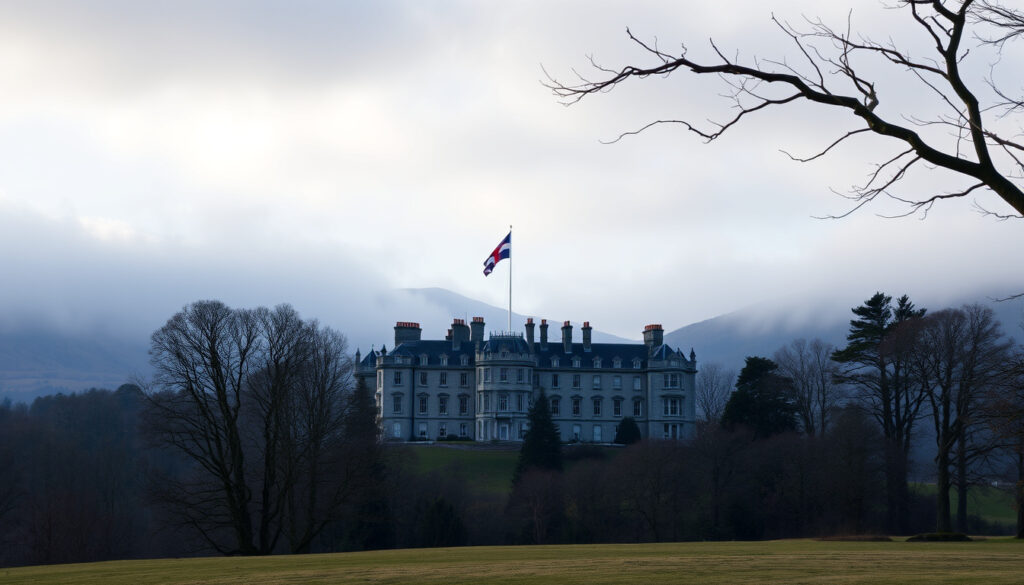
Queen Elizabeth II Final Days: What Happened Before Death
Few moments in modern British history carry the weight of a monarch’s final hours — especially when that monarch reigned for seventy years. Queen Elizabeth II’s death on 8 September 2022 ended an era, but the days leading up to it remain a mix of official record and private, unknowable moments. This article reconstructs what we know for certain about her last 48 hours, who was with her, and what the official documents reveal.
Reign length: 70 years, 214 days ·
Age at death: 96 ·
Number of prime ministers served: 15 ·
Date of accession: 6 February 1952 ·
Date of death: 8 September 2022
Quick snapshot
- Whether the Queen was fully aware of her terminal condition
- Exact nature of her physical decline in final weeks
- Full list of people present at the moment of death
- 6 Sept: Met Truss at Balmoral for constitutional handover
- 7 Sept: Cancelled virtual Privy Council, placed under medical supervision
- 8 Sept: Died at 15:10 BST with Charles and Anne at bedside
- Operation Unicorn triggered for Scotland-based death protocols
- State funeral on 19 September 2022 at Westminster Abbey
- King Charles III’s reign began immediately upon her death
The table below summarises the key biographical details of Britain’s longest-reigning monarch.
| Label | Value |
|---|---|
| Full name | Elizabeth Alexandra Mary Windsor |
| Born | 21 April 1926, Mayfair, London |
| Died | 8 September 2022, Balmoral Castle, Scotland |
| Reign | 6 February 1952 – 8 September 2022 |
| Age at accession | 25 |
| Children | Charles, Anne, Andrew, Edward |
| Spouse | Prince Philip, Duke of Edinburgh (married 1947–2021) |
What did the Queen do two days before she died?
On 6 September 2022, Queen Elizabeth II performed one of her last constitutional duties at Balmoral Castle: appointing Liz Truss as prime minister. The meeting was not held at Buckingham Palace as tradition dictated, but rather at the Queen’s Scottish residence because of her increasing frailty. Official photographs released by the palace show the Queen smiling but leaning on a walking stick, a rare visual cue of her physical condition at 96 years old (GOV.UK).
The audience with Truss followed a similar meeting the same day with outgoing Prime Minister Boris Johnson, making 6 September 2022 one of the busiest days the Queen had experienced in months. The royal diary indicates that these were among her final official acts before her death on 8 September.
Appointing the new Prime Minister Liz Truss
The appointment of Liz Truss as prime minister on 6 September 2022 marked the 15th time Queen Elizabeth II had formally installed a new head of government during her reign. The ceremony, conducted at Balmoral instead of Buckingham Palace, was a concession to the Queen’s reduced mobility (BBC News).
Was Queen Elizabeth awake when she died?
The question of whether the Queen was conscious during her final moments has generated substantial public curiosity. According to a memo attributed to Sir Edward Young, the Queen’s private secretary, and later reported by BBC News, the Queen died very peacefully — “slipped away in her sleep” — with no pain and apparently unaware of her passing. The memo describes the scene as quiet and dignified, with family members present.
The official death certificate, released on 29 September 2022 by the Scottish registrar, lists the cause of death simply as old age (BBC News). The document was signed by Dr. Douglas Glass, the Balmoral-based physician who pronounced the Queen dead at 15:10 BST on 8 September 2022 (The Guardian).
Medical timeline of final hours
The Queen’s health declined so rapidly in her final 24 hours that the palace issued an unprecedented public statement on the morning of 8 September 2022, confirming that doctors were “concerned for Her Majesty’s health” and had placed her under medical supervision (GOV.UK). This statement triggered a cascade of travel arrangements for immediate family members.
Family presence at Balmoral
Princess Anne, who was already at Balmoral attending the Queen, stated afterward that she was “fortunate to share the last 24 hours of my dearest mother’s life” in a personal statement published by The Royal Family. She also accompanied the Queen’s coffin on its final journey from Balmoral to London.
The medical evidence suggests the Queen experienced no prolonged suffering. For the public, the silence around her final awareness — whether she knew she was dying — remains an unresolved human detail that no official document addresses.
How long did the Queen know she was dying?
No official statement was ever released confirming that Queen Elizabeth II had received a terminal diagnosis. The palace did not announce any specific illness, and the death certificate lists only old age as the cause (BBC News). However, several circumstantial signals point toward the Queen and her inner circle being aware of a significant decline.
The decision to move her meetings with outgoing and incoming prime ministers to Balmoral rather than London in early September was one such signal. Another was the cancellation of the Queen’s virtual Privy Council meeting on 7 September 2022, the day before she died (GOV.UK).
Chronic fatigue and mobility issues
Throughout 2022, the Queen had experienced what palace aides described as “episodic mobility problems.” She used a walking stick publicly, and her public appearances became increasingly rare. The postponement of key events, including the annual Balmoral staff gathering and the 6 September in-person meeting of the Privy Council, suggested a medical team managing a gradual decline.
Postponement of Privy Council meeting
The virtual Privy Council meeting scheduled for 7 September 2022 was canceled with no explanation. This marked a break from the Queen’s consistent attendance record at Privy Council meetings throughout her reign. Within hours, Buckingham Palace issued the statement placing the Queen under medical supervision.
Unverified claims by Boris Johnson and broadcaster Gyles Brandreth that the Queen may have had a form of bone marrow cancer have circulated since her death (Wikipedia). These remain speculation, as no official source confirmed any specific diagnosis.
Did the Queen cry when Prince Philip died?
Queen Elizabeth II’s grief following the death of Prince Philip on 9 April 2021 was conducted almost entirely out of public view. The palace released no information about her private emotional response, and no photograph captured her crying. Royal biographers have since characterized her mourning period as restrained — consistent with her lifelong public composure (Wikipedia).
The Queen attended Prince Philip’s funeral at Windsor Castle on 17 April 2021, sitting alone in a pew as required by COVID-19 pandemic restrictions. The image of her solitary figure, masked and dressed in black, became one of the defining photographs of that period. She did not visibly cry during the service.
Private grief and public composure
The Queen’s approach to personal loss had long been a subject of commentary. Her own father, King George VI, died when she was 25, and she assumed the throne without any public show of grief. The same pattern held with Prince Philip — the palace maintained a public silence about her emotional state, while close associates later described her as deeply affected but resolute.
Philip’s funeral during COVID-19 restrictions
The pandemic further complicated the Queen’s grieving process. The funeral was limited to 30 attendees, and she did not have the opportunity to receive the kind of public sympathy or family support typical for a royal spouse’s funeral. The restrictions meant Prince Harry returned from the United States but did not appear publicly with other family members in a traditional procession.
The same stoicism that made the Queen a symbol of stability during national crises also meant that her personal grief remained private. Whether the Queen cried when Prince Philip died is a question about human emotion — one that the palace’s record-keeping was never designed to answer.
Who was at Queen Elizabeth’s bedside when she died?
The official record confirms that two of the Queen’s four children were present at Balmoral when she died at 15:10 BST on 8 September 2022: King Charles III (then Prince Charles) and Princess Anne. The Royal Family confirmed that Anne had been with the Queen for the final 24 hours.
Prince Andrew and Prince Edward, the Queen’s other sons, traveled to Balmoral but arrived after her death. Prince William and Prince Harry, the Queen’s grandsons, also made the journey but were not present at the moment of death, according to reporting by ABC News. Meghan Markle did not travel to Balmoral with Prince Harry.
King Charles III
Charles was at Balmoral and became king immediately upon his mother’s death. The succession was automatic and required no formal ceremony. He addressed the nation later that evening in a pre-recorded broadcast.
Princess Anne
Anne’s role in her mother’s final hours was the most intimate. She was the one who registered the death on 16 September 2022, as recorded in the Scottish register (CBS News). Her public statement described accompanying the Queen on her “final journey” and expressed gratitude for the time they shared.
Other family members
Prince Andrew, Prince Edward, and Sophie, Countess of Wessex, arrived at Balmoral after the Queen’s death. Prince William and Prince Harry were informed of the deteriorating situation while traveling; neither was at the bedside. The absence of Prince Harry in particular fueled renewed public interest in family dynamics.
Confirmed facts
- Queen died at 15:10 BST at Balmoral Castle (BBC News)
- Cause of death: old age (BBC News)
- Charles and Anne at bedside (The Royal Family)
- Appointed Liz Truss on 6 September 2022 (GOV.UK)
- Death registered by Princess Anne (CBS News)
- Queen died peacefully per private secretary’s memo (BBC News)
What’s unclear
- Whether Queen was aware of terminal condition
- Exact medical decline in final weeks
- Full list of people at moment of death
- Whether Queen expressed final wishes or words
- Speculated cancer diagnosis (unconfirmed by officials) (Wikipedia)
“She slipped away in her sleep, very peacefully. There was no pain. She was not aware of anything.”
— Sir Edward Young, the Queen’s private secretary, as reported by BBC News
“I was fortunate to share the last 24 hours of my dearest mother’s life.”
— Princess Anne, The Royal Family
“As our longest-serving monarch, she lived a life of duty and service. May she rest in peace.”
— Prime Minister Liz Truss, public statement following Queen’s death
“Queen Elizabeth was a constant presence in our national life. Her legacy will endure.”
— Archbishop of Canterbury, statement on Queen’s faith
Timeline of final days
- — Queen appoints Liz Truss as prime minister at Balmoral Castle (GOV.UK)
- — Queen cancels virtual Privy Council meeting; doctors place her under medical supervision (GOV.UK)
- — Family members travel to Balmoral; palace confirms Queen’s failing health publicly
- — Queen dies peacefully at Balmoral (BBC News)
- — Official announcement of death made public
- — State funeral at Westminster Abbey
The final 48 hours of Queen Elizabeth II’s life represent a collision between official record and private experience. We know the constitutional facts: she appointed a prime minister, canceled a meeting, and died peacefully. We do not know whether she felt the weight of her own mortality that week, or what her final private words may have been. For historians and the British public, the gap between what was documented and what was felt is the enduring story of those days. The monarchy’s lesson: the crown passes, but the machinery of state does not pause.
Related reading: Maureen O’Hara: Cause of Death & Life Timeline
Frequently asked questions
How old was Queen Elizabeth II when she died?
She was 96 years old when she died on 8 September 2022. She was born on 21 April 1926 (BBC News).
Where did Queen Elizabeth II die?
She died at Balmoral Castle in Scotland, her summer residence. The location was confirmed in the official death announcement (GOV.UK).
Who succeeded Queen Elizabeth II as monarch?
Her eldest son, King Charles III, succeeded her immediately upon her death. He was confirmed as monarch by the Accession Council and publicly addressed the nation later that day.
What was Queen Elizabeth II’s full name?
Her full name was Elizabeth Alexandra Mary Windsor. She was born at 17 Bruton Street in Mayfair, London.
How long did Queen Elizabeth II rule?
She reigned for 70 years and 214 days, from 6 February 1952 to 8 September 2022. This is the longest reign of any British monarch.
Did Queen Elizabeth II have any last words?
No official last words were released. Reports based on a memo from her private secretary suggest she died peacefully in her sleep without pain (BBC News).
Was Queen Elizabeth II buried with Prince Philip?
The Queen was interred at the King George VI Memorial Chapel in Windsor Castle on 19 September 2022. Prince Philip, who died in April 2021, was moved to join her in the same vault.
More related posts
 Brenda Vaccaro: Career, Movies, and Life Story
 Michaela Strachan: Illness, Family, Career & Net Worth
 Princess Margaret: Life, Love, and Legacy of the Queen’s Sister
 Jack Quaid: Partner, Career, and Meghan Markle Comments
 Mother of the Bride Outfit for Over 50 : Trend 2026
 Magnus Carlsen Net Worth 2025: Earnings and Wealth Breakdown
 Jacobi Jupe: Age, Parents, Hamnet Role & Brother Noah Jupe