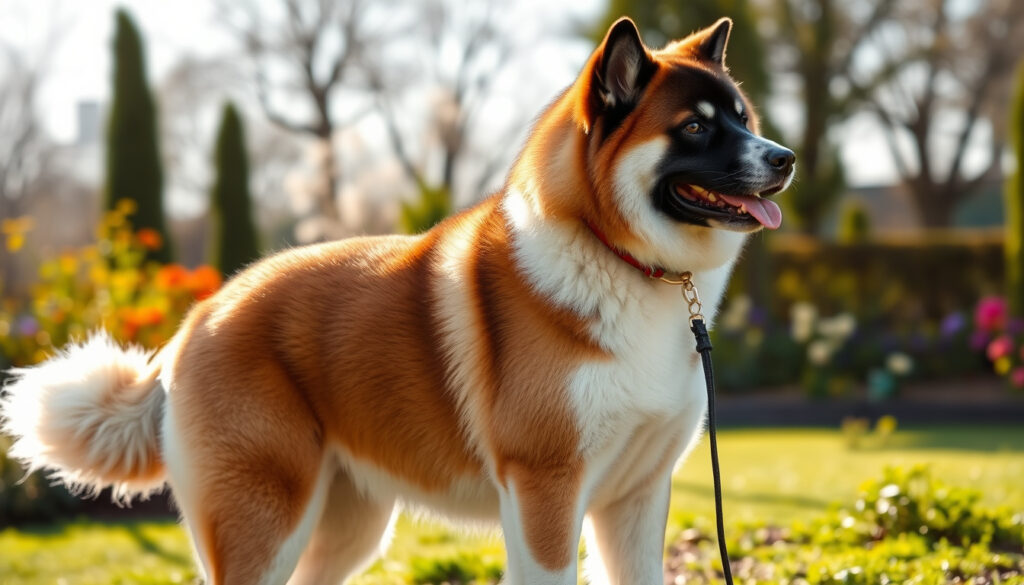
Akita Dog: Temperament, Cost, and Care Guide
Imagine sharing your home with a dog bred to hunt bears, guard castles, and stay utterly devoted to one family—that’s the Akita. This ancient Japanese breed carries a reputation for fierce loyalty and independence, but those same traits can create real challenges for the unprepared owner.
Origin: Japan (mountainous regions) ·
Size: Large: 70–130 lbs (32–59 kg) ·
Lifespan: 10–15 years ·
Coat: Double coat, dense and straight ·
Temperament: Loyal, independent, dignified ·
Restricted breed: Yes, in many jurisdictions
Quick snapshot
- Akita originated in the mountainous regions of northern Japan (Britannica (encyclopedia))
- They have a dense double coat that sheds heavily (American Kennel Club (breed registry))
- Akitas are known for deep loyalty to their family but aloofness toward strangers (Britannica (encyclopedia))
- Whether Akitas are inherently aggressive or a product of socialization and training (Akita Club of America (breed club))
- Exact number of dog bite incidents involving Akitas (Dogs Trust (rescue charity))
- Effectiveness of breed-specific legislation in reducing attacks (Akita Club of America (breed club))
- How much temperament differs between American and Japanese Akita lines (Akita Club of America (breed club))
- Developed in the 1600s as a hunting and guarding breed in Japan (Britannica (encyclopedia))
- Declared a natural monument in Japan in 1931 (Wikipedia (encyclopedia))
- American Akita line emerged after WWII from dogs brought by U.S. servicemen (American Kennel Club (breed registry))
- More cities may add Akitas to restricted breed lists (PetMD (pet health site))
- Genetic research into Akita health problems (hip dysplasia, autoimmune disorders) is ongoing (PetMD (pet health site))
- Rising demand for responsibly bred Akitas increases puppy prices (Chewy (pet retailer))
Seven key facts, one headline: the Akita is a large, fiercely loyal working breed with a double coat and an independent streak that demands an experienced owner.
| Attribute | Value |
|---|---|
| Origin | Japan (Mountainous regions of Honshu) |
| Size | Large; males 110–130 lbs, females 70–100 lbs |
| Lifespan | 10–15 years |
| Coat | Double coat; straight, dense outer coat and soft undercoat |
| Colors | Red, white, brindle, sesame; with or without mask |
| Group | Working group (AKC); Spitz (FCI) |
| Temperament | Loyal, dignified, courageous, independent |
Is an Akita considered an aggressive dog?
The Akita’s guardian history means it reads neutral actions as potential threats—a trait that can escalate without careful socialization.
Will an Akita turn on its owner?
Akitas were bred to guard and hunt, which gave them a protective instinct that can tip into aggression if mismanaged. According to the Akita Club of America (breed club), Akitas have a well-developed guarding instinct and may misread innocent actions as threats. The Akita Club of America notes that most Akitas exhibit aggressive tendencies mainly toward other dogs of the same sex, not toward people (Akita Club of America (breed club)). Still, a poorly socialized Akita can become protective of its family to a point that is dangerous for strangers and even family members who don’t follow its rules.
How many attacks have been by Akitas?
There is no centralized national database that tracks dog bites by breed (Dogs Trust (rescue charity)), so exact numbers are unavailable. Some studies and media reports list Akitas among breeds involved in fatal incidents, but the data is fragmented and often lacks context about the dog’s history or training.
What this means: Aggression in Akitas is linked to socialization and training far more than to genetics. A well-trained, well-socialized Akita is typically not aggressive toward humans, but owners must take that work seriously.
Is an Akita a good family dog?
Akitas can be gentle with their own family but are not tolerant of children’s unpredictability, making supervision essential.
Why are Akitas not cuddly?
Akitas are independent, dignified dogs. The Akita Club of America explains that they are not likely to shower affection on people outside their family or close friend circle (Akita Club of America (breed club)). They appreciate company but, as Royal Canin Australia (pet nutrition company) puts it, they are “fiercely independent and capable of taking initiative without hesitation.” That independence means they are not lap dogs—they will show loyalty through watchfulness, not through constant affection.
For families, the Akita Club of America recommends monitored interactions with children because Akitas are not an overly tolerant breed. Early socialization and respect for the dog’s space are critical. The trade-off: a family that can manage the Akita’s need for structure will get a fiercely loyal protector, but one that fails to do so faces real friction.
Why are Akitas a restricted breed?
Because of their size and guardian instinct, many insurance policies and landlords treat Akitas as high-risk, leading to outright bans.
Akitas appear on banned-breeds lists in numerous jurisdictions. The restrictions stem from their size (70–130 lbs) and their reputation for aggression toward other animals and unfamiliar people. Homeowners’ associations and rental properties often prohibit them outright, and some insurance companies refuse coverage or charge surcharges for Akita ownership.
The implication: before getting an Akita, check local housing laws and insurance policies. Many owners are forced to surrender their dogs because they didn’t anticipate these restrictions. This is one of the most under-discussed barriers to Akita ownership.
How much does an Akita dog cost?
The upfront cost is only the start—lifetime ownership can exceed $17,000, with insurance premiums that may be double that of a non-restricted breed.
What is the lifespan of an Akita?
Akitas typically live 10–15 years (PetMD (pet health site)). That’s a long commitment for a breed that requires firm training, ample exercise, and specialized care.
Are Akitas hard to take care of?
Yes, for several reasons. Exercise needs are moderate to high, and the double coat requires brushing 2–3 times per week and more during shedding season. Training demands consistency and patience. The breed is strong-willed, and Akitas are “not always eager to perform” even though they are relatively easy to train (Britannica (encyclopedia)). Secure fencing is non-negotiable because of their prey drive (Akita Club of America (breed club)).
What problems do Akitas have?
Common health issues include hip dysplasia, hypothyroidism, autoimmune disorders, and gastric torsion (bloat) (PetMD (pet health site)). These conditions can lead to annual vet bills of $500–$1,500 or more. The PDSA (UK veterinary charity) estimates lifetime ownership costs at over £17,000, and the minimum monthly cost after purchase is £105.
Does Akita bark a lot?
No. Akitas are not excessive barkers (Britannica (encyclopedia)). They are generally quiet, which makes them suitable for apartments in terms of noise—but their size and exercise needs make apartment living tough.
The pattern: Akita ownership costs are above average for a large breed, and the restricted-status surcharges on insurance and housing add another layer. Budget for $2,000 to $3,000 in the first year alone.
Are Akitas intelligent dogs?
Akitas are smart, but their independence means they will not obey just to please—they need a reason to comply.
Akitas are intelligent and trainable, but their strong will makes them a challenge for novice owners. The Akita Club of America says most Akitas are very intelligent and extremely loyal, but they can also be stubborn. Positive reinforcement works best, and consistency is key. Rover UK (pet sitting network) describes them as “intelligent, independent, and loyal,” and notes they may be intolerant of other dogs of the same sex. This intelligence, combined with an independent nature, means that an Akita will test boundaries. They are not recommended for first-time owners.
The implication: intelligence in an Akita is a double-edged sword—it makes them capable of learning complex commands, but it also means they will outsmart an inconsistent handler. Training classes and strong leadership are not optional.
Upsides
- Deeply loyal and protective of family
- Low barking—quiet companion
- Striking appearance, dignified demeanor
- Relatively easy to train with the right approach
- Excellent watchdog instincts
Downsides
- Can be aggressive toward other dogs, especially same-sex
- High prey drive; may chase small animals
- Not tolerant of children’s rough play
- Restricted in many housing markets and insurance policies
- Independent and stubborn, challenging for first-time owners
- Heavy shedding, high grooming needs
What we know—and what we don’t
Confirmed facts
- Akitas originated in Japan as hunting and guard dogs (Britannica (encyclopedia))
- They are known for loyalty to their family (Royal Canin Australia (pet nutrition company))
What remains unclear
- Exact number of attacks by Akitas (no reliable national data)
- Whether aggression is primarily genetic or environmental
- Effectiveness of breed-specific legislation in reducing bites
- Whether American and Japanese Akita lines differ significantly in temperament
Voices from the breed
“The Akita is a muscular, double-coated dog of ancient Japanese lineage famous for their dignity, courage, and loyalty.”
— American Kennel Club (breed registry)
“Originating from the mountains of northern Japan, the Akita has a short double coat similar to that of many other northern spitz breeds.”
— Wikipedia (encyclopedia)
“Akitas are dignified, alert, gentle, quiet, and exceptionally loyal.”
— Royal Canin Australia (pet nutrition company)
For a prospective owner in the UK, the decision is clear: if you cannot secure a home that allows restricted breeds and you cannot commit to consistent training and socialization, an Akita is not the right fit. If you can meet those conditions, you’ll earn a loyalty that few other dogs provide. Check local regulations and insurance before falling in love with a puppy—because the consequences of a mismatch are expensive and heartbreaking.
Related reading: Down Syndrome: Causes, Symptoms, Lifespan, and What to Know · Ford Transit Buying Guide: Reliability & Model Years
mywoof.com, akitaclub.org, gooddog.com, dogtime.com, uk.pedigree.com
Frequently asked questions
What is the difference between American Akita and Japanese Akita?
Do Akitas shed a lot?
Are Akitas good with other dogs?
How much exercise does an Akita need?
Can Akitas live in apartments?
What is the best diet for an Akita?
Are Akitas easy to potty train?
More related posts
 Alert Missing Persons Unit – Seasons Cast Cancellation Guide
 Low Rise Jeans: Fit, Styles, and Who They Suit
 Serum Total Bilirubin Level – Normal Range, Causes and Test Guide
 What Does In Transit Mean – Shipping Status Explained
 Alun Wyn Jones: Heart Condition, Army Role, Wife Doctor
 Belinda Carlisle Biography: Her Sobriety, Music and Life
 Https://192.l.168.1.1 – Router Login Guide & Troubleshooting
 What Is the UK Minimum Wage? 2025 Rates & 2026 Projections