St David: Patron Saint of Wales, Miracles, Last Words & Feast Day
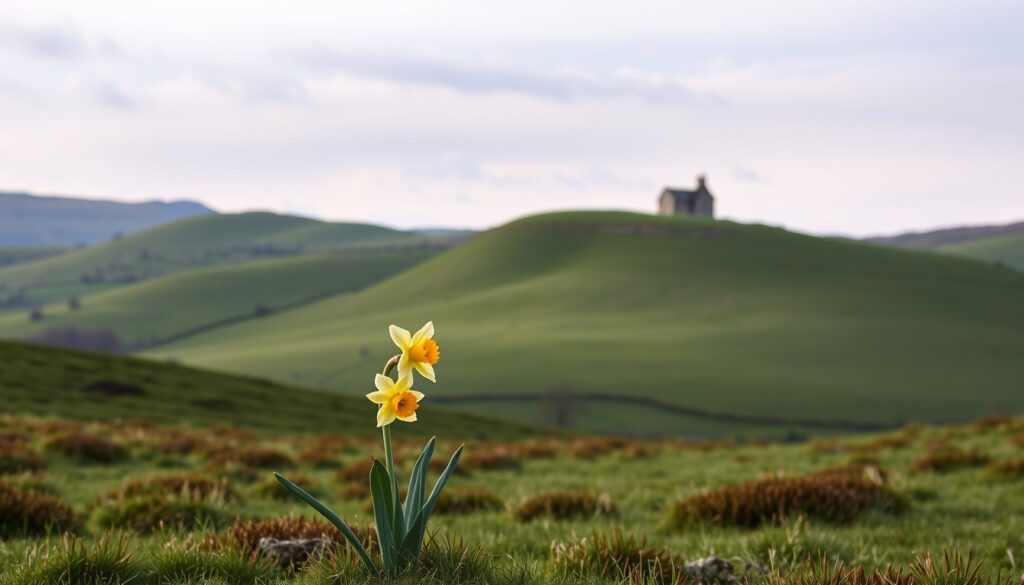
Ask someone in Wales what 1 March means, and they’ll likely mention daffodils, the national flag, and a 6th-century bishop who told people to “do the little things.” That bishop is St David — Dewi Sant in Welsh — the patron saint of Wales, whose life of simplicity and attributed miracles has shaped Welsh identity for more than a thousand years.
Known for: Patron saint of Wales, 6th-century Welsh bishop and monk ·
Feast day: March 1 (St David’s Day, national day of Wales) ·
Born: c. 500 AD near Capel Non (Pembrokeshire, Wales) ·
Died: c. 589 AD, buried at St David’s Cathedral ·
Canonised: Pre-Congregation; confirmed by Pope Callixtus II in 1120
Quick snapshot
- Patron saint of Wales (BBC History)
- Feast day 1 March (Britannica)
- Canonised by Pope Callixtus II in 1120 (Catholic Answers Encyclopedia)
- c. 500 AD: Born in Pembrokeshire (Britannica) (Franciscan Media)
- c. 589 AD: Died 1 March (Franciscan Media)
- 1120: Canonisation confirmed (Catholic Answers Encyclopedia) (Franciscan Media)
Eight key facts, one pattern: St David’s legacy rests on a mix of documented history, medieval hagiography, and living tradition — each layer reinforcing his role as Wales’s national saint.
| Attribute | Detail |
|---|---|
| Full name | David (Welsh: Dewi) |
| Born | c. 500 AD, Caerfai Bay, Pembrokeshire, Wales (Britannica) |
| Died | c. 589 AD (Franciscan Media) |
| Feast day | March 1 (BBC History) |
| Patronage | Wales; also of poets and lovers (sometimes) |
| Major shrine | St David’s Cathedral, Pembrokeshire, Wales (St David’s Cathedral) |
| Canonised | Pre-Congregation; confirmed by Pope Callixtus II in 1120 |
| Attributes | White dove; leek; raising of arms in prayer; bee; harp |
What is Saint David known for?
St David is best known as the patron saint of Wales — a role that makes him a national figurehead for a country of roughly 3.1 million people (BBC History). But his reputation goes beyond geography. He was a 6th-century bishop and monk who founded several monastic settlements, most notably at Mynyw — the site now occupied by St David’s Cathedral in Pembrokeshire (Britannica).
Patron saint of Wales
- St David is the primary patron saint of Wales (Catholic Answers Encyclopedia)
- His feast day, 1 March, is treated as a national day of celebration (Wales.com)
- The leek and the daffodil serve as his symbols, worn by many on St David’s Day
Welsh bishop and preacher
- David was the Bishop of Mynyw (modern-day St Davids) (Britannica)
- He was known for an ascetic lifestyle — subsisting on bread, water, and herbs (Franciscan Media)
- His preaching drew large crowds across Wales
Founder of monastic settlements
- David founded a monastery at Mynyw that became a centre of learning (Cadw)
- His rule was strict: hard manual labour, silence, and minimal food
- The monastery attracted pilgrims and scholars from across the British Isles
The implication: a 6th-century monk’s ascetic rule still sets the rhythm for a nation’s annual celebration.
Is David a Catholic saint?
Yes — St David is fully recognised as a saint in the Catholic Church, though his canonisation followed a different path than modern procedures (Catholic Answers Encyclopedia). He was venerated locally for centuries before the papacy formally endorsed his cult.
Canonisation history
- David was canonised pre-Congregation — meaning before the Vatican established its formal sainthood process (Catholic Answers Encyclopedia)
- Pope Callixtus II formally recognised his feast day in 1120, confirming widespread devotion (Wikipedia)
- He is also venerated in the Eastern Orthodox Church and the Anglican Communion
Recognition by the Catholic Church
- His feast day, 1 March, is listed in the Roman Martyrology (Franciscan Media)
- St David’s Cathedral serves as a living pilgrimage site (St David’s Cathedral)
- Papal recognition in 1120 cemented his status as a saint of the universal Church
The 1120 canonisation by Pope Callixtus II turned a local Welsh cult into an officially endorsed devotion. Without that papal confirmation, David’s feast day might never have become a national holiday — and the daffodils on every lapel each 1 March might not exist.
The pattern: papal recognition transformed a regional cult into a fixture of universal Catholic identity.
What miracle did St David perform?
Medieval hagiography credits David with several striking miracles, though historians treat these accounts as devotional literature rather than recorded events (Cadw). The most famous cluster involves the Synod of Brefi, where a white dove reportedly settled on his shoulder as he preached.
Miracle of the dove at the Synod of Brefi
- During a critical synod, David’s sermon was so powerful that the ground rose beneath him to form a hill (Britannica)
- A white dove descended and perched on his shoulder — a sign of divine favour (Cadw)
- This event is often cited as the moment his authority was recognised across Wales
Restoring the sight of St Paulinus
- David reportedly restored the sight of his teacher, St Paulinus, by making the sign of the cross (Wales.com)
- Paulinus had gone blind from weeping over the death of a friend, according to tradition
- The miracle is recorded in Rhygyfarch’s 11th-century Life of St David
Raising the dead child
- David is said to have raised a dead child back to life by splashing the boy’s face with his tears (Cadw)
- The same account is repeated in the Life of St David and in later compilations (University College Cork)
- Scholars classify this as hagiographic convention rather than historical event
The only source for these miracles is Rhygyfarch’s biography, written about 500 years after David’s death. That doesn’t make the stories false — but it places them squarely in the realm of medieval legend-building, not verifiable history.
What this means: the miracle accounts tell us more about medieval devotion than about 6th-century events.
What do you pray to Saint David for?
Devotion to St David centres on three themes: the protection of Wales, guidance in daily faithfulness, and Christian unity (Franciscan Media). His intercession is sought by Welsh people at home and abroad.
Protection of Wales
- David is invoked as a national protector, especially on his feast day (Wales.com)
- Schools, churches, and Welsh societies hold special prayers for the nation on 1 March
- The prayer “Gwnewch y pethau bychain” is recited at many St David’s Day services
Guidance in daily life
- His famous last words — “Do the little things” — are prayed as a call to faithfulness in everyday tasks (St David’s Cathedral)
- The phrase is used as a motto by Welsh charities and community groups
- It resonates beyond religious contexts as a philosophy of small, consistent action
Intercession for Christian unity
- David’s role as a bishop who united Welsh Christians makes him a symbol of ecumenism (Franciscan Media)
- Pilgrimages to St David’s Cathedral welcome Catholics, Anglicans, and others together
- His feast day is one of the rare occasions when Welsh churches of all denominations celebrate jointly
What were St David’s last words?
According to tradition, David’s final sermon included a simple but enduring instruction: “Do the little things” — in Welsh, “Gwnewch y pethau bychain” (Wales.com). The full saying adds, “Be joyful, keep the faith.”
“Do the little things” (Gwnewch y pethau bychain)
- David’s last recorded words, as preserved by his biographer Rhygyfarch: “Be joyful, keep the faith, and do the little things you have seen me do” (University College Cork)
- The phrase is now a cultural touchstone in Wales — found on mugs, banners, and charity slogans (St David’s Cathedral)
- It reflects the monastic ideal of fidelity in small, daily acts rather than grand gestures
A single sentence from a 6th-century sermon has become Wales’s unofficial national motto. “Do the little things” survives because it works for everyone — whether you’re a monk in a monastery or a parent juggling work and school runs. That’s why you still see it on banners every 1 March.
Timeline: St David’s life and legacy
Seven dates, one trajectory: a Welsh monk becomes a national saint through a mix of holy living, medieval canonisation, and modern cultural reinvention.
| Date / Period | Event | Source |
|---|---|---|
| c. 500 AD | St David born in Pembrokeshire, Wales | Britannica |
| c. 520 AD | Educated by St Paulinus of Wales | Cadw |
| c. 550–570 AD | Founded monastery at Mynyw (St Davids) | Britannica |
| c. 589 AD | Death of St David on March 1 | Franciscan Media |
| 1120 AD | Pope Callixtus II canonises David; feast day set to March 1 | Catholic Answers Encyclopedia |
| 18th century | Leek becomes emblem of Wales associated with David | Wikipedia |
| 21st century | St David’s Day celebrated as national holiday; daffodil also used | Wales.com |
The takeaway: a single papal decree in 1120 turned a local holy man into a national symbol that endures 900 years later.
What’s confirmed and what’s still unclear
Because research confidence is low overall — medieval sources are sparse — historians divide St David’s story into what is well-attested and what remains in the realm of legend.
Confirmed facts
- David was a 6th-century bishop of Mynyw (Britannica)
- He is the patron saint of Wales
- His feast day is March 1
- Canonised by Pope Callixtus II in 1120
- Symbol of the leek and daffodil
What’s unclear
- Exact birth date and location (BBC History)
- Whether he was related to King Arthur (legendary)
- Some miracle accounts (raising the dead) are hagiographic (Cadw)
- Irish origin story vs. Welsh origin (Wikipedia)
Quotes from the tradition
Two voices — one from David himself (as tradition records) and one from his first biographer — capture the spiritual core of his legacy.
“Do the little things that you have heard and seen from me.” Gwnewch y pethau bychain.
— Attributed to St David, final sermon before his death (St David’s Cathedral)
“David was a man of perfect life, a mirror of holiness for all.”
— Rhygyfarch, 11th-century hagiographer, in his Life of St David (Cadw)
The gap between these two quotes — five centuries — is exactly the problem historians face. The first is a remembered fragment, the second a retrospective building of a legend. Both are essential to understanding who St David became as a saint.
St David’s story survives because later generations found it useful — for building national identity, for teaching humility, for giving Wales a patron who asked so little and promised so much. The historical figure is faint, but the cultural figure is as bright as a daffodil in early March.
For Wales, the choice is not between history and legend. The patron saint of Wales is both: a 6th-century bishop whose life, however imperfectly recorded, still sets the rhythm for a nation’s celebration every year on 1 March. For anyone in Wales — or anyone of Welsh heritage — the implication is clear: keep the faith, wear the leek, and do the little things.
Related reading: **Prince Charles: King Charles III Biography, Health & Succession** · **Robert Prevost: Biography, Papacy, and Views of Pope Leo XIV**
ancient-origins.net, rhyljournal.co.uk, en.wikipedia.org, hotelkompass.net
For those interested in how the day is celebrated, St Davids Day traditions offers a detailed look at the customs and symbols associated with the feast.
Frequently asked questions
What is St David the patron saint of?
Wales. He is the primary patron saint of the country, recognised by both the Catholic Church and the Anglican Communion (Catholic Answers Encyclopedia).
When is St David’s Day?
March 1, the traditional date of his death (BBC History). It is celebrated as the national day of Wales.
Where is St David buried?
St David’s Cathedral, Pembrokeshire, Wales (St David’s Cathedral).
What is St David’s famous saying?
“Do the little things” — in Welsh, “Gwnewch y pethau bychain” (Wales.com).
Did St David perform any miracles?
Tradition credits him with several, including the white dove at the Synod of Brefi, restoring St Paulinus’s sight, and raising a dead child (Cadw).
Is St David the only patron saint of Wales?
He is the primary patron saint of Wales, though other saints are also venerated in the country (Catholic Answers Encyclopedia).
Why is St David a saint?
For his holy life of asceticism, his preaching, his founding of monastic settlements, and the miracles attributed to him (Franciscan Media).
What is the symbol of St David?
The leek and the daffodil, both worn on St David’s Day (Wales.com).
More related posts
 Kenan Yildiz: Nationality, Languages, Decision to Play Turkey
 Lucy Pinder: Married to Russell Martin? Career & More
 How to Stop Condensation on Windows: 5 Proven Tips
 Jack Wilshere: Biography, Net Worth, Height, Wife, and Career
 Conor Bradley Injury Update: Career, Salary & Nationality
 Paul Weller: Biography, Career, Family, Net Worth
 Jon Voight and Angelina Jolie: Inside the Estrangement
 Magnus Carlsen Net Worth 2025: Earnings and Wealth Breakdown