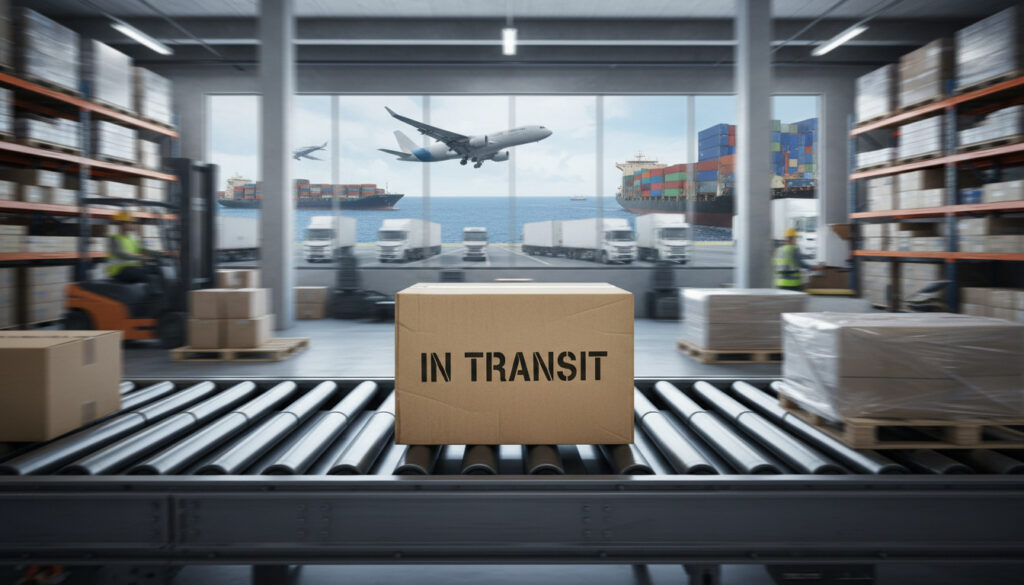
What Does In Transit Mean – Shipping Status Explained
Seeing “In Transit” on your tracking screen signals movement, yet the package rarely arrives immediately. This status indicates your parcel has entered the carrier’s network and is progressing toward its destination, though it may not currently be in a moving vehicle.
The phrase generates significant confusion among online shoppers. Many interpret it as a guarantee of imminent arrival, while others worry when the status remains unchanged for days. Understanding what this status actually represents helps set realistic expectations for delivery windows.
Carriers including USPS, FedEx, Royal Mail, and Evri all utilize this terminology, though specific definitions and update frequencies vary between services.
What Does ‘In Transit’ Mean in Shipping?
Definition
Package accepted and en route through the carrier’s network after pickup.
Stages
Collection → Processing → Transportation → Final facility.
Common Carriers
USPS, FedEx, Royal Mail, Evri, and international logistics networks.
Next Status
“Out for Delivery” indicates final-mile routing.
According to shipping process documentation, the “In Transit” status does not necessarily indicate your package is currently in a moving vehicle such as a truck or airplane. Instead, it indicates the package is progressing through various stages of delivery, which may include being at a carrier facility, transfers between warehouses, loading onto vehicles, or customs inspections.
- The status confirms the package is neither lost nor pending pickup
- Physical movement is not constant; parcels rest at distribution hubs
- Scanning occurs at facility entry and exit points, not continuously
- International shipments include customs clearance within this phase
- Updates typically refresh every 24 hours for domestic routes
- The designation covers both ground and air transportation modes
| Carrier/Category | In Transit Meaning | Typical Duration |
|---|---|---|
| USPS | Moving between network facilities | 1-5 days |
| FedEx | Within FedEx network, scheduled delivery date set | Varies by service |
| Royal Mail | Not confirmed in available sources | Unclear |
| Evri | Not confirmed in available sources | Unclear |
| Shein | Not confirmed in available sources | Unclear |
| International Sea | Moving between ports/customs | Weeks |
| Long-Haul Ground | Cross-country truck transport | Several days |
Does ‘In Transit’ Mean It Will Be Delivered Today?
No. The “In Transit” status specifically indicates your package is not yet available for immediate delivery. This designation means the parcel is progressing toward a local distribution center, but has not yet entered the final delivery phase.
Why the Status Appears Static
Tracking systems update when packages scan at facility checkpoints, not during transport. A parcel may remain “In Transit” for several days while traveling long-haul routes by truck or rail, creating the impression of stagnation despite ongoing movement.
Packages only transition to “Out for Delivery” on the actual delivery day. This typically occurs early morning when the parcel reaches the local delivery facility, according to shipping documentation.
The Moment Status Changes
Once your package reaches the final mile facility, the status shifts to “Out for Delivery.” This change indicates the parcel has been loaded onto a delivery vehicle and should arrive the same day.
How Long Does ‘In Transit’ Typically Take?
Duration varies significantly based on distance, shipping method, and logistical variables. Domestic shipments typically remain in transit for one to five days, while international deliveries can extend for weeks depending on customs processes and transportation modes.
Domestic vs. International Timeframes
Road freight across national routes may keep packages in transit status for several days, particularly for cross-country journeys. International sea freight extends this window substantially, with logistics documentation noting these shipments can remain in transit for weeks depending on the route.
Distance between facilities, carrier service level, customs requirements, and transportation method all influence duration. Peak seasons and weather events may extend timelines unexpectedly.
When to Contact the Carrier
If your package exceeds standard delivery estimates by more than 48 hours without status updates, contact the carrier. Delays may stem from weather disruptions, incorrect labeling, or logistical exceptions.
What Does ‘In Transit’ Mean for USPS and FedEx?
While the general concept remains consistent across major carriers, USPS and FedEx apply specific parameters to this status. Technical definitions for Royal Mail and Evri remain unverified based on current research.
USPS Specifics
USPS updates “In Transit” status approximately every 24 hours as packages move between network facilities. The carrier uses the specific message “EnRoute to Next USPS Network Stop” to indicate movement from the accepting facility toward destinations, according to USPS tracking guidelines.
FedEx Specifics
FedEx indicates that “In Transit” means your package is moving within their network and maintains a scheduled delivery date barring customs or transit delays. The status may persist for multiple days until final delivery, as noted in FedEx customer documentation.
Specific definitions for Royal Mail and Evri “In Transit” terminology have not been verified in available carrier documentation. Recipients should consult What Time Does Royal Mail Deliver for delivery timing information.
What Are the Exact Stages of ‘In Transit’?
Packages progress through distinct phases while classified as “In Transit,” according to logistics documentation.
- Picked Up – Carrier collects the package from origin
- Sorted and Routed – Distribution center processes and directs the item
- Long-Haul Transport – Movement via ship, rail, air, or truck between hubs
- Final Facility Arrival – Package reaches the delivery-area distribution center
- Out for Delivery – Item loaded onto local delivery vehicle
- Delivered – Package reaches the recipient
The transition from “In Transit” to “Out for Delivery” marks the shift from network transportation to last-mile delivery.
What Is Certain vs. Uncertain About ‘In Transit’ Status?
Tracking terminology creates specific expectations, though not all details remain transparent.
Established Facts
- The package has left the origin facility
- It is progressing through the carrier’s network
- Status updates occur at scanning checkpoints
- Final delivery requires “Out for Delivery” status
Uncertain Elements
- Exact current location between scans
- Specific arrival time at next facility
- Whether the package is in a moving vehicle
- Royal Mail and Evri specific status definitions
Why Does ‘In Transit’ Cause Confusion?
The gap between technological capability and logistical reality generates misunderstanding. Customers expect GPS-level precision, yet carriers scan packages only at facility entry and exit points. This creates tracking black holes where the package is moving but invisible to the system.
Additionally, the term implies continuous motion, while carrier documentation confirms packages may sit at facilities for hours during sorting. This contradiction between expectation and operational reality causes recipients to assume delays when none exist.
What Do Official Sources Say?
“In Transit means your package is on its way to its final destination and is moving through the carrier’s network, though it may not always be actively in motion.”
— FedEx Customer Support Documentation
“The carrying of people or things from place to place.”
— Lexical definition referenced in shipping contexts
What Should You Do When Your Package Is In Transit?
Monitor your tracking number periodically rather than obsessing over hourly updates. If the status remains unchanged beyond standard delivery estimates, verify the shipping address and contact the carrier. For comprehensive guidance on tracking across different services, see What Does In Transit Mean for USPS, FedEx & More.
Frequently Asked Questions
What does in transit mean Shein?
Specific definitions for Shein’s tracking terminology have not been verified in available research. Generally, it indicates the package is moving through the international logistics network toward your destination.
What does Evri stand for?
Evri is the trading name for the UK parcel delivery company formerly known as Hermes UK. The rebranding occurred in 2022.
Can a package be in transit but not moving?
Yes. The status includes time spent at distribution centers during sorting, loading, and awaiting transport connections. The package is progressing through the network even when stationary.
Why has my package been in transit for a week?
Long transit times typically indicate long-haul transportation or international customs processing. Cross-country ground shipping and overseas freight naturally extend this duration.
Does in transit mean out for delivery?
No. These are distinct statuses. “In Transit” precedes “Out for Delivery.” The latter appears only when the package reaches the local facility and loads onto the delivery vehicle.
What causes a package to get stuck in transit?
Delays arise from weather disruptions, peak season volume, damaged labels, customs holds, or logistical exceptions. Contact the carrier if delays exceed 48 hours beyond estimates.
More related posts
 Bayern vs Boca Juniors – 2-1 Result, Goals and Lineups
 Nicole Kidman: Biography, Children, Marriages, and FAQs
 Woody Guthrie: Life, Death, and Dylan Connection
 India Summer – Biography, Age, Height, Ethnicity, and Awards
 Count Dooku: The Fallen Jedi Who Became a Sith Lord
 Robert Fripp: Biography, Facts, and Common Myths
 Charlie Hunnam: LGBTQ, Children, Net Worth & Ed Gein Facts
 The Haunting of Hill House – Netflix Cast Episodes Book Guide