Healthy Snacks: Top 5, Filling Options, and Budget Picks
Anyone who has stood in the supermarket aisle wondering if that “healthy” granola bar is actually good for them knows the struggle is real. Between misleading labels and endless options, finding snacks that are nutritious, filling, and affordable can feel like a puzzle — this guide solves it with a straight-talking look at the five healthiest snacks, what to eat when hunger strikes, and how to do it without blowing your budget.
US adults who snack daily: 90% · Snack calories per day (average): 580 · Healthy snack market growth (2023-2028): 6.4% CAGR · Top nutrient-dense snack category: Nuts and seeds
Key facts to remember before you shop:
| Fact | Source |
|---|---|
| Nuts and seeds support heart health and reduce inflammation. | NIH (US health research agency) |
| Greek yogurt contains more protein than regular yogurt. | USDA FoodData Central |
| Air-popped popcorn is a whole grain with low calorie density. | Nationwide Children’s Hospital |
| Fruit and vegetables are the best snack choice for children and adults. | NHS (UK national health service) |
Quick snapshot
- Nuts and seeds are nutrient-dense and support heart health (NIH (US health research agency))
- Greek yogurt contains more protein than regular yogurt (USDA FoodData Central (US food composition database))
- Air-popped popcorn is a whole grain with low calorie density (Nationwide Children’s Hospital (US pediatric medical center))
Exact satiety ranking of snacks varies by individual metabolism. Long-term weight loss efficacy of specific snack types requires more research. Processed “healthy” snack bars vary widely in satiety and sugar content across brands.
- 2020: Pandemic increases home snacking; healthy snack sales surge 15% (Statista (market research platform))
- 2022: FDA updates nutrition label to highlight added sugars (FDA (US food safety regulator))
- 2023: Plant-based protein snacks become fastest-growing subcategory (Grand View Research (market research firm))
Market growth projected at 6.4% CAGR through 2028 (Grand View Research (market research firm)). More brands expected to launch high-protein, low-sugar options.
The snapshot separates what is confirmed from what still needs more research.
What are the top 5 healthiest snacks?
Nutrition scientists and health organizations keep circling back to the same shortlist. Here are the five snacks that consistently top the rankings for nutrient density and satiety.
Nuts and seeds
- Provide healthy fats, protein, and fiber in a portable package. The NIH (US health research agency) notes that regular consumption supports heart health and reduces inflammation.
- A handful of almonds (about 23 nuts) delivers 6 grams of protein and 3.5 grams of fiber for roughly 160 calories.
Fresh fruit and vegetables
- The NHS (UK national health service) says fruit and vegetables are the best snack choice for children and adults alike. They are high in fiber, vitamins, and water content, which increases volume without many calories.
- A medium apple has about 95 calories and 4 grams of fiber.
Greek yogurt and cottage cheese
- Greek yogurt packs roughly 15-20 grams of protein per 200-gram serving, more than double that of regular yogurt. The Mayo Clinic (US medical research nonprofit) recommends protein-rich dairy as a core component of a healthy diet.
- Cottage cheese offers similar protein density with low sugar.
Hard-boiled eggs
- Eggs are a complete protein source, meaning they contain all nine essential amino acids. One large egg provides 6 grams of protein for about 70 calories.
- Research from the Harvard T.H. Chan School of Public Health (academic research body) indicates that eggs as part of a balanced diet do not increase heart disease risk for most people.
Hummus with raw veggies
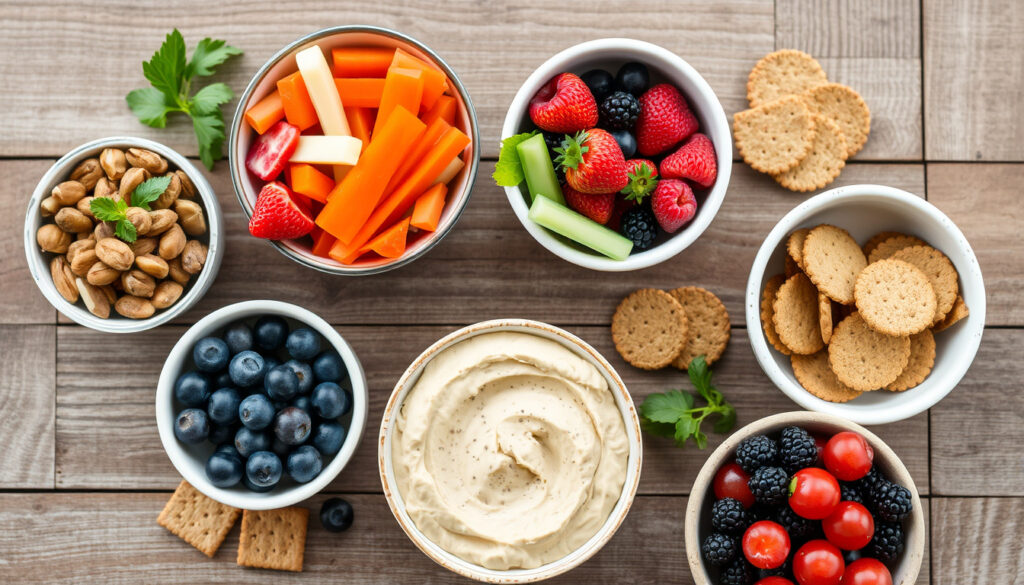
- Hummus offers plant-based protein and fiber from chickpeas, plus healthy fats from tahini. Pairing it with raw vegetables like carrot sticks, bell peppers, or cucumber adds crunch and extra nutrients.
- The UC Davis Children’s Hospital (US pediatric medical center) lists vegetables with hummus as a budget-friendly snack option.
The pattern: these five foods earn their place by delivering nutrients per calorie, not by marketing.
What snacks are filling but healthy?
The secret to feeling full without overeating lies in fiber and protein, which slow digestion and regulate hunger hormones. These five options do that job well.
Oatmeal with berries
- Oatmeal contains beta-glucan, a soluble fiber that slows stomach emptying and keeps blood sugar steady. The Mayo Clinic (US medical research nonprofit) confirms that beta-glucan helps reduce cholesterol.
- Adding berries boosts fiber and antioxidant content.
Apple slices with peanut butter
- Apples provide 4 grams of fiber per medium fruit. Peanut butter adds protein and healthy fats. This combination has been shown to increase satiety more effectively than either food alone.
Avocado on whole-grain crackers
- Avocado is rich in monounsaturated fats and fiber. One-third of a medium avocado contains about 3 grams of fiber and healthy fats that slow digestion.
- Whole-grain crackers add additional fiber. Harvard Health (academic health publication) notes that avocado consumption is linked to better diet quality.
Edamame
- Edamame (young soybeans) is a complete plant protein, meaning it contains all essential amino acids. One cup provides about 18 grams of protein and 8 grams of fiber.
- It is naturally low in sugar and provides iron and calcium.
Chia pudding
- Chia seeds absorb up to 12 times their weight in water, forming a gel that expands in the stomach and promotes fullness. Two tablespoons have 5 grams of fiber and 3 grams of protein.
- The American Heart Association (health advocacy organization) includes chia seeds among heart-healthy foods.
The average American consumes 580 snack calories per day. Swapping processed options for fiber- and protein-rich snacks could cut daily calorie intake by 200-300 calories without leaving you hungry.
What are some cheap and healthy snacks?
Eating healthy does not have to cost more. These five snacks cost less than $1 per serving in most US supermarkets.
Popcorn (air-popped)
- Air-popped popcorn is a whole grain with only 31 calories per cup. The Nationwide Children’s Hospital (US pediatric medical center) recommends popcorn as a fiber-rich snack choice.
- Cost: about $0.15 per serving.
Bananas
- Bananas are affordable year-round and rich in potassium and vitamin B6. One medium banana costs roughly $0.20 and provides 3 grams of fiber.
- The American Academy of Pediatrics (children’s health authority) recommends whole fruit as a healthy snack choice.
Carrot sticks
- Carrots are cheap, crunchy, and high in vitamin A. A 3-ounce serving costs about $0.20 and provides 200% of the daily value for vitamin A.
- Pair with hummus for added protein and satiety.
Canned tuna
- Canned tuna provides lean protein for under $1 per serving. A 3-ounce serving delivers about 20 grams of protein and is rich in omega-3 fatty acids.
- The FDA (US food safety regulator) recommends tuna as a low-mercury fish option when eaten in moderation.
Oatmeal packets
- Plain oatmeal packets cost pennies per serving and can be dressed up with fruit or cinnamon. The Mayo Clinic (US medical research nonprofit) confirms oatmeal’s cholesterol-lowering benefits.
- A single packet costs about $0.15 to $0.30.
Cheap does not mean processed. Many budget-friendly snacks like instant noodles or sugary granola bars cost the same as these healthier options but deliver far less nutritional value per dollar. The difference is not price; it is choosing whole foods over packaged ones.
The trade-off: the cheapest healthy snacks require a little preparation. Pre-washing and portioning vegetables on the weekend saves time and money during the week.
What to eat when I’m craving junk food?
Cravings are normal, but the right swaps can satisfy the urge without the nutritional downside. In fact, 90% of US adults snack daily, so finding healthier alternatives to junk food is a practical skill.
Dark chocolate (70%+ cacao)
- Dark chocolate satisfies sweet cravings with less sugar than milk chocolate. A 1-ounce serving of 70% dark chocolate contains about 12 grams of sugar, compared to 20 grams in milk chocolate.
- The American Heart Association (health advocacy organization) recommends limiting added sugar to 25 grams per day for women and 36 grams for men. Dark chocolate fits within that limit more easily.
Frozen grapes
- Frozen grapes mimic the texture of candy but contain only natural sugars and fiber. A cup of frozen grapes has about 100 calories and no added sugar.
Baked kale chips
- Homemade kale chips provide the crunch of potato chips with far fewer calories. One cup of kale chips (baked, not fried) has about 50 calories and 2 grams of fiber.
Spiced roasted chickpeas
- Roasted chickpeas offer savory crunch and protein. A half-cup serving contains about 7 grams of protein and 6 grams of fiber.
- The Harvard T.H. Chan School of Public Health (academic research body) highlights legumes as a key food group for reducing chronic disease risk.
Rice cakes with avocado
- Rice cakes provide a light, crunchy base, while avocado adds healthy fats and creaminess. This combination delivers a satisfying texture similar to toast but with fewer calories.
The healthiest junk-food swaps do not try to replicate the original perfectly. Instead, they satisfy the same craving (crunch, sweetness, or saltiness) with whole foods that also deliver protein or fiber.
The pattern: satisfying the craving is not the problem — the nutrient deficit is.
What snack kills hunger?
High-protein snacks reduce ghrelin, the hunger hormone. One study found that a high-protein snack reduced subsequent calorie intake by an average of 150 calories at the next meal.
Greek yogurt with berries
- Greek yogurt provides 15-20 grams of protein per serving. The Nationwide Children’s Hospital (US pediatric medical center) recommends low-fat yogurt as a fiber and protein pairing when combined with fruit.
Handful of almonds
- Almonds provide protein, fiber, and healthy fats. A one-ounce serving (about 23 almonds) contains 6 grams of protein and 3.5 grams of fiber.
- Research from the American Society for Nutrition (national nutrition research body) shows that almond consumption improves satiety and reduces hunger compared to carbohydrate-rich snacks of equal calories.
String cheese and an apple
- This combination pairs protein from dairy with fiber from fruit. A string cheese stick provides about 8 grams of protein, while a medium apple adds 4 grams of fiber.
Tuna salad on cucumber slices
- Canned tuna provides lean protein, and cucumber slices add volume with very few calories. A 3-ounce serving of tuna on cucumber rounds provides about 20 grams of protein for fewer than 150 calories.
Protein shake
- A whey or plant-based protein shake delivers quick satiety. Most shakes contain 20-30 grams of protein per serving, which research suggests is the optimal amount for appetite suppression.
The pattern: protein plus fiber is the hunger-killing formula, and it repeats across every effective snack.
Healthy snacks for kids and special diets
Choosing snacks for children and specific dietary needs requires balancing nutrition with taste. The guidance from pediatric health organizations is clear: whole foods win.
Healthy snacks for kids
- The NHS (UK national health service) says fruit and vegetables are the best snack choice for children, and packaged snacks should be limited to two a day maximum.
- The American Academy of Pediatrics (children’s health authority) recommends fiber-rich foods such as whole-grain breads, cereals, beans, seeds, and nuts.
- The Nationwide Children’s Hospital (US pediatric medical center) says half the plate should be fruits and non-starchy vegetables.
Healthy snacks Indian
- Traditional Indian snacks like roasted chana (chickpeas) and makhana (fox nuts) are nutrient-dense options. Roasted chana provides about 8 grams of protein per quarter-cup serving.
- Both are naturally gluten-free and work for plant-based diets.
Healthy snacks to bake
- Baked snacks reduce added fats compared to fried alternatives. Options include oatmeal cookies with reduced sugar, whole-wheat banana muffins, and baked chickpea snacks.
- Baking at home also allows control over ingredients and portion sizes.
Healthy snacks for weight loss
- Weight-loss snacks focus on high volume and low calorie density. Vegetables, air-popped popcorn, and broth-based soups are effective choices.
- The CDC (US public health agency) recommends choosing snacks that are low in added sugars and sodium while high in nutrients.
The pattern: across all dietary needs, the same essentials apply. Prioritize whole foods, watch added sugar, and pair protein with fiber for lasting fullness.
Where to buy healthy snacks
Access to healthy snacks is easier than it used to be, but knowing what to look for matters more than where you shop.
Healthy snacks from supermarket
- Most supermarkets stock pre-cut vegetables, nuts, yogurt, and whole-grain crackers. The UC Davis Children’s Hospital (US pediatric medical center) lists unsalted plain popcorn, plain yogurt, fresh fruit, and low-fat string cheese as budget-friendly options found in any grocery store.
- Check the produce section first; then look for plain versions of dairy and grains.
Healthy snacks to buy online
- Online retailers offer variety packs and subscription boxes for nuts, seeds, dried fruit, and protein bars. This can be cost-effective for bulk purchases.
- Read labels carefully: even “healthy” subscription boxes may include items with added sugar or sodium.
What to look for on nutrition labels
- The FDA (US food safety regulator) recommends checking for three things: added sugar (less than 5 grams per serving), fiber (at least 3 grams), and protein (at least 5 grams).
- The CDC (US public health agency) adds that sodium should be below 200 milligrams per serving for a snack.
What this means: the best place to buy healthy snacks is the one that lets you read labels and avoid impulse purchases. Supermarkets work if you shop the perimeter; online works if you buy plain, unsweetened options in bulk.
“Choosing whole foods over processed snacks is the single most impactful change people can make to their snacking habits. It is not about perfection; it is about replacing one or two packaged items a day with fruits, vegetables, or nuts.”
— Registered dietitian, American Institute for Cancer Research
“Protein and fiber are the two nutrients that most reliably increase satiety. A snack that contains both will keep you fuller longer than a snack that contains only carbohydrates.”
— Healthline nutrition editor
Related reading: Neil Ruddock: Weight Loss, Wife, Net Worth, and Life in 2025 · Nick DiGiovanni: Net Worth, MasterChef Exit, Career & Life
nhslanarkshire.scot.nhs.uk, healthychildren.org, uaf.edu, nationwidechildrens.org, kidshealth.org, childrenshospital.org, health.clevelandclinic.org, calorique.io
Frequently asked questions
What is the healthiest snack to eat before bed?
A snack that combines protein with a small amount of complex carbohydrates, such as a banana with a tablespoon of almond butter or a small bowl of cottage cheese, is ideal. These options contain tryptophan and magnesium, which support sleep.
Are protein bars considered healthy snacks?
It depends on the bar. The healthiest protein bars contain less than 5 grams of added sugar, at least 10 grams of protein, and a short ingredient list. Many commercial protein bars are essentially candy bars with added protein.
Can I eat unlimited vegetables as a snack?
Yes, for most people. Non-starchy vegetables like cucumbers, celery, bell peppers, and leafy greens are very low in calories and high in fiber and water. The CDC (US public health agency) recommends filling half your plate with fruits and vegetables at meals and snacks.
Is popcorn a healthy snack?
Air-popped popcorn is a whole grain and a healthy snack choice. The Nationwide Children’s Hospital (US pediatric medical center) includes it on its list of fiber-rich snacks. Avoid movie-theater or microwave versions with added butter and salt.
How many healthy snacks should I eat per day?
One to two snacks per day is typical for most people, depending on meal size and activity level. The American Academy of Pediatrics (children’s health authority) recommends limiting packaged snacks to two a day maximum for children.
Are dried fruits healthy snacks?
Dried fruits retain the fiber and vitamins of fresh fruit but are more calorie-dense because the water is removed. A serving size is about one-quarter cup. Choose varieties without added sugar.
What healthy snacks are good for diabetes?
Snacks that combine protein, fiber, and healthy fat, such as apple slices with peanut butter, a handful of almonds, or Greek yogurt, help stabilize blood sugar. The American Diabetes Association (diabetes health authority) recommends snacks with less than 15 grams of carbohydrates per serving.
For the average shopper trying to eat better, the choice is clear: stock your pantry with nuts, seeds, fruit, and plain dairy, skip the middle aisles, and pre-portion your snacks on the weekend. Shoppers who pre-portion snacks on the weekend will have the healthiest option ready when hunger hits.
More related posts
 Sasha Grey: Biography, Career, and Current Life (2025)
 Judge Frank Caprio Dies at 88: Last Words and Legacy
 Marks and Spencer School Uniform – Prices Held Since 2021
 Gregg Wallace Net Worth – Salary, Assets And 2024 Exit
 Monica Bellucci: Biography, Age, Height, Net Worth, Career
 Alfred Hitchcock: Biography, Movies, and the Man Behind Suspense
 John Bonham: Death, Family, and Legacy Rock’s Greatest Drummer
 Tatum O’Neal: From Youngest Oscar Winner to Resilience