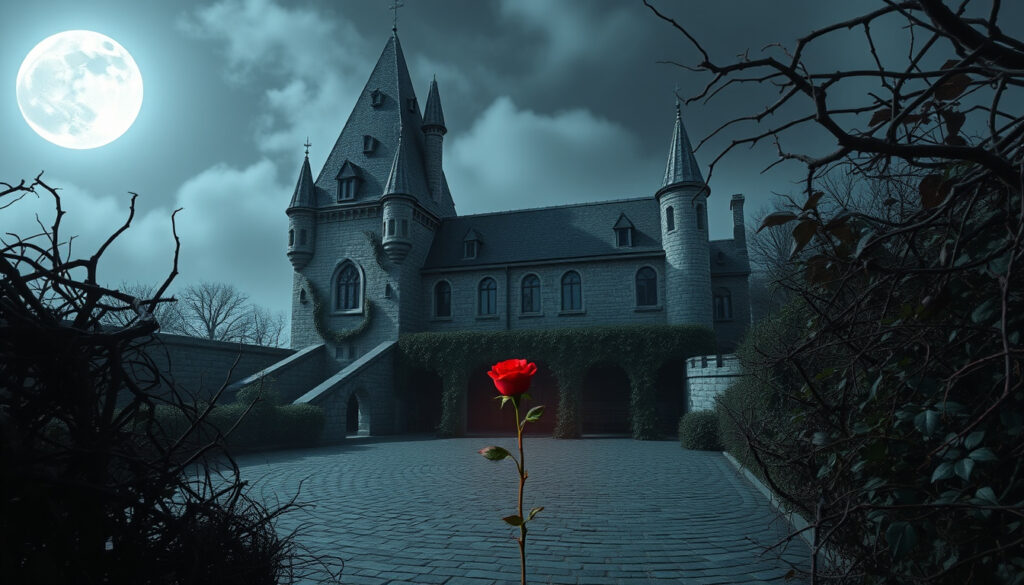
Sleeping Beauty: Story, Versions, Meaning, and Moral Lesson
There’s a reason a story about a princess who sleeps for a hundred years has never faded from memory. Across three centuries and countless retellings, Sleeping Beauty has survived because each generation finds something new in it—whether a warning, a wish, or simply a triumph of good over bad.
Year of Disney film release: 1959 ·
Aarne‑Thompson classification: Type 410 ·
Number of good fairies in Disney version: 3 ·
Year of earliest known written version (Perrault): 1697 ·
Grimm version title: Little Briar Rose
Quick snapshot
- Sleeping Beauty is classified as Aarne‑Thompson type 410 (EBSCO Research Starters)
- Disney’s 1959 film features Princess Aurora and Prince Phillip (EBSCO Research Starters)
- The Grimm version is titled Little Briar Rose (The Walt Disney Family Museum)
- Whether any Disney princess is intended to represent autism (The Walt Disney Family Museum)
- Whether Perrault’s original tale included rape and twins (some sources claim this, but the evidence is disputed) (A Storybook World / H. R. Conklin post)
- 1697: Charles Perrault publishes the first written version (EBSCO Research Starters)
- 1812: Brothers Grimm publish Little Briar Rose (EBSCO Research Starters)
- 1959: Disney releases animated film (EBSCO Research Starters)
- Modern retellings (Tchaikovsky’s ballet, Disney film) derive from Perrault’s 1697 tale (EBSCO Research Starters)
Six key facts, one pattern: the three versions share a basic premise but diverge in details.
| Fact | Value |
|---|---|
| Full title of Disney film | Sleeping Beauty (1959) |
| Princess name in Disney film | Princess Aurora (also called Briar Rose) |
| Villain name | Maleficent |
| Original author (Perrault) | Charles Perrault |
| Grimm version title | Little Briar Rose |
| Aarne‑Thompson type | 410 |
What is the basic story of Sleeping Beauty?
The Disney version
Most people know Sleeping Beauty through Disney’s 1959 film. Princess Aurora is cursed at birth by the sorceress Maleficent to prick her finger on a spindle and die before sunset on her 16th birthday. Three good fairies—Flora, Fauna, and Merryweather—soften the curse so she falls into a deep sleep instead, broken only by true love’s kiss. Prince Phillip defeats Maleficent (in dragon form) and awakens Aurora with a kiss (IJSSL academic paper). The film credits Perrault’s version as its source and adapts elements from Tchaikovsky’s ballet (Disney Biz Journal).
Disney’s version cut the second half of Perrault’s tale entirely—the part where the prince’s mother tries to eat the princess’s children. Parents who want the full story may be surprised by how much darker the original is.
The Perrault version
Charles Perrault published La Belle au bois dormant in 1697. In his telling, the princess pricks her finger on a spindle and sleeps for 100 years. The prince arrives, kneels before her, and she wakes—but no kiss is mentioned (EBSCO Research Starters). The story does not end with the wedding; it continues with an ogress mother-in-law who wants to eat the prince’s children and his wife (Cram.com essay). Perrault’s tale is arguably the most politically layered: a warning about aristocratic marriage.
The Grimm version
The Brothers Grimm published Little Briar Rose in 1812. In their version, thirteen fairies are invited to the princess’s christening; because only twelve golden plates are available, one fairy is left out and curses the girl (The Walt Disney Family Museum). The curse falls on her 15th birthday, not her 16th, and lasts 100 years. When the prince arrives, the hedge of thorns parts, and the princess wakes naturally—the prince does not kiss her awake; the kiss happens only after she is already awake (same source).
The implication: each adaptation reflects the values of its era—Disney’s mid‑century optimism, Perrault’s courtly caution, and the Grimms’ folk fatalism.
What is the Grimm version of Sleeping Beauty?
Differences from Perrault
- Thirteen fairies instead of seven or eight (The Walt Disney Family Museum)
- The curse is pronounced on the 15th birthday, not the 16th (same source)
- No true‑love kiss: the prince arrives as the hundred years end and the princess wakes on her own (same source)
- No arranged marriage and no ogress mother‑in‑law (same source)
The name Little Briar Rose
The Grimm princess is named Briar Rose, not Aurora. The name evokes the thorn hedge that surrounds the castle during the hundred‑year sleep (The Walt Disney Family Museum). Disney borrowed the alias “Briar Rose” for Aurora’s hidden identity in the forest, a nod to the German source.
The Grimm version is the one most frequently cited in academic folklore studies because it lacks the courtly embellishments Perrault added. Readers looking for the “original” fairy tale often find Little Briar Rose closer to the oral tradition, though its earliest known written form is Perrault’s (EBSCO Research Starters).
The pattern: the Grimms stripped away Perrault’s courtly politics and left a simpler, more elemental story about fate and time.
What does Sleeping Beauty mean?
Metaphorical interpretations
Literary analysts have read the sleeping princess as a symbol of puberty, dormant potential, or the transition from childhood to adulthood. The hundred‑year sleep can represent a period of isolation or waiting before maturity (EBSCO Research Starters). Some interpretations focus on the spindle as a symbol of domestic life and the danger it poses to young women, a theme Perrault and the Grimms both kept (Fairytalez).
The story has also been read as an allegory for the changing seasons: the sleeping princess is winter, the prince is spring. This natural‑cycle reading appears in analyses of the older oral versions that predate Perrault (EBSCO Research Starters).
Moral lesson
The most quoted moral is that patience and true love can overcome any obstacle. Perrault himself attached a verse: “Wait, though the time be long; the prize is worth the cost.” But the story also warns against pride and revenge—the uninvited fairy retaliates because she feels slighted. Good triumphs over evil, but only after a costly sleep (The Walt Disney Family Museum).
The catch: the story’s moral is not fixed; each retelling reshapes the lesson to fit its own cultural moment.
What disorder does Sleeping Beauty represent?
Autism spectrum representation
Some fans have speculated that Princess Aurora—or other Disney princesses—may have been intended to represent traits associated with autism. For example, Aurora’s quiet, introverted nature and her preference for solitude are sometimes cited. However, there has been no official confirmation from Disney or any creative team involved in the film that any princess was designed to represent autism (The Walt Disney Family Museum). The speculation remains in the realm of fan interpretation and has not been validated by any primary source.
The question of representation in classic fairy‑tale adaptations is part of a larger cultural conversation about diversity and inclusion. Without official documentation, these claims belong to the “unclear” category and should be treated as thoughtful conversation, not established fact.
What this means: the absence of evidence does not disprove the interpretation, but it does anchor the claim firmly in speculation rather than fact.
What is the moral lesson of Sleeping Beauty?
Across all versions, the central lesson is that good eventually overcomes evil, and that true love—whether romantic or familial—has transformative power. In Perrault’s original, the princess’s mother‑in‑law is defeated, not by a prince’s sword, but by the princess’s own courage in exposing the ogre’s crimes (Cram.com essay). In the Grimm version, the lesson is more fatalistic: what is fated will come to pass, and patience is rewarded.
For modern readers, the tale also serves as a reminder that the stories we tell children are never neutral—they carry the values of their time and place. Disney’s 1959 film, for instance, added a strong prince who fights for his beloved, reflecting mid‑century American ideals of romantic love (IJSSL academic paper).
Timeline
- — Charles Perrault publishes La Belle au bois dormant (EBSCO Research Starters)
- — Brothers Grimm publish Little Briar Rose (EBSCO Research Starters)
- — Disney releases animated Sleeping Beauty (EBSCO Research Starters)
Clarity check
Confirmed facts
- Sleeping Beauty is Aarne‑Thompson type 410 (EBSCO Research Starters)
- Disney’s 1959 film features Princess Aurora and Prince Phillip (EBSCO Research Starters)
- Grimm version titled Little Briar Rose (The Walt Disney Family Museum)
What remains unclear
- Whether any Disney princess is intended to represent autism (no official confirmation)
- Whether Perrault’s original tale included rape and twins (disputed among sources)
“It is from the bosom of this wood that the princess slept for a hundred years, until a prince should come to wake her.” This line captures the Perrault version’s central romance—the wait, the hope, the awakening.
Charles Perrault, “The Sleeping Beauty in the Wood” (1697), as summarized in EBSCO Research Starters
“The hedge of thorns grew thicker and thicker until it enclosed the whole castle. Nothing could break through it—except time.” That’s the Grimm version’s patient philosophy: no magic spell, just nature running its course.
Brothers Grimm, “Little Briar Rose” (1812), as described in The Walt Disney Family Museum
The pattern across all versions is clear: the princess is a passive figure who must wait for rescue. What changes is who rescues her and why. For modern readers, the story’s most enduring question is not whether true love’s kiss works, but what it means to be “awakened”—to knowledge, to independence, to adulthood. For anyone studying fairy tales, the Sleeping Beauty tradition is a case study in how culture reworks its oldest fears into the sweetest soporifics.
christiestratos.com, instagram.com, reddit.com, pacifica.edu, angourieslibrary.com, canadasignal.org
Frequently asked questions
Is Sleeping Beauty rose or Aurora?
The princess is named Aurora in Disney’s 1959 film. In the original Grimm version she is called Briar Rose. Disney gave her the alias Briar Rose when she lives in hiding in the forest. (The Walt Disney Family Museum)
Did Aurora marry Prince Phillip?
Yes, in the Disney 1959 film Aurora and Prince Phillip marry at the end. In Perrault’s original, the princess also marries the prince (after the ogre subplot). In the Grimm version, the couple marries without any prior arranged engagement. (EBSCO Research Starters)
What is Sleeping Beauty a metaphor for?
Common interpretations include puberty, dormant potential, the change of seasons (winter to spring), and the transition from childhood to adulthood. These readings appear in academic folklore analysis. (EBSCO Research Starters)
What disorder does Sleeping Beauty represent?
Kleine‑Levin syndrome is sometimes informally called “Sleeping Beauty syndrome” because it causes periodic excessive sleep. There is no official connection between the fairy tale and the medical condition. Some fans also speculate about autism representation in Disney princesses, but no confirmation exists.
Are any Disney princesses autistic?
No Disney princess has been officially confirmed as autistic. Fan speculation exists around several characters, including Aurora and Belle, but the studio has not made any such designation. (The Walt Disney Family Museum)
More related posts
 Kids New Balance Trainers: 327 vs 530 Comparison Guide
 Kate Abdo: Biography, Career, and Jamie Carragher Incident
 Micky van de Ven: Speed Record, Tottenham Contract and Family
 Kirsty MacColl Death: Tragic Accident and Lasting Legacy
 Zlatan Ibrahimovic: Biography, Career, Net Worth, Age
 Royal Mail Live Chat: Talk to a Real Person Quickly
 Emma Mackey: Biography, Age, Career & Personal Life
 How to Choose the Best Ski Jacket: A Complete Buying Guide