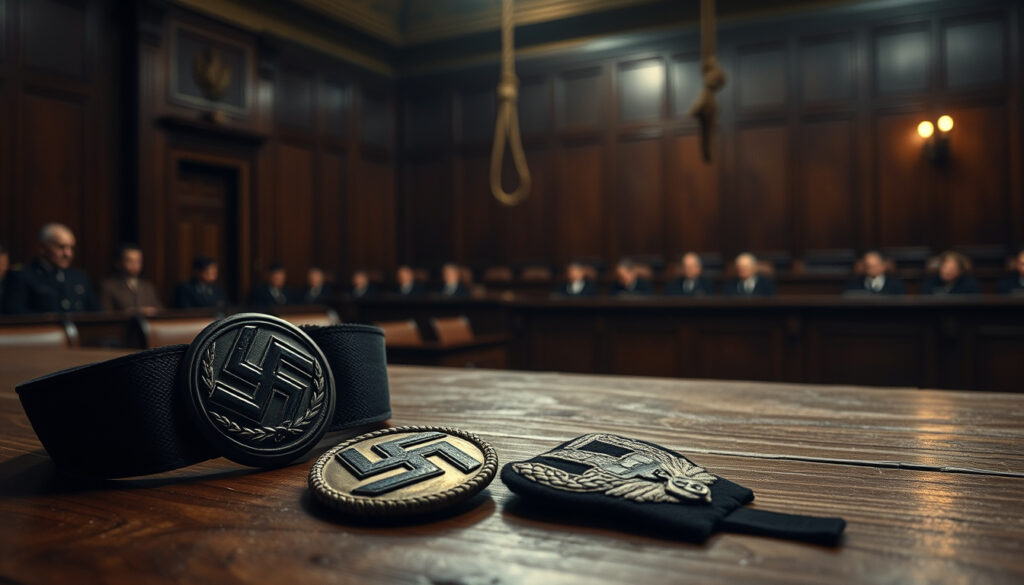
Hermann Göring: WWI Ace, Nazi Leader, Suicide at Nuremberg
Few figures from the Nazi regime embody as many contradictions as Hermann Göring. He was once a decorated World War I flying ace with 22 confirmed victories, yet by the end of his life he weighed over 260 pounds and was dependent on morphine. Here’s how the man who founded the Gestapo and served as Hitler’s second-in-command ended up avoiding the hangman’s noose by his own hand.
Born: 12 January 1893 ·
Died: 15 October 1946 (suicide) ·
Highest Nazi rank: Reichsmarschall ·
Role in Nazi Party: Commander of Luftwaffe, second in command to Hitler ·
Convicted of: Crimes against peace, war crimes, crimes against humanity ·
Famous flying ace: 22 confirmed aerial victories
Quick snapshot
- Göring was Hitler’s designated successor after 1941 (Britannica (established encyclopedia))
- He founded the Gestapo in 1933 (PBS American Experience (historical documentary))
- He died by cyanide suicide in 1946 (United States Holocaust Memorial Museum (museum archive))
- Exact source of the cyanide capsule in prison — smuggled by Göring or passed by a guard? (BBC News (major news outlet))
- His precise IQ (estimates vary around 138) (Britannica (established encyclopedia))
- Whether he knew the full extent of the Holocaust before 1941 (BBC News (major news outlet))
- May 9, 1945: Surrendered to U.S. 7th Army in Austria (PBS American Experience (historical documentary))
- October 1, 1946: Sentenced to death by hanging (Britannica (established encyclopedia))
- October 15, 1946: Suicide by cyanide hours before execution (United States Holocaust Memorial Museum (museum archive))
- Ongoing historical investigation into how the cyanide reached him
- Further analysis of Göring’s psychological profile using Nuremberg records
Eight key facts about Göring’s life outline a trajectory from war hero to convicted war criminal.
| Fact | Detail |
|---|---|
| Full name | Hermann Wilhelm Göring |
| Date of birth | 12 January 1893 |
| Place of birth | Rosenheim, Bavaria |
| Date of death | 15 October 1946 |
| Cause of death | Suicide by cyanide |
| Political party | Nazi Party |
| Spouse | Emmy Sonnemann (1935-1946) |
| Children | Edda Göring |
The implication: Göring’s personal timeline shows a swift fall — from designated successor to suicide in less than five years.
How was Hermann Göring captured?
Surrender to the US Army in Austria
- Göring surrendered to the U.S. 7th Army on May 9, 1945, near Radstadt, Austria (PBS American Experience (historical documentary)).
- He was initially held at Camp Ashcan in Luxembourg before being transferred to Nuremberg (Britannica (established encyclopedia)).
The pattern: Unlike Hitler, who died in his bunker, Göring chose to live and face trial — only to cheat the hangman at the last minute.
Göring’s capture and trial turned him into the symbolic face of Nazi accountability in the postwar world.
Who was more powerful, Goering or Himmler?
Göring’s role as Hitler’s designated successor
- Hitler designated Göring as his successor in 1939, by decree (Britannica (established encyclopedia)).
- As commander of the Luftwaffe and head of the Four-Year Plan, Göring controlled the German war economy and air force.
Himmler’s control of the SS and police state
- Himmler oversaw the SS, the Gestapo (after 1934), and the concentration camp system (PBS American Experience (historical documentary)).
- By 1944, Himmler had eclipsed Göring as the second most powerful man in the Reich, after the Luftwaffe’s failures in the Battle of Britain and the collapse of Göring’s economic plans.
The trade-off: Göring held formal titles and Hitler’s favor early on, but Himmler’s reality-based power (through the SS) proved more enduring as the war turned against Germany.
A quick comparison of their roles and fates:
| Aspect | Hermann Göring | Heinrich Himmler |
|---|---|---|
| Highest position | Reichsmarschall, Commander of Luftwaffe | Reichsführer-SS, Minister of Interior |
| Power base | Luftwaffe, economic ministries | SS, police, intelligence |
| Successor to Hitler? | Designated 1939, fell from favor | Never officially designated, but assumed control in 1945 |
| Death | Suicide by cyanide (1946) | Suicide by cyanide (1945) |
The implication: Both men ended the same way — poison — but Göring’s power was always more dependent on Hitler’s personal trust, while Himmler built an independent apparatus.
How intelligent was Hermann Goering?
Göring’s IQ and education
- Prison psychologist Gustave Gilbert estimated Göring’s IQ at around 138 (Britannica (established encyclopedia)).
- He was fluent in several languages and displayed a sharp, manipulative intellect during the Nuremberg proceedings.
Psychological assessments at Nuremberg
- Gilbert described Göring as intelligent but lazy, prone to using his mental agility for self-justification rather than honest reflection.
The catch: High IQ scores do not correlate with moral judgment — Göring used his intelligence to rationalize atrocities.
Was Hermann Goering heavy?
Göring’s weight and physical condition
- In his later years, Göring weighed over 260 pounds (PMC article on Göring’s alleged morphine addiction (peer-reviewed medical literature)).
- This was a dramatic change from his lean, athletic frame as a WWI pilot.
Why did Göring gain so much weight?
- Weight gain is directly linked to his morphine addiction and associated metabolic changes (PMC article on Göring’s alleged morphine addiction (peer-reviewed medical literature)).
- Some historians also note glandular issues and a sedentary lifestyle during the war years.
The pattern: Göring’s physical decline mirrored his political decline — both accelerated after 1941.
The same man who once dogfought at 20,000 feet ended his days unable to walk without assistance, his body ravaged by drugs and overindulgence.
What was Hermann Goering addicted to?
Morphine addiction and its origin
- Göring’s addiction began after an injury sustained during the 1923 Beer Hall Putsch, when he was treated with morphine (PMC article on Göring’s alleged morphine addiction (peer-reviewed medical literature)).
- He later switched to paracodeine (Paracodin), a codeine derivative, and was reportedly taking over 100 pills daily at the height of his dependence (PMC article on Göring’s alleged morphine addiction (peer-reviewed medical literature)).
Impact on his health and behavior
- The addiction contributed to severe weight gain, erratic decision-making, and a general decline in his leadership capacity (PBS American Experience (historical documentary)).
- At his capture, Göring reportedly arrived with two suitcases filled with paracodeine pills (PMC article on Göring’s alleged morphine addiction (peer-reviewed medical literature)).
The implication: Göring’s addiction was not a footnote but a driving factor in his political unraveling and ultimate downfall.
How did Göring take his life?
Cyanide capsule and the Nuremberg trials
- On the night of October 15, 1946, hours before his scheduled execution by hanging, Göring swallowed a potassium cyanide capsule (United States Holocaust Memorial Museum (museum archive)).
- The source of the cyanide remains disputed. Some accounts say he concealed it himself; others allege a U.S. guard unwittingly passed it to him (BBC News (major news outlet)).
The mystery: Despite a decade of historical research, no one knows for certain how the capsule got into his cell — a final act of control that Göring took to the grave.
Timeline: Key events in Göring’s life and fall
- 1893 — Born in Rosenheim, Germany
- 1914-1918 — Fighter pilot in WWI, awarded the Pour le Mérite
- 1922 — Joined the Nazi Party
- 1933 — Appointed Prime Minister of Prussia; created the Gestapo
- 1935 — Appointed Commander-in-Chief of the Luftwaffe
- 1941 — Designated Hitler’s successor
- 1945 — Surrendered to the US Army; arrested and tried at Nuremberg
- 1946 — Sentenced to death; committed suicide the night before execution
The pattern: The timeline shows a clear arc — rise through military and political success, peak in 1941, then rapid descent as the war turned against Germany.
Clarity check: What we know and what remains uncertain
Confirmed facts
- He was Hitler’s second-in-command (Britannica (established encyclopedia))
- He founded the Gestapo (PBS American Experience (historical documentary))
- He was convicted at Nuremberg (Britannica (established encyclopedia))
- He died by cyanide suicide in 1946 (United States Holocaust Memorial Museum (museum archive))
What’s unclear
- Exact source of the cyanide capsule in prison (BBC News (major news outlet))
- Precise IQ (estimates vary) (Britannica (established encyclopedia))
- Whether he knew the full extent of the Holocaust before 1941
Quotes from the record
“I did not have the power to stop the war. I was not the Leader.”
— Hermann Göring, at Nuremberg
“Göring was intelligent but lazy. He used his mental agility to justify, not to reflect.”
— Gustave Gilbert, prison psychologist at Nuremberg
The contrast: Göring’s self-defense and Gilbert’s clinical assessment reveal a man who saw himself as a victim of circumstance, while those who studied him saw a master of evasion.
Summary
Hermann Göring remains the ultimate case study in Nazi hypocrisy: a war hero who became a drug-addicted war criminal, a designated successor who outlived Hitler only to cheat the executioner. For historians and students of the Third Reich, the lesson is clear — Göring’s contradictions are not separate from his crimes; they are part of them. The question of how he obtained the cyanide capsule will likely never be fully resolved, but the act itself sealed his legacy as the Nazi who refused to face justice on anyone’s terms but his own.
Related reading
- Marlene Dietrich: Life and Controversies — Another German-born figure of the same era, a vocal critic of Nazism.
- Ed Kemper: Verified Facts and Unresolved Questions — A similar methodological approach to separating established facts from speculation.
en.wikipedia.org, newworldencyclopedia.org, en.nuremberg.media, pbs.org, fr.wikipedia.org, theguardian.com, news.bbc.co.uk, independent.co.uk
Frequently asked questions
Was Edda Göring still alive as of 2025?
Yes, Edda Göring, the only child of Hermann Göring, was still alive as of 2025. She lived a private life in Germany and never participated in public discourse about her father’s legacy.
What rank did Hermann Göring hold?
Göring held the unique rank of Reichsmarschall, created specifically for him. It was the highest military rank in Nazi Germany, senior to all field marshals.
Why did Hermann Göring wear sunglasses?
Göring frequently wore sunglasses in public, partly for fashion and partly to hide the effects of his drug use and the resulting eye sensitivity. Some historians also suggest he used them to project an air of mystery.
Did Hermann Göring have children?
Yes, Hermann Göring had one daughter, Edda Göring, born in 1938 with his second wife, Emmy Sonnemann.
What was Hermann Göring’s role in the Holocaust?
As a top Nazi leader, Göring was instrumental in the regime’s anti-Jewish policies. He signed the decree that authorized the “final solution” and oversaw the economic plunder of Jewish assets. He was convicted of crimes against humanity at Nuremberg.
How much did Hermann Göring weigh?
In his later years, Göring weighed over 260 pounds (118 kg), a result of morphine addiction, glandular issues, and overeating.
Who portrayed Hermann Göring in the film Nuremberg?
In the 2000 film *Nuremberg*, Hermann Göring was portrayed by the actor Brian Cox. The film focuses on the trials and Göring’s psychological battle with the prison psychologist.
More related posts
 Katarina Johnson-Thompson: Biography, Partner, Daley Thompson
 Greg Rutherford: Gold Medals, Height, Family, Net Worth
 Marlene Dietrich: Life, Controversies, Lovers, and Iconic Quotes
 Lenny McLean: The Guv’nor – Britain’s Bare-Knuckle Fighter
 Wet Wet Wet Songs – Top 10 Hits Discography Lyrics
 45 Days From Today – Exact Date Calculator
 Scott Disick: Net Worth, Partner, Kids, and Life After Kourtney
 Callum McGregor: Celtic captain, wages, Scotland absence, school