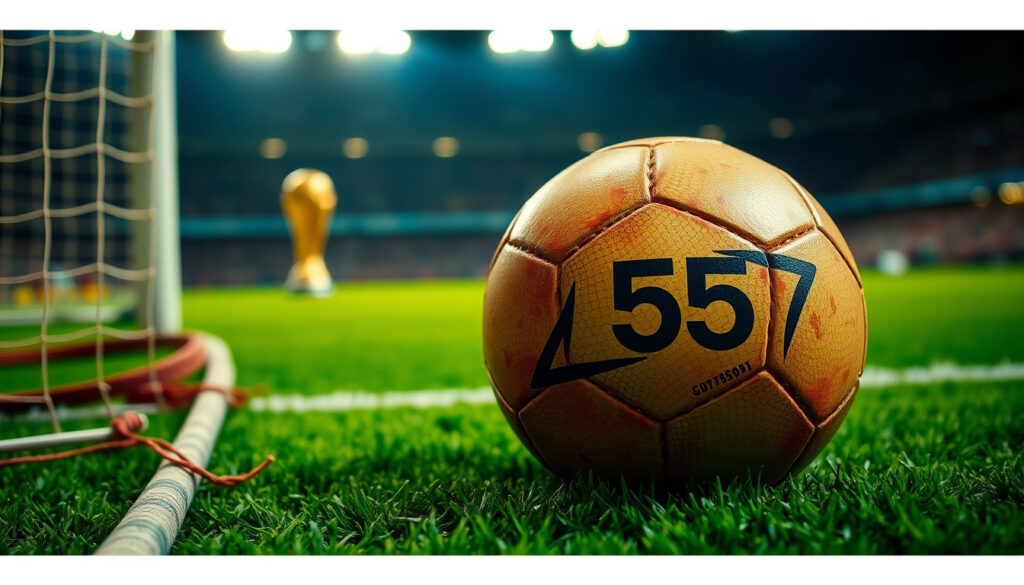
Jimmy Greaves: 357 Goals, World Cup Heartbreak, and Legacy
Few footballers have left a mark quite like Jimmy Greaves — a man whose goals defied belief and whose life off the pitch told a much harder story. He scored more top-flight goals than anyone in English history, yet a freak injury kept him from the 1966 World Cup final.
Top-flight goals: 357 ·
England caps: 57 ·
England goals: 44 ·
World Cup winner: 1966 ·
Clubs played for: 4 (Chelsea, AC Milan, Tottenham, West Ham)
Quick snapshot
- Exact net worth at death (figures vary across sources)
- Whether he would have started the 1966 final if fit
- Full contractual reasons for the end of Saint and Greavsie
- 1957: Professional debut at Chelsea
- 1966: World Cup winner (injured before final)
- 1971: Retires from professional football
- 19 Sep 2021: Dies aged 81 after a stroke
- His 357-goal record remains untouched in English football
- Statues and tributes at Tottenham and Chelsea honour his legacy
- Debate continues on whether he was England’s greatest ever striker
Jimmy Greaves’s personal and career statistics at a glance:
| Full name | James Peter Greaves |
| Born | 20 February 1940, East Ham, London |
| Died | 19 September 2021 (aged 81) |
| Height | 5 ft 10 in (1.78 m) |
| Position | Forward |
| England caps/goals | 57 / 44 |
| Top-flight goals | 357 |
| World Cup | 1966 winner |
How many clubs did Jimmy Greaves play for?
Greaves played for four professional clubs across England and Italy, leaving a trail of broken defensive records at each stop. His journey took him from Chelsea’s youth system to a brief, unhappy stint in Milan, then back to London where he became a Tottenham legend, before finishing at West Ham.
Chelsea (1957–1961)
- Debuted as a 17-year-old and scored on his first-team debut
- 124 goals in 169 appearances for the Blues (BBC Sport)
- Became the First Division’s youngest-ever player to reach 100 goals
AC Milan (1961)
- Transferred for £80,000 — a huge fee at the time
- Scored only 9 goals in 14 games (The Guardian)
- Struggled to settle in Italy and requested a transfer within months
Tottenham Hotspur (1961–1970)
- Signed for £99,999 — deliberately one pound less than the £100,000 psychological barrier
- 266 goals in 379 appearances, making him Tottenham’s all-time top scorer (Tottenham Hotspur)
- Won the FA Cup in 1963 with Spurs
West Ham United (1970–1971)
- Moved across London for a reported £150,000 fee
- Scored on his debut against Manchester City
- Retired in 1971 after a short final season (BBC Sport)
The implication: Greaves’s career arc — from teenage sensation to unhappy Milan exile to Tottenham immortality — mirrors the volatility of a player who lived by instinct, not calculation.
Why did Jimmy Greaves leave Spurs?
By 1970, the goals had begun to dry up, and Greaves’s personal demons were catching up with him. His departure from Tottenham wasn’t a single event but the result of a slow decline in form, fitness, and focus.
Declining form and injuries
- Scored only 13 goals in his final season at Spurs — modest by his standards
- Lost his starting place to Martin Chivers
- Battled persistent ankle and knee injuries
Alcohol-related issues
- Greaves struggled with alcoholism during his playing days (The Guardian)
- Alcohol affected his training and match sharpness
- Later in life, he openly admitted drinking affected his career
Transfer to West Ham
- Moved to West Ham United in March 1970 for £150,000
- Played alongside Bobby Moore and Geoff Hurst
- His final season yielded only a handful of goals before retirement
The catch: Greaves’s exit from Spurs wasn’t a betrayal by the club — it was a quieter tragedy of a man losing his edge to injury and alcohol, making the move almost inevitable.
Did Jimmy Greaves get a World Cup medal?
This is one of the most debated questions in English football history. The short answer is yes — but it took 43 years for him to receive it.
1966 World Cup squad selection
- Greaves was an automatic pick for England’s 1966 squad
- Played in the opening two group matches against Uruguay and Mexico
- Scored against Mexico in the final group game (BBC Sport)
Injury in the group stage
- Suffered a deep gash to his shin during the group stage
- Manager Alf Ramsey dropped him for the final, replacing him with Geoff Hurst
- Hurst scored a hat-trick in the final — securing his place in history
Reception of a medal decades later
- FIFA initially awarded medals only to the 11 players who played in the final
- In 2009, FIFA changed the rules to honour all squad members
- Greaves received his winners’ medal at a ceremony in Downing Street (BBC Sport)
Jimmy Greaves is the only player in the 1966 squad whose absence from the final is remembered as painfully as the victory itself. Geoff Hurst’s hat-trick built a legend — but Greaves’s injury built a ghost story.
The pattern: Greaves’s World Cup story is defined by absence, not presence — a cruel twist for a player who had been England’s most reliable goal threat.
How good was Jimmy Greaves in football?
Measuring Greaves against history’s best requires looking at cold numbers and warm memories. By any statistical measure, he ranks among the most prolific strikers England has ever produced.
Goal-scoring records
- 357 top-flight goals — the highest total in English top-division history (Wikipedia)
- 6 First Division top scorer titles
- 44 goals in 57 England appearances — a ratio of 0.77 goals per game (BBC Sport)
- 266 goals for Tottenham Hotspur, the club’s all-time record (Tottenham Hotspur)
- Inducted into the National Football Museum Hall of Fame (National Football Museum)
Comparison to contemporaries
- Sir Bobby Charlton called Greaves “the greatest goalscorer I ever saw”
- Ranked fourth in England’s all-time men’s goalscorer list behind Wayne Rooney, Sir Bobby Charlton, and Gary Lineker (BBC Sport)
- His 357 top-flight goals remain well ahead of Alan Shearer’s 283 Premier League-era total
Impact on English football
- Greaves defined the “natural finisher” archetype — quick, two-footed, and clinical
- His partnership with Bobby Smith at Tottenham set standards for attacking play
- Influenced generations of English strikers, including Gary Lineker and Harry Kane
Why this matters: Greaves’s 357-goal record isn’t just a number — it’s a wall that no English goalscorer has scaled since. In an era without substitutes, modern fitness regimes, or protective refereeing, he scored at a rate that still looks supernatural.
Were Saint and Greavsie friends?
Ian St John and Jimmy Greaves formed one of television’s most beloved football duos. Saint and Greavsie wasn’t just a show — it was a cultural phenomenon that brought humour and warmth to football coverage for nearly a decade.
Formation of the Saint and Greavsie duo
- Ian St John, a former Liverpool striker, partnered Greaves on ITV
- The pair had genuine chemistry and a natural comic rhythm
- They presented together from 1983 onwards on ITV’s football coverage
TV show and fan reception
- Saint and Greavsie became a Saturday lunchtime staple on ITV
- The show mixed match previews, banter, and celebrity guests
- Audiences loved their irreverent style, which contrasted with the BBC’s more formal approach
End of the partnership
- The show ended in 1992 when ITV lost top-flight football rights to Sky
- Greaves’s health also played a role — his battle with alcohol and a minor stroke affected his ability
- The two remained friends until Greaves’s death in 2021
What this means: The partnership was a rare example of football television that transcended the game itself, leaving a legacy of warmth.
What did Jimmy Greaves die from?
Greaves’s final years were marked by a struggle with alcoholism and declining health, but his death came suddenly at home in September 2021.
Health decline in later years
- Greaves battled alcoholism for decades, and it seriously damaged his health
- He suffered a severe stroke in 2015 that left him with limited mobility
- Despite health struggles, he remained active in public appearances and media
Cause of death
- Greaves died on 19 September 2021 at his home in Danbury, Essex
- The cause of death was a stroke (BBC Sport)
- He was 81 years old
- His family released a statement: “Jimmy passed away at home in the early hours of this morning, aged 81”
Tributes and legacy
- Tottenham Hotspur called him “the greatest goalscorer in our history” (Tottenham Hotspur)
- Fans laid flowers outside the stadiums of all four clubs he played for
- His funeral was a private family affair, but a public memorial was held at St Paul’s Cathedral
“Jimmy was the greatest goalscorer I ever saw. He was simply a genius.”
— Sir Bobby Charlton, speaking after Greaves’s death, as quoted by BBC Sport
“Jimmy Greaves was a wonderful player and a wonderful man. He brought joy to millions.”
— Gary Lineker, as quoted by Associated Press
For English football fans, the lesson is bittersweet: Greaves gave everything to the game — and the game gave him back a complicated legacy. His 357 goals stand as the English top flight’s ultimate record, but so too does his battle with alcohol serve as a reminder of the human cost behind the brilliance.
Confirmed facts
- 357 top-flight goals — English record (Wikipedia)
- 44 England goals in 57 appearances (BBC Sport)
- Played for Chelsea, AC Milan, Tottenham, West Ham (BBC Sport)
- 1966 World Cup winner (medal awarded in 2009) (BBC Sport)
- Died from a stroke on 19 September 2021 (BBC Sport)
- Battle with alcoholism was well-documented (The Guardian)
What’s unclear
- Exact net worth at death (figures vary across sources)
- Whether he would have started the 1966 final if fully fit
- Full contractual details behind the end of Saint and Greavsie
Timeline: Jimmy Greaves’s Life and Career
- 20 Feb 1940 — Born in East Ham, London (BBC Sport)
- 1957 — Signs professional with Chelsea (BBC Sport)
- 1959–1961 — Top scorer for Chelsea, 124 goals in 169 games (BBC Sport)
- 1961 — Moves to AC Milan for £80,000 (The Guardian)
- Dec 1961 — Returns to England, signs for Tottenham Hotspur (Tottenham Hotspur)
- 1963 — Wins FA Cup with Tottenham (Tottenham Hotspur)
- 1966 — Part of England’s World Cup-winning squad (injured after group stage) (BBC Sport)
- 1970 — Moves to West Ham United (BBC Sport)
- 1971 — Retires from professional football (BBC Sport)
- 1983–1992 — Co-presenter of Saint and Greavsie on ITV (BBC Sport)
- 2009 — Receives World Cup winners’ medal (BBC Sport)
- 19 Sep 2021 — Dies aged 81 after a stroke (BBC Sport)
The 43-year gap between Greaves winning the World Cup and actually getting his medal reveals a cruel irony: FIFA’s 2009 rule change finally honoured the squad, but it couldn’t rewrite the feeling of watching from the sidelines in 1966.
The catch: The medal delay highlights how FIFA’s rules often fail to recognise the contributions of entire squads.
flashscore.com, en.wikipedia.org, de.wikipedia.org, theweek.com, standard.co.uk, wordcurrent.uk
Frequently asked questions
How many goals did Jimmy Greaves score for England?
He scored 44 goals in 57 appearances for England, including six hat-tricks (BBC Sport).
What was Jimmy Greaves’ net worth?
Exact figures are not publicly confirmed, but estimates vary widely. He earned well from his playing career and TV work with Saint and Greavsie, but struggled with alcoholism later in life.
Did Jimmy Greaves ever win the league title?
He never won the English First Division title. He won the FA Cup with Tottenham in 1963 and the World Cup with England in 1966.
Why was Jimmy Greaves not in the 1966 final?
He suffered a deep shin gash in the group stage and was replaced by Geoff Hurst, who scored a hat-trick in the final (BBC Sport).
How long did Jimmy Greaves play for Tottenham?
He played for Tottenham Hotspur from December 1961 to March 1970, a total of 379 appearances and 266 goals (Tottenham Hotspur).
What happened to Jimmy Greaves after football?
He became a TV presenter alongside Ian St John on Saint and Greavsie, wrote columns, and later struggled with alcoholism before his death in 2021.
How did Jimmy Greaves die?
He died from a stroke on 19 September 2021 at his home in Danbury, Essex, at the age of 81 (BBC Sport).
Related reading
More related posts
 Lucien Laviscount: Age, Height, Net Worth, and Relationships
 Oliver Savell: The Teen Actor Behind Alan Carr in Changing Ends
 Elle Fanning: Biography, Age, Height, Sister & Partner
 DJI Osmo Pocket 3 Review: Specs, Price in Ireland & Verdict
 Nana Akua: Biography, Age, Children, and Personal Life
 Jonny Wilkinson: Rugby Legend, Net Worth, Family
 How to Choose the Best Ski Jacket: A Complete Buying Guide
 Marty McFly: Character Profile, Facts, and Back to the Future