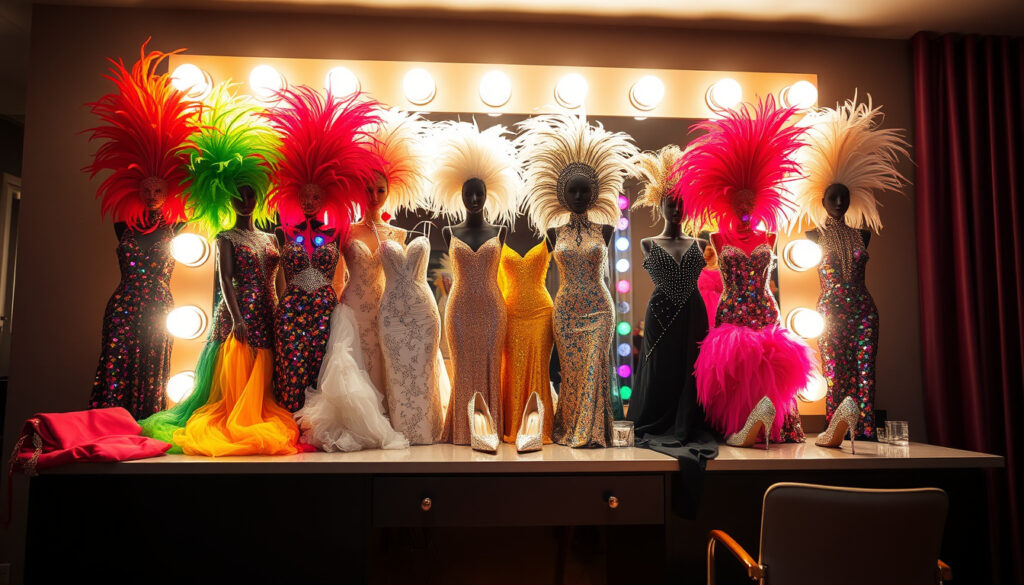
What Is a Drag Queen? Definition, History, and Famous Performers
Few performance arts spark as much curiosity—and misunderstanding—as drag. From the exaggerated lashes to the towering wigs, drag queens have been entertaining audiences for over a century. But behind the glitter lies a rich history and a diverse community that defies simple labels. This guide separates fact from fiction and answers the questions people actually ask.
First recorded use of ‘drag’: 1870s ·
RuPaul’s Drag Race Emmy wins: 24 ·
Number of drag queens in Ireland: Over 50 ·
Drag queen performances in nightclubs: Global
Quick snapshot
- Drag queens perform in exaggerated feminine attire for an audience (Encyclopaedia Britannica)
- Term “drag” likely originated in 19th-century theater (Encyclopedia.com)
- Drag queens were visible at the Stonewall riots of 1969 (Encyclopedia.com)
- RuPaul’s Drag Race mainstreamed drag after 2009 (Emory ScholarBlogs)
- Exact etymology of the word “drag” is debated (Encyclopaedia Britannica)
- Total number of drag queens worldwide is unknown (Encyclopaedia Britannica)
- Precise historical origins of drag performance remain hazy (National Geographic)
- 1870s – first known use of “drag” in theater slang (Encyclopaedia Britannica)
- 1928 – drag queen performed at Struthers Library Theatre (Struthers Library Theatre)
- 1969 – drag queens participated in Stonewall riots (Encyclopedia.com)
- 2009 – RuPaul’s Drag Race premieres (Emory ScholarBlogs)
Drag’s journey from underground theater to mainstream entertainment reveals a performance art that is both ancient and constantly reinventing itself.
| Fact | Value |
|---|---|
| First known use of ‘drag’ | 1870s in theater slang |
| RuPaul’s Drag Race seasons | 16 (as of 2025) |
| Common drag queen makeup items | Foundation, contour, lashes, wig |
| Drag queen performance venues | Nightclubs, brunches, weddings, pride events |
What is a drag queen?
At its simplest, a drag queen is a person—usually male—who performs in exaggerated feminine attire for an audience. Encyclopaedia Britannica defines it as “a man who dresses in women’s clothes and performs before an audience, typically in nightclubs and gay bars.” The performance is the key: drag is a temporary, exaggerated gender presentation, not a daily identity.
Why is it called drag?
The term “drag” likely developed from 19th-century British theater slang, where men playing women’s roles wore dresses that “dragged” across the floor. Encyclopedia.com notes that the phrase “drag queen” probably emerged in the homosexual community of Great Britain during the nineteenth century. However, the precise etymology remains debated.
The word’s origin is theater jargon, not something malicious. It describes a performance style, not a person’s identity.
What is the history of drag?
Drag has a long performance tradition. BBC Bitesize places drag within a historical entertainment context, not as a modern invention. In 1928, a drag queen performed at the Struthers Library Theatre. Smithsonian Magazine reports that William Dorsey Swann is widely discussed as the first self-proclaimed drag queen. By the 1950s, drag queens were performing regularly in gay bars, and they were especially visible during the 1969 Stonewall riots. National Geographic frames modern drag’s early history around police raids, clubs, and the movement into pop culture.
The pattern: drag evolved from underground theater to a cornerstone of LGBTQ+ nightlife, then to mass entertainment. Emory ScholarBlogs credits RuPaul’s Drag Race—which premiered in 2009 and has since won 24 Emmy awards—with bringing drag into the mainstream.
A drag queen is a person, usually male, who uses drag clothing and makeup to imitate and often exaggerate female gender signifiers and gender roles for performance.
Wikipedia’s definition of a drag queen
A drag queen is a man who dresses in women’s clothes and performs before an audience, typically in nightclubs and gay bars.
Encyclopaedia Britannica’s definition
Can a straight girl be a drag queen?
Drag is a performance art open to anyone, regardless of gender or sexual orientation. CNN describes drag as “the dramatic amplification of gender,” a definition that doesn’t restrict who can perform. Straight women do perform as drag queens—though less commonly—and the community welcomes them when they bring the required theatricality.
Is drag only for gays?
Historically, drag queens have usually been gay men and part of gay culture, according to Wikipedia. But the art form has always included people of all orientations. Drag is a performance, not a sexual orientation. As Smithsonian notes, some historians use a definition that includes intentional gender expression and competition—which anyone can participate in.
Can a woman be a drag queen?
Yes. While drag queens have traditionally been male performers, women can and do perform as drag queens. The Wikipedia article notes that drag queens imitate female gender signifiers; a woman doing the same is still performing a heightened femininity. The key is the exaggeration and the entertainment value, not the performer’s birth gender.
Drag is an equal-opportunity art. The only requirement is a willingness to put on a spectacle. For anyone wondering “Can I be a drag queen?”—the answer is yes, if you have the charisma, uniqueness, nerve, and talent.
What did drag queens do?
Drag queens perform in a variety of settings: nightclubs, drag brunches, weddings, and pride events. Their acts include singing, dancing, lip-syncing, and comedy. French Wikipedia notes that drag queens may engage in singing, dancing, theater, and lip-sync as part of their performance. The Korean Wikipedia adds that they “imitate and often exaggerate female gender signifiers and roles for entertainment.”
How do drag queens do cleavage?
Drag queens create the illusion of cleavage using makeup, padding, and special undergarments. The technique involves contouring the chest with dark and light shades to create depth, then using tape or padding to push breast tissue or silicone forms into shape. Some use specialized bras designed for drag. The goal is a convincing feminine silhouette within the exaggerated aesthetic of drag.
Which famous drag queen is straight?
Most well-known drag queens are openly gay, but there are straight drag queens too. For example, some female impersonators identify as heterosexual. The exact number is hard to pin down because drag is about performance, not announcing one’s sexuality. Wikipedia notes that drag queens have historically usually been gay, but that is a correlation, not a requirement.
Who is the most beautiful drag queen?
Beauty is subjective, but certain drag queens consistently top “most beautiful” lists: RuPaul, Bianca Del Rio, Violet Chachki, and Aquaria are often cited for their polished looks. Encyclopaedia Britannica emphasizes that drag is performance rather than ordinary dress, meaning the “beauty” is part of the act.
Why do girls like drag queens so much?
Drag queens have a strong female fanbase for several reasons. Their performances celebrate femininity in an exaggerated, unapologetic way—something many women find liberating. Drag shows are inclusive spaces where everyone is welcome to have fun. CNN notes that drag is the “dramatic amplification of gender,” and that amplification can feel like a party for all genders.
Moreover, drag queens are often charismatic, witty, and talented performers. The community built around drag—both in clubs and online—offers a sense of belonging. Emory ScholarBlogs describes how RuPaul’s Drag Race turned that appeal into a global phenomenon, giving women characters and catchphrases they can rally behind.
Clarity section
Confirmed facts
- Drag queens are performers who exaggerate feminine gender signifiers (Wikipedia)
- The term “drag” originated in 19th-century theater (Encyclopedia.com)
- RuPaul is a famous drag queen and television personality (Emory ScholarBlogs)
What’s unclear
- Exact etymology of the word “drag” (Encyclopaedia Britannica)
- Total number of drag queens worldwide
- Precise historical origins of drag performance (National Geographic)
- How many drag queens identify as straight
For anyone curious about drag, the choice is clear: explore the art form with an open mind, or miss out on one of the most vibrant performance traditions of the last century.
Frequently asked questions
What is the difference between a drag queen and a transgender woman?
Drag is a performance; transgender identity is a person’s internal gender identity. A drag queen may be a man or woman performing as a heightened version of femininity. A transgender woman identifies as a woman full-time. They are not the same.
Do drag queens have to be gay?
No. Many drag queens are gay, but straight men and women also perform in drag. Drag is an art form, not a sexual orientation.
Can men be drag queens?
Yes. Historically, most drag queens have been men who dress in women’s clothing for performance. That remains the most common profile.
How much does drag makeup cost?
A basic drag makeup kit (foundation, contour, lashes, wig) can cost $50–150. Professional sets for competition can exceed $500.
Are drag shows suitable for children?
Many drag shows are adult-oriented, but family-friendly drag brunch events exist. Check age recommendations before attending.
What is a drag king?
A drag king is a performer—usually female—who exaggerates masculine gender signifiers. It is the counterpart to drag queen.
How do drag queens choose their stage names?
Stage names often include puns (e.g., “Bianca Del Rio”), name references, or combinations of first and last names that sound glamorous or funny.
More related posts
 Cote de Pablo: Biography, Personal Life, and Current Projects
 Highest Paying Jobs UK – Top 10 Salaries 2025 No Degree
 Sophie Cunningham: Relationship Status and Key Facts
 Hank Azaria: Ethnicity, Voices, Sobriety, and Perry Funeral
 Treat Williams Death: Cause, Accident & Tom Selleck’s Tribute
 Jason Bateman Movies and TV Shows – 40-Year Career Highlights
 Arsene Wenger: Career, Net Worth, and Current Role at FIFA
 Carlos Alcaraz: Girlfriend, Family, Diet, Net Worth